Westboro’s streets between the Ottawa River corridor and the Richmond Road mainstreet include older houses, infill, additions and substantially renovated interiors. That variety makes a standard neighbourhood prescription unreliable. A 1940s basement later underpinned or finished may present different drains, elevations and access from a newer semi nearby. Installation planning should follow verified private plumbing rather than architectural appearance.
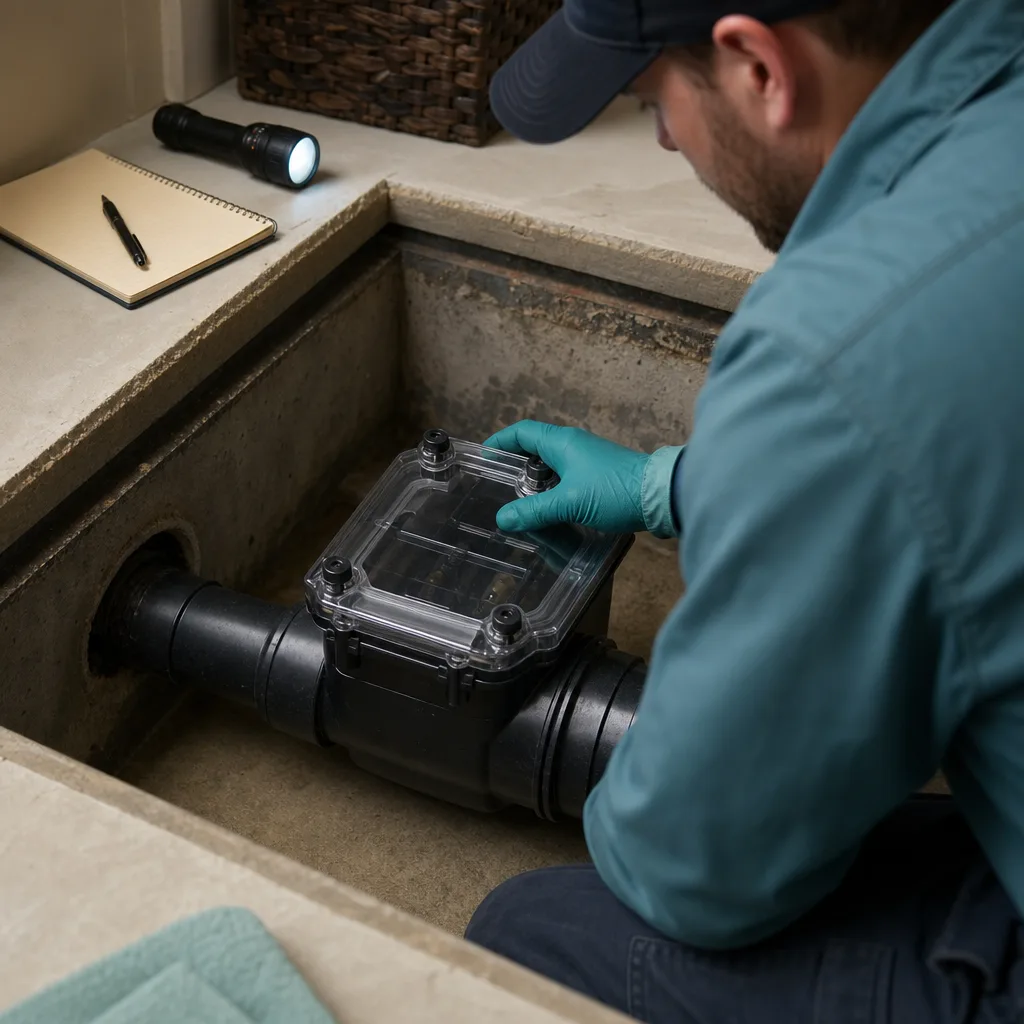
A sanitary backwater valve is intended to let wastewater leave under normal conditions and resist reverse sanitary flow during surcharge. It does not stop Ottawa River flooding, overland runoff, groundwater, foundation seepage or rain through a low opening. It also cannot guarantee an insurance outcome or eliminate maintenance. This guide organizes the property-specific questions a Westboro owner should resolve with qualified professionals and the City.
Richmond Road planning and heritage material offers useful context for neighbourhood change, yet it cannot identify a buried drain or approve work. Treat it as background while relying on property records, qualified field investigation, current municipal review and product-specific maintenance instructions for the decision that follows.
Read Westboro’s renovation layers before choosing a location
Westboro houses often carry several generations of work: rear additions, basement bathrooms, lowered floors, relocated stacks and newer finishes over original drainage. Building age is a clue, not a drain map. Collect permit records, plans and invoices, then have a plumber verify accessible piping, cleanouts and branch directions. Unpermitted or undocumented work should be treated as an uncertainty, not casually assumed compliant.
Ask whether all basement fixtures would sit on the protected side of a proposed valve and whether any connection could remain vulnerable. The most convenient floor tile to remove is not necessarily over the correct pipe. A written sketch of observed and inferred routing helps prevent cosmetic considerations from controlling a hydraulic and code decision.
- Compare the original footprint with additions and enclosed porches. A newer stack or bathroom may connect at a point that changes the useful valve location.
- Ask whether basement lowering or underpinning changed drain elevations. Do not assume an original sketch describes piping after major structural renovation.
- Locate cleanouts, floor drains, laundry, mechanical condensate and bathroom fixtures, then have the assessor state which are inside and outside proposed protection.
- Identify radiant heating, electrical service routes and other concealed work before floor cutting. Records and appropriate locating reduce avoidable damage but do not eliminate uncertainty.
- Discuss older pipe condition independently from valve need. Roots, offsets, corrosion or scale may justify repair, but a valve should not be marketed as a cure for those defects.
- Plan a permanent removable access panel as part of the finish design. A valuable renovated room still needs straightforward inspection without breaking tile or fixed millwork.
- Preserve photographs of exposed piping with measurements from fixed walls before restoration. They help future maintenance without replacing the approved drawings or inspection record.
Do not confuse river, groundwater and sewer protection
Westboro’s relationship to the Ottawa River is geographically meaningful, but a sanitary backwater valve is not a river-flood barrier. River levels, overland routes, groundwater and sanitary surcharge are separate questions. Consult official flood information where relevant and avoid extrapolating from elevation or distance alone. Site-specific professional advice is necessary.
Clear water at a wall-floor joint points toward a different pathway than wastewater at a floor drain. Low window wells, settled grading, short downspouts and sump performance deserve their own review. One event can involve multiple sources, so a valve may be one part of a layered plan rather than the whole response.
Plan access on compact lots and finished interiors
Compact urban lots can limit exterior staging, while landscaped yards and narrow side access affect material handling. Inside, homeowners may need to protect hardwood stairs, millwork and occupied living space from dust and traffic. Discuss the work route, containment, debris removal, working hours and restoration before accepting a scope. These practical details should not change the technically suitable valve location.
Identify radiant floor heating, electrical routes and other concealed services before cutting. Older finishes may warrant hazardous-material assessment by an appropriate specialist. The plumber should explain investigative limits and what happens if the drain is deeper, offset or in poorer condition than anticipated. Allowances and change authorization should be written, not improvised after opening the slab.
Combine camera inspection with records and measurements
A drain camera may show pipe direction, material condition, offsets, roots or debris and can support locating. It cannot see through every obstruction or identify every concealed branch. Ask for relevant video or images, distance references and a plain-language account of what was and was not observed. In an altered Westboro house, records and fixture tracing may be equally important.
If the drain has defects, decide whether repair belongs in the same scope. Installing a valve does not cure a collapsed, misaligned or repeatedly blocked private sewer. Request a proposal that identifies investigation, device, fittings, protected branches, excavation, inspection, concrete reinstatement and finish exclusions, rather than a price for an unexplained product.
Related reading
Coordinate Ottawa permits with renovation timing
Ottawa provides specific backwater-valve permit information. Confirm current requirements for the actual scope before demolition, especially if valve work is bundled with a basement renovation or bathroom. Separate work packages do not erase approval obligations. A past permit for the house is not permission for new plumbing.
Assign who applies, supplies drawings, answers review comments, books inspection and completes corrections. Confirm which piping must remain exposed. Do not let a flooring schedule force premature closure. Keep approved documents, inspection records, device literature and photographs with the renovation file; they are useful for maintenance and resale but do not guarantee rebates or insurance.
Related reading
Check rebate rules before treating them as project funding
The Residential Protective Plumbing Program publishes eligibility criteria and documentation requirements. Many Westboro homes may prompt owners to ask about age-based eligibility, but age alone does not approve an application. Property status, applicant, proposed measure and current program terms all matter. Contact the City before work if reimbursement affects the decision.
Retain quotations, permit and inspection material, detailed invoices and proof of payment in the required form. Check deadlines and whether pre-approval or other sequencing applies. Only the City decides eligibility and amount. A contractor should not convert a possible municipal rebate into a guaranteed reduction on which the household budget depends.
Related reading
Respect heritage context without confusing it with plumbing approval
Parts of the broader Richmond Road–Westboro area have documented cultural-heritage context, and individual properties may have heritage considerations. A hidden sanitary device does not automatically avoid every planning or building question if work affects protected fabric or other regulated elements. Check the property’s status and project scope rather than assuming.
Heritage research can explain a building’s evolution but rarely supplies a reliable current drain layout. Preserve significant finishes through careful access planning where feasible, yet never bury required valve access to protect appearance. Regulatory review, plumbing function and conservation goals should be coordinated by the appropriate professionals.
Related reading
Make the access cover part of the room design
The valve must remain available for inspection, cleaning and eventual repair in accordance with the approved installation and manufacturer. In a polished basement, plan a flush removable panel or other suitable treatment early. Do not run permanent cabinetry, tile or broadloom over an access point and expect maintenance to occur.
Label the location in the home file and record model, installation date, permit and photographs before closure. If furniture normally sits nearby, ensure it can be moved safely. Good access reduces the temptation to skip inspection and allows a service professional to respond without first damaging expensive finishes.
Pair valve care with whole-property checks
Follow product-specific maintenance instructions and use qualified service. Moving and sealing parts can collect waste, grease or debris; inspect after a suspected event as well as at the recommended interval. Do not open the assembly during active reverse flow. Gurgling, odour or slow drains calls for diagnosis, not an improvised tool or chemical treatment.
At the same seasonal check, look at sump operation where present, backup power, window wells, grading and downspout discharge. Keep dated notes and photographs. A maintained valve still cannot guarantee protection in every event, but documented care supports reliability, informed service and accurate conversations with a future buyer or insurer.
Related reading
Compare full scopes and written insurance answers
Compare quotes on investigation, drain coverage, product, permits, inspection attendance, dust controls, concrete, finish restoration, warranty and exclusions. Ask how unknown conditions and additional drain repair are authorized. Lister Plumbing confirms Westboro service coverage, but this page does not claim any completed local work or neighbourhood performance result.
Ask the insurer whether a valve changes sewer-backup coverage, limits, deductible, premium or required maintenance, and request written answers. Distinguish sewer backup from overland and groundwater wording. Permits, rebates and professional installation do not bind an insurer or guarantee claim payment. Store valuables above floor level despite any device.
- Have bidders separate necessary drain repair from the protective-valve scope, while explaining whether one must precede the other. This makes both urgency and cost easier to evaluate.
- Confirm responsibility for protecting stairs, occupied rooms and landscaped access routes during demolition and debris removal. A technically sound installation still needs a workable construction plan.
- Ask for the proposed access-cover dimensions and finish approach before ordering replacement flooring. Last-minute concealment often conflicts with future inspection and manufacturer service clearances.
- Record unknown-condition rates or allowances and require written approval for changes. Older Westboro renovation layers make transparent change management more useful than an unrealistically absolute quotation.
- At handover, obtain inspection status, photographs, model literature and the first recommended maintenance date, then share relevant device information with the insurer without assuming acceptance.
Related reading
Westboro backwater valve FAQ
Does living near the Ottawa River make a sanitary valve the right solution?
Not by itself. The device addresses reverse flow through protected sanitary piping, not river flooding, overland flow or groundwater. Review official flood information and obtain property-specific assessments for each plausible pathway.
Can a valve be added during a Westboro basement renovation?
It may be efficient to coordinate work, but drain suitability, approvals, inspection timing and permanent access still govern. Confirm requirements before demolition and do not let flooring or cabinetry conceal work before inspection or block future service.
Do roots or old pipes change the plan?
They can. A camera and other investigation may reveal conditions needing repair. A valve does not fix a damaged or obstructed private drain. Ask the professional to separate repair recommendations from backflow protection and explain the order of work.
Does an older house automatically receive the City rebate?
No. The City evaluates all current eligibility and documentation conditions. Verify directly before contracting, follow required sequencing and retain permit, inspection, invoice and payment evidence. No contractor can guarantee approval.
Can the access cover be hidden beneath a built-in?
Not if the built-in prevents required inspection, cleaning or replacement. Incorporate a practical removable access solution into the room design and preserve a location sketch and device information.
Is a backwater valve a substitute for a sump pump?
No. They address different pathways. The valve targets reverse sewer flow; a sump system may manage foundation drainage or groundwater where applicable. Each should be assessed on the actual property.
Will installation reduce my insurance premium?
Only the insurer can answer. Ask about premium, sewer-backup endorsement, limits, deductible, exclusions and maintenance requirements in writing. Installation does not guarantee coverage, savings or payment after a loss.
Sources and official references
- City of Ottawa — Richmond Road/Westboro Community Design Plan
- City of Ottawa — Backwater valve permits
- City of Ottawa — Residential Protective Plumbing Program
- City of Ottawa — Prevent basement flooding
Programs, permits and bylaws change. Confirm current requirements with the City of Ottawa before acting.
Questions about your Westboro home?
Ask a local plumber, without pressure.
Requests are sent to Lister Plumbing, who serve homes across all Ottawa areas listed here. A request is not a commitment, and no price is promised before someone looks at your plumbing.