
The principle in three steps
- Normal flowHome → sewer
- Sewer surchargePressure reverses
- Valve respondsFlap closes the path
Start with the direction of travel
One drain, two possible directions.
A backwater valve is a one-way protective device installed in a building's drainage system. In ordinary conditions, used water from toilets, sinks, showers and laundry moves from the house toward the municipal sanitary sewer. If wastewater in that sewer pushes backward toward the property, a properly located valve is intended to close and limit that reverse path. It is a useful distinction: the device does not remove floodwater, pump water out, or make the sewer stop surcharging. It interrupts one possible route into the house.
That simple idea depends on the actual plumbing underneath a particular floor. A house may have several branches joining the main drain, fixtures at different elevations, older changes that are not visible from above and more than one kind of drainage connection. This guide explains the principle so you can ask better questions, not so you can identify an installation point without an assessment. If you are starting after a wet-basement event, the flood assessment guide is a better first stop than choosing a valve from a photograph.
01 / The mechanism
How flow changes at the valve
Wastewater normally flows downhill through the home's drains and building sewer. The sanitary sewer collects this used water and carries it onward through the municipal system. The City of Ottawa distinguishes sanitary sewers from storm sewers, which carry rain and surface runoff; it also notes that some older areas have combined sewers. Those networks are not interchangeable, so it matters which connection is being discussed. See the City's wastewater questions and sewer-system explanation .
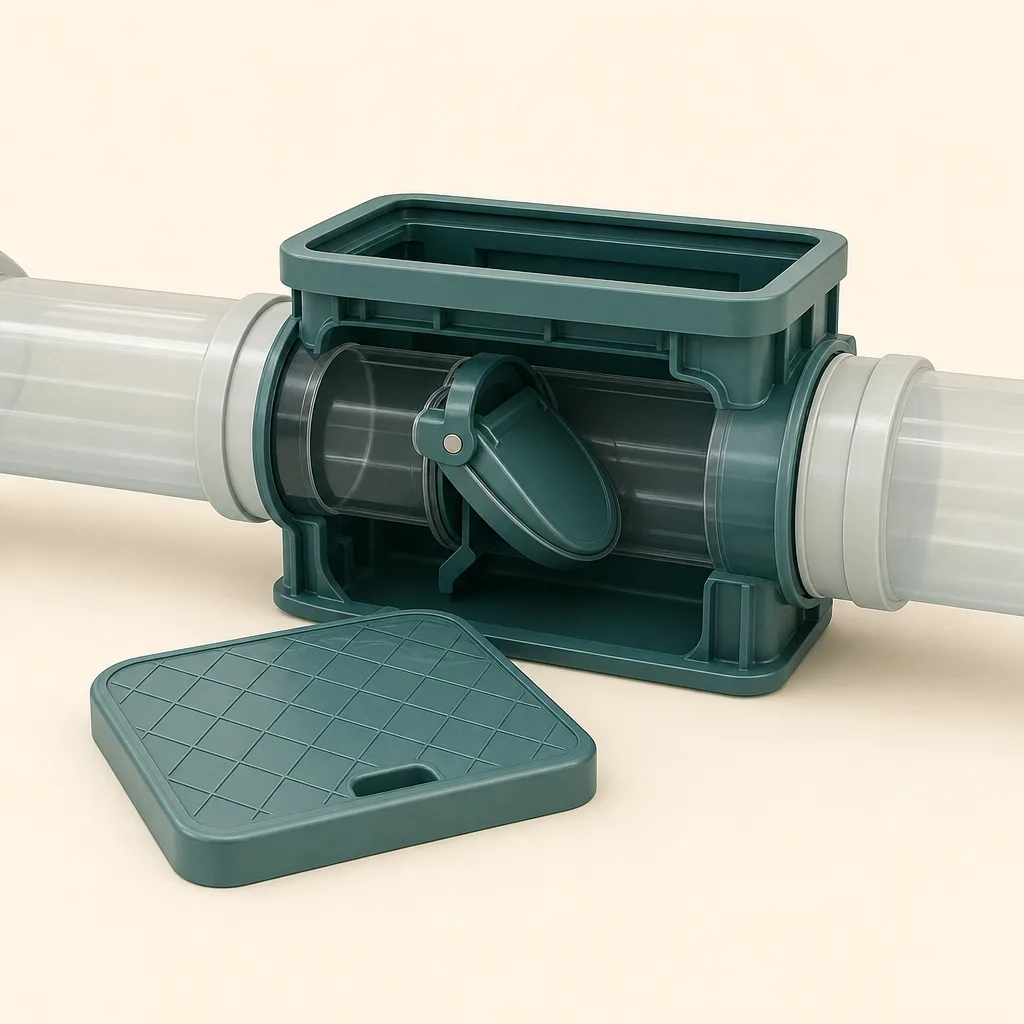
A typical backwater valve has an internal moving flap or gate. Under normal forward flow, the moving part allows water to pass toward the sewer. If pressure or flow reverses at the device, it moves toward a closed position to resist wastewater coming back. The details differ by approved device and installation, including how it is accessed, so a conceptual drawing should never substitute for the product instructions or a plumbing plan. An open access cover is not itself proof that the internal flap is clean, correctly oriented or functioning.
Normal use
Used water leaves the house. The valve permits flow toward the sanitary sewer.
Reverse pressure
Water in the sewer attempts to move back toward the building drain.
Valve closed
The flap blocks the reverse route at this point. Household drains upstream cannot discharge normally.
02 / The trade-off
When it closes, your drains need a pause.
Closing the sewer-side route also means wastewater produced inside the house may not be able to leave. If someone flushes a toilet, runs a shower or starts a washing machine while the valve is shut, that water can collect upstream of the valve and rise toward a low fixture. The safest practical habit during a suspected sewer surcharge is to avoid using fixtures connected to the protected drain until conditions return to normal. This is particularly important if a basement bathroom or floor drain is the lowest opening on that line.
A valve is not a storage tank. Nor does it tell you, from upstairs, that the municipal system is clear. If a fixture drains unusually slowly, wastewater appears at a floor drain, or the valve seems unable to reopen, stop adding water and ask a qualified professional to investigate. Do not remove an access cover during an active backup: the contents can be contaminated and under pressure. The purpose of understanding this limitation is not to make a valve sound less valuable; it is to help everyone in the home know what to do when it is working.
Practical rule: if the valve may be closed, pause toilet flushing, bathing, laundry and other drain use on that protected line.
03 / Before work starts
The right location is found, not guessed.
The most useful first question is, “Where did the water actually enter?” Sewage rising at a basement floor drain points to a different investigation than clear water seeping across a foundation wall. Note the weather, which fixtures were in use, whether a sump was running, and where the water appeared first. Photographs and dates can help a professional reconstruct the event, but a single stain or smell is not a reliable diagnosis on its own.
Next, a qualified plumber can trace the drain route and branch connections, inspect accessible pipe, establish fixture elevations and check whether an existing valve or cleanout is present. Pipe depth, condition and the location of walls or finished surfaces influence where work is practical. The aim is to protect the intended fixtures without leaving a branch between those fixtures and the sewer that could still backflow. In some homes, the best answer may include other work, or a valve may not address the reported water at all.
Read the assessment guide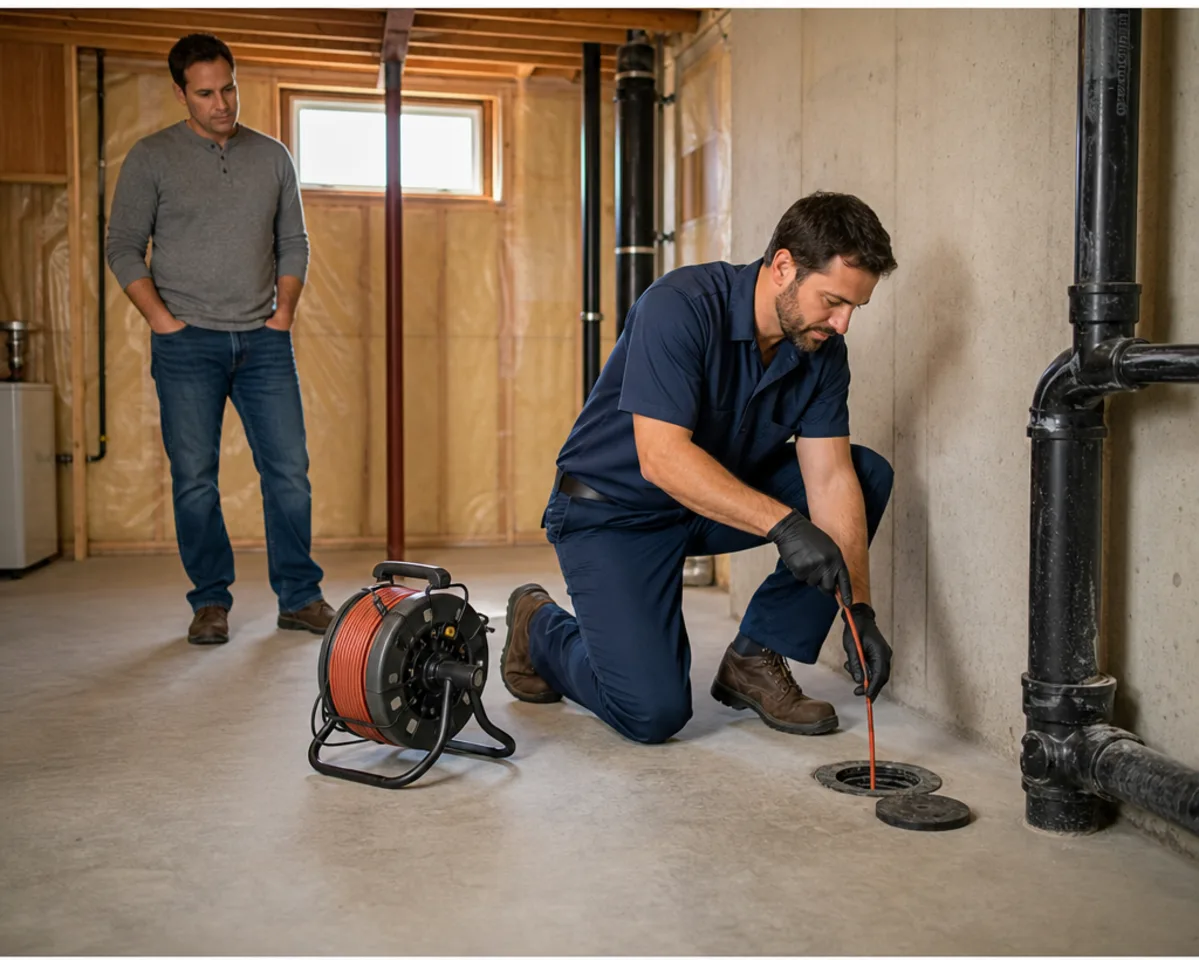
04 / From concern to plan
A sensible installation sequence
A proposal should say what the work includes, not just name a device. For an existing house, installation may require opening a finished floor, exposing and assessing the building drain, fitting the selected assembly, testing it, arranging the required inspection, and restoring the affected area. Ask who is responsible for each stage, whether restoration is included, and how access to the valve will be preserved. The scope and cost factors depend on the actual site rather than a universal price.
- 01
Trace the water path
Record where and when water appeared. Separate possible sanitary backup from rainwater at a wall, a sump issue or a plumbing leak. If there has been sewage, prioritize safe cleanup and professional assessment.
- 02
Map the plumbing
Have the drain, branches, fixtures, existing protective devices and available access reviewed. A camera inspection or other investigation may be suggested where pipe condition or layout is uncertain.
- 03
Agree on a buildable plan
Discuss valve type and location, what it will and will not protect, permit and inspection responsibilities, floor opening, testing, access and restoration before authorizing work.
- 04
Keep access and records
After installation, retain device instructions, permit and inspection documents, photographs and invoices. Leave the cover reachable and understand the no-drain-use rule during closure.
For the practical sequence of floor opening, fitting and inspection, read the installation guide. If you are comparing service areas, the Ottawa areas directory offers locally framed starting points without replacing a property assessment.
05 / Ottawa-specific checks
Confirm the rules before the floor is opened.
Municipal guidance and program terms can change. These are direct City of Ottawa references, not a promise of approval or reimbursement.
Permits and inspection
The City's backwater-valve permit page describes applications, plans and required inspections, including accessible placement for sanitary valves. It also states that new single, semi-detached, row-house and townhome dwelling units in Ottawa require sanitary-service backwater valves. That new-construction rule does not mean every older home already has one or that an existing-home retrofit follows an identical plan. Confirm the permit and inspection requirements for the proposed work with the City and the person doing the installation before it starts.
Possible rebate, not a guaranteed discount
Ottawa's Residential Protective Plumbing Program describes assistance for qualified property owners installing eligible protective plumbing. Its published criteria include property and device conditions, building-permit and inspection documentation, a paid itemized invoice and an application timeframe. The City says rebates do not cover maintenance, repair or replacement of existing protective devices. Read the current terms in full and confirm eligibility directly with the City; do not subtract an assumed rebate from a quote. Our rebate guide explains what to prepare, but the City makes the eligibility decision.
06 / Know the boundary
What it does not keep out
A sanitary backwater valve controls a sanitary-drain path at its installation point. It does not seal the building envelope. Groundwater can move through soil and find a foundation crack or a floor-wall joint. Surface water can collect beside the house when grading, downspouts, window wells or blocked exterior drains direct it there. A burst supply pipe or a leaking appliance creates water inside the home, upstream of any sewer protection. Those situations need their own investigation and remedy.
Sump pits and pumps address water collected by a foundation drainage arrangement; they are not simply another name for a sanitary backwater valve. Storm and sanitary backwater valves serve different connections, and the City describes both kinds in its protective-plumbing program. In older or altered houses, do not infer the connection from the location of a cover alone. A diagnosis may involve checking foundation drainage, pump operation, surface grading, the sewer line, or several systems together. No single device makes a basement flood-proof.
Do not confuse the water paths
Sanitary backup
Wastewater reverses through a connected drain. A correctly planned sanitary valve can help limit this path.
Groundwater / seepage
Water enters through soil and foundation openings. Drainage and waterproofing questions are separate.
Rain at the surface
Water enters through a window, door, grading low point or exterior opening. A drain-line valve cannot close those openings.
Sump or plumbing failure
A stopped pump, leaking supply pipe or appliance needs diagnosis and repair of that system.
07 / Living with the device
Access is part of protection.
The moving part can only do its job if it can move freely. Debris, grease, wipes or damage can interfere with a seal or keep a flap from returning to its normal position. Keep the access cover reachable and record where it is; covering it permanently with flooring, cabinetry or storage makes future inspection harder. Follow the particular device's instructions for inspection and cleaning, and ask a qualified plumber for a maintenance interval suited to the installed assembly and conditions. The maintenance guide goes into the questions to ask.
Everyday drain habits matter too. The City advises against flushing products marketed as “flushable” wipes because they do not break down like toilet paper and can contribute to sewer trouble. If you repeatedly notice slow drains, odours, gurgling or water returning at a fixture, seek diagnosis rather than treating a valve cleaning as a complete answer. A blocked private drain and municipal sewer surcharge are different problems that can produce confusingly similar symptoms.
Common planning mistakes
Questions worth asking before you approve work
- Assuming every wet basement is a sewer backup.Ask what evidence points to sanitary reverse flow rather than seepage, runoff or a leak.
- Choosing a position from a generic diagram.Ask which branches are protected, which are not and why the proposed location is accessible.
- Forgetting the closed-valve period.Make sure people in the home know to stop using connected drains during a surcharge.
- Treating a rebate as money already received.Verify current City rules and preserve permit, inspection and payment documents.
- Burying the inspection point.Agree on the finished access detail before floor restoration begins.
08 / Quick answers
Frequently asked questions
These answers explain the general mechanism. They cannot confirm the layout or condition of an individual house.
Does a backwater valve stop every kind of basement flood?
No. A sanitary backwater valve addresses reverse flow through the sanitary drain where it is correctly installed. Water entering through a foundation crack, window well, floor-wall joint, plumbing leak or surface opening follows another path. A sump pump and foundation drainage system also have different jobs. Identify the entry route before choosing a remedy.
Can I flush a toilet when the valve is closed?
Avoid using toilets, sinks, showers, laundry and other fixtures connected upstream of the closed valve. The home’s wastewater may have nowhere to go and could back up into a lower fixture inside the house. Wait until the sewer surcharge has passed and the valve can reopen normally; seek professional advice if you suspect it remains closed or blocked.
Will the flap close every time it rains?
Not necessarily. Rain alone does not tell you what pressure exists in the particular sewer serving your home. The valve responds to reverse flow or pressure at its location, not to a weather forecast. Some rain events may not affect the sanitary line at all, while a blockage or other sewer condition can matter at another time.
Where should a valve go in an existing house?
There is no universal spot. A qualified plumber needs to map the building drain, incoming branches and fixture elevations, confirm the sewer connection and select a location that protects the intended fixtures without leaving an unprotected branch. The assembly must remain accessible for inspection and cleaning. Floor opening and restoration may be part of the plan.
Do I need a permit in Ottawa?
Check the City of Ottawa’s current backwater-valve permit page with the person planning the work before construction starts. The City describes permit applications, plans and required inspections for backwater-valve work; the exact permit and inspection path depends on the proposed installation. Do not assume a contractor quote alone replaces City approval.
Is an Ottawa rebate automatic if I install one?
No. The City’s Residential Protective Plumbing Program offers financial assistance to qualified properties and lists eligibility conditions, eligible devices, documentation and deadlines. Confirm current terms directly with the City before work and budget as if a rebate has not been approved. Keep permit, inspection and paid itemized invoice records if you intend to apply.
Does a backwater valve need regular attention?
Yes. Its access cover should not be buried under a finished floor or permanent storage. Follow the installed device’s instructions and ask a qualified professional how often to inspect and clean it for your situation. Debris, grease or damaged moving parts can interfere with closure or reopening; maintenance is not a substitute for diagnosing an ongoing drainage problem.
What if water has already entered the basement?
Treat it as a safety and source-identification problem first, not a reason to immediately open the valve cover. Avoid contact with suspected sewage and do not handle electrical equipment in standing water. Document what you can safely observe, contact the appropriate emergency, utility, insurer or qualified plumbing help, and have the water entry path assessed before planning a permanent measure.
A useful next step
Describe the problem before choosing the hardware.
Share what you have observed, where water appeared and what you know about the drains. A site-specific conversation can clarify the questions an installation plan needs to answer.
Official references
- City of Ottawa: wastewater FAQs
- City of Ottawa: backwater-valve permits
- City of Ottawa: Residential Protective Plumbing Program
This is educational information for Ottawa homeowners, not a plumbing diagnosis, code opinion or eligibility decision. Check the linked City pages for current requirements before acting.