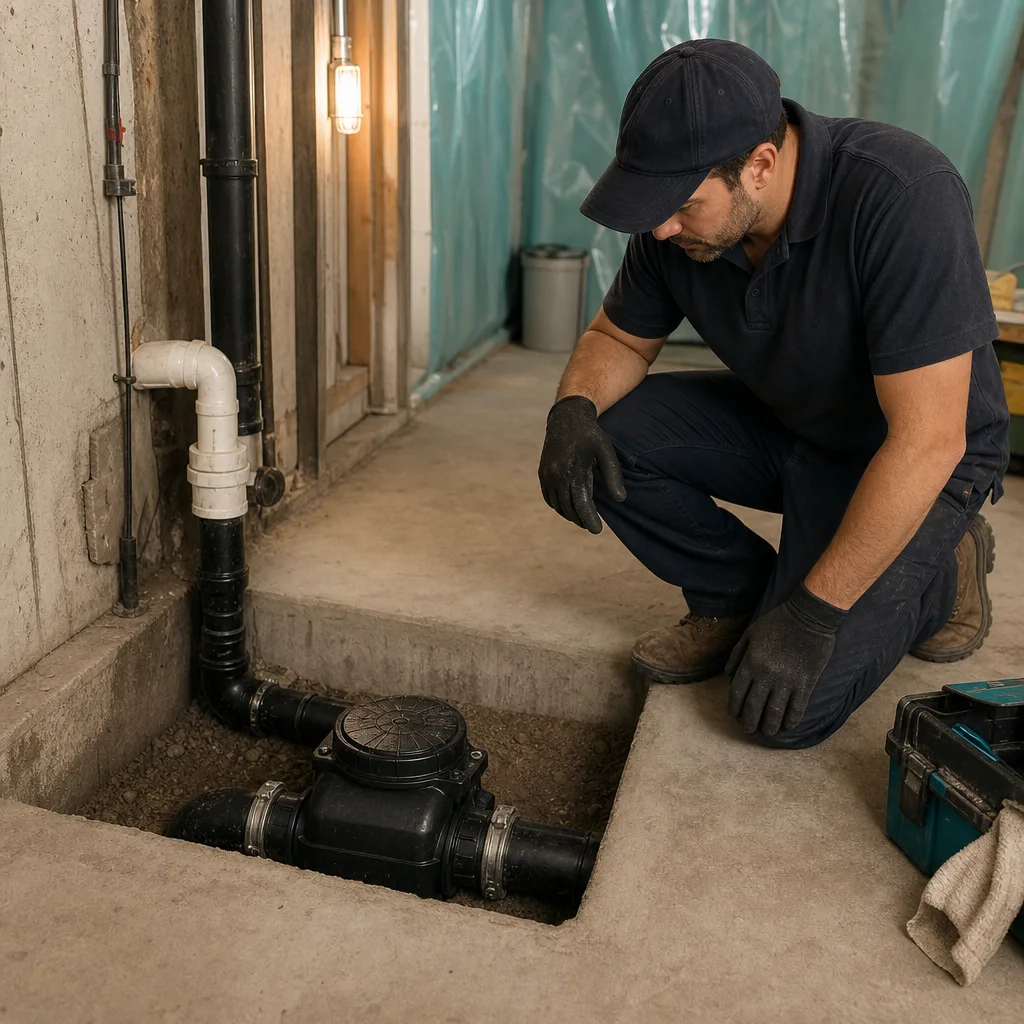
Bells Corners sits at a distinctive west-end crossroads, with established residential pockets, townhouse and apartment properties, commercial frontage along Robertson Road and the Greenbelt nearby. Those visible features help homeowners frame access and lot-drainage questions, but they do not reveal a private building drain. Even neighbouring homes can differ after additions, basement bathrooms, service replacement or other renovations.
A backwater valve is designed to permit outward drainage and close against reverse flow. It can be one useful layer against a sewer-backup pathway; it cannot stop groundwater, runoff, window-well entry, a supply leak, an obstructed private sewer or every possible flooding event. Good Bells Corners planning therefore links evidence, professional design, City review, realistic restoration and ongoing access instead of treating the device as a universal cure.
Turn Bells Corners context into property questions
The mix of established homes and commercial or multi-residential properties makes property type the first decision point. Confirm whether the dwelling is freehold, condominium or rental, and whether below-slab pipes and exterior services are private or shared. Corporation or landlord authorization may be needed before investigation becomes invasive. A municipal address in Bells Corners does not by itself establish ownership of a pipe.
For a freehold house, collect renovation permits, plumbing invoices, fixture locations and any service records. Note additions and finished areas that could conceal the original drain route. Ask a qualified plumber to reconcile records with conditions rather than assuming a model of house has an unchanged layout.
Distinguish backup evidence from other basement water
Record where water first appeared, whether it contained waste, which drains or fixtures changed, and what was happening outdoors. Wastewater rising at a low fixture is materially different from clear seepage at a wall or water entering a window well. Do not enter contaminated water or an area with electrical hazards merely to investigate.
Slow drainage can result from a local branch or private service obstruction. A valve is not a repair for a damaged or blocked line. If an incident occurred, contact a plumber and insurer promptly; preserve safe photographs and remediation records. A careful diagnosis may produce more than one recommendation because sewer backup and surface or foundation water can occur during the same storm.
Use camera evidence to plan, not to oversell certainty
Camera and locating work can help identify drain direction, visible material, branches and an accessible valve location. Ask to see footage and have the plumber explain which fixtures would be upstream. In a finished lower level, locating before opening concrete can reduce guesswork and help define flooring removal and dust protection.
The camera sees only what is visible from accessible piping. Water, debris, bends and deposits may obscure defects, and footage does not certify every joint or the municipal system. The report should identify limitations and recommend cleaning, repair or additional investigation where needed. Do not proceed with a valve solely because a camera entered the line.
Assess exterior water without making Greenbelt assumptions
The nearby Greenbelt is a defining part of Bells Corners geography, but proximity to open land does not prove groundwater level, sewer type or flood exposure at a house. During safe weather, inspect downspout outlets, grading, driveway depressions, window wells and landscaping near the foundation. Compare current conditions with approved site plans where additions or hard surfaces changed drainage.
A sanitary valve does not redirect roof water or seal foundation cracks. Where a sump exists, assess it as a separate system, including safe discharge and backup power considerations. Match each measure to evidence: reverse sanitary flow, collected groundwater and surface runoff are different pathways requiring different responses.
Related reading
Require a permitted, serviceable design
Ottawa’s protective-plumbing FAQ says a building permit is required for protective plumbing devices. Confirm the current process with the Building Code Client Service Centre or 3-1-1 before construction. The quote should assign application, review-response and inspection-booking responsibilities and state when concrete and piping must remain visible.
The selected location must protect the intended fixtures without inappropriate bypasses and must remain accessible after flooring is restored. Device selection and drainage alteration belong to a qualified professional under applicable requirements. This guide deliberately provides no drain-cutting steps: below-slab excavation, sewage and hidden services create hazards, and an incorrect installation can impair drainage.
Related reading
Verify Ottawa rebate eligibility before ordering work
The City’s Residential Protective Plumbing Program publishes conditions and maximum rebate amounts for eligible measures. Its page currently differentiates sanitary, indoor storm and outdoor storm backwater valves and applies construction-date and other criteria. The City reimburses according to program rules, not simply because a property is in an established neighbourhood.
Ask the City about the current application sequence, property-type treatment and required proof before committing funds. Retain estimates, authorization, permits, inspection results, paid itemized invoices, model information and photographs. Program terms and funding can change; neither an installer nor an article can guarantee eligibility, the maximum amount or approval.
Related reading
Price the opening, installation and restoration honestly
A complete proposal identifies investigation, valve model, exact location, permit, inspection, concrete opening, pipe work, testing, cleanup, access cover and restoration boundary. Ask who removes and replaces flooring, trim or cabinetry and whether hazardous-material assessment is outside scope. Comparable totals matter more than an isolated valve price.
Require a written process for unforeseen pipe material, branch arrangement or damage. Ask how occupants will manage temporary drain shutdown and how the work area will be separated from living space. The final access should be practical to open, not merely technically present beneath furniture or a difficult flooring detail.
- Obtain a sketch of protected fixtures and known bypasses.
- Confirm model approval, warranty and maintenance information.
- Separate plumbing inspection from decorative completion.
- Reject promises of complete flood prevention.
Related reading
Plan what the household does when the valve closes
A closed sanitary backwater valve also prevents household wastewater from leaving normally. During a suspected sewer surcharge, stop flushing, showering, laundering and running dishwashers or taps that discharge to the protected drain. Otherwise wastewater can build behind the device and overflow at the lowest fixture.
Post concise instructions near the access point and keep plumber, insurer and City contact information available. Keep occupants away from sewage, and do not operate electrical equipment in wet areas. A valve reduces one hazard only when occupants understand its operating consequence.
Protect access and keep a Bells Corners service record
Follow the manufacturer’s instructions and plumber’s advice for inspection and cleaning. Service typically confirms unobstructed movement and removes appropriate debris, but model and site conditions determine the safe method and interval. Arrange inspection after a backup, unusual drainage or work on the building drain.
Keep the cover clear of permanent flooring and storage. Save the permit, inspection outcome, invoice, photos, manual and maintenance entries with house records. Ask the insurer separately about sewer-backup coverage, deductibles and documentation; a City permit or rebate never guarantees insurance approval or a claim result.
Related reading
Use a Bells Corners pre-contract question set
Ask every contractor the same core questions: What evidence identifies reverse flow as the concern? Which fixtures are protected? What visible condition supports the chosen location? What could bypass it? Who obtains the permit and attends inspection? What floor area is disturbed, and what is restored? Consistent questions expose differences that a simple price comparison misses.
Request answers in writing or add them to the scope. Distinguish confirmed observations from assumptions that can only be resolved after opening the floor. If unforeseen work is possible, require a method for photographs, explanation, pricing and owner authorization before it proceeds. This protects both parties and preserves a useful record.
Check practical scheduling as well. Confirm temporary plumbing shutdown, material staging, parking, debris removal, dust control and safe separation from children or pets. If the home is attached or managed, include required notices and working-hour rules. Good logistics do not prove the plumbing design, but they prevent avoidable disruption around a sound design.
Commission the valve before closing the project file
At handover, ask the installer to identify the access cover, demonstrate the permitted inspection points without encouraging unsafe handling, and explain normal versus abnormal operation. Receive the model literature, warranty information and final invoice. Confirm that required City inspection is complete before decorative work hides the installation area.
Update the basement plan with the valve location and protected fixtures. Give operating instructions to every resident, including the need to stop water use during closure. If a tenant or future buyer will occupy the property, leave durable instructions rather than relying on verbal transfer.
Review the wider flood plan after installation. Downspouts, grading, window wells, pump equipment and insurance still require attention because the valve addresses only reverse drain flow. Schedule model-appropriate maintenance and use any later incident as a reason to reassess all pathways, not as proof that a single device succeeded or failed.
Understand private-line responsibility and service decisions
The City’s homeowner-responsibility information distinguishes public infrastructure from portions serving private property. Ask the City and plumber to identify the relevant boundary for the specific concern rather than assuming every underground problem is municipal. Responsibility can affect who investigates, who authorizes work and whether a valve project should pause for service repair.
If camera evidence shows a concern beyond the planned floor opening, obtain a written description and locate it as accurately as practical. Ask what is urgent, what remains uncertain and whether another authority or specialist should review it. Avoid accepting a repair recommendation based only on house age or neighbourhood anecdotes.
For owners comparing repair and protection budgets, require separate prices and objectives. Restoring reliable drainage and reducing reverse-flow risk are related but not interchangeable outcomes. A valve installed in a poorly functioning line may add maintenance difficulty without resolving the original complaint.
Keep 3-1-1 information, private-plumber findings and insurer communications in the same project file. If responsibility is disputed or unclear, resolve it before destructive work. Clear documentation is especially valuable when the route crosses a shared driveway, condominium element or another area with multiple interests.
Bells Corners backwater valve FAQ
Does living near the Greenbelt mean my Bells Corners basement needs a valve?
No. Geography alone does not establish a sewer-backup pathway or groundwater condition. Investigate the property’s drainage, incident evidence and exterior water routes before selecting measures.
Can neighbours’ valve choices determine mine?
No. Renovations, branch layouts, fixture elevations and service condition can differ between similar homes. A neighbour’s experience can suggest questions, not replace inspection and permit review.
Will a valve fix a blocked private sewer?
No. An obstruction or damaged service needs its own diagnosis and repair. Installing a valve without addressing poor drainage can leave the underlying problem and complicate operation.
Do Ottawa permit rules apply in Bells Corners?
Yes, Bells Corners is within Ottawa. The City FAQ states protective-plumbing devices require a building permit. Confirm current documents, fees and inspection stages directly with the City.
Is the City rebate automatic for an older house?
No. Ottawa applies current eligibility, property, work and documentation rules. Obtain required approval before work and do not treat the listed maximum as a guaranteed payment.
What plumbing can we use if the valve is closed?
Avoid all fixtures discharging through the protected drain until conditions clear and professional advice says use is safe. Household wastewater can otherwise overflow inside.
How should a finished floor handle valve access?
Use a durable, readily removable access treatment sized for service. Confirm clearance with the installer before selecting flooring, and never conceal the cover beneath fixed cabinetry.
Sources and official references
- City of Ottawa — Residential Protective Plumbing Program
- City of Ottawa — protective-plumbing FAQ
- City of Ottawa — service-line failure risk
- National Capital Commission — Greenbelt
Programs, permits and bylaws change. Confirm current requirements with the City of Ottawa before acting.
Questions about your Bells Corners home?
Ask a local plumber, without pressure.
Requests are sent to Lister Plumbing, who serve homes across all Ottawa areas listed here. A request is not a commitment, and no price is promised before someone looks at your plumbing.