
In this guide10 sections
- 01Access is part of the system
- 02Know what a cleanout is for
- 03Find and record known access points
- 04Plan finishes around future service
- 05Do not test or operate an unknown valve
- 06Understand inspection and maintenance needs
- 07Ask how household drainage is affected
- 08Questions before installation or alteration
- 09Prepare records for a future owner
- 10Keep the area serviceable over time
- ↗Official references
Before you begin
Why a reachable access point matters for inspection, maintenance and future home ownership.
Access is part of the system
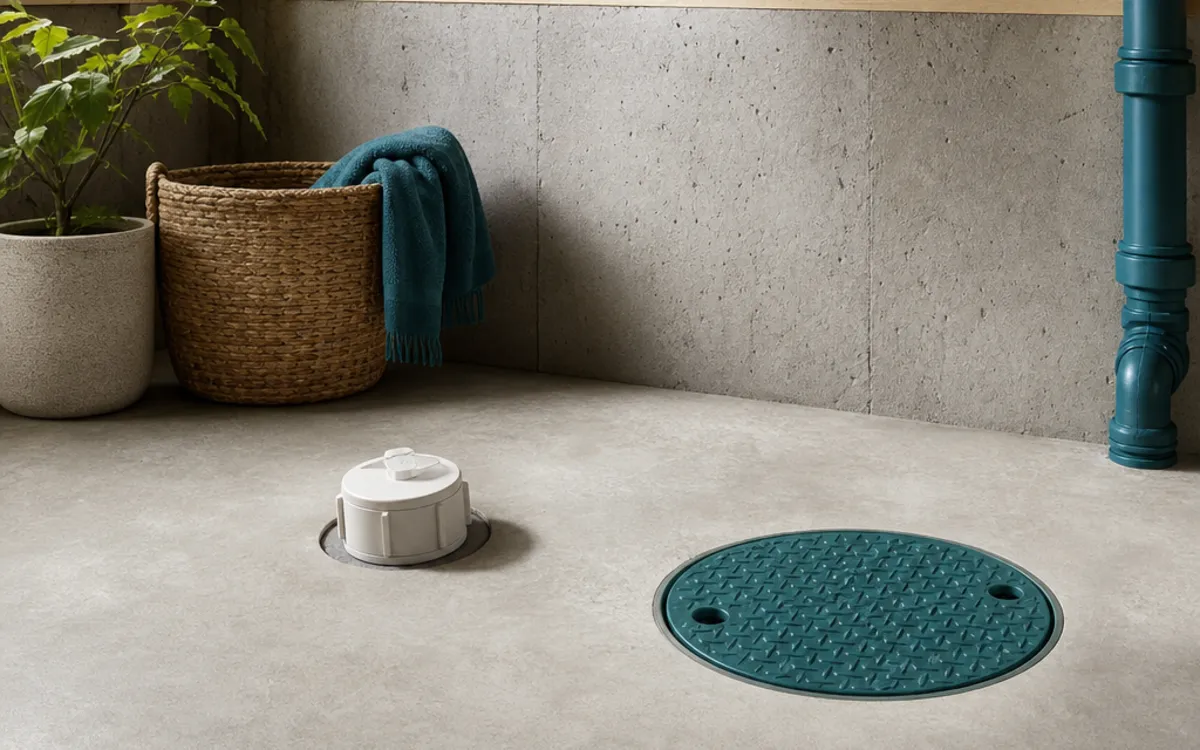
A backwater valve is difficult to inspect, clean or service if its access is buried under permanent finishes, fixed cabinetry or heavy storage. A cleanout may provide access to a pipe without being the valve itself, so covers and openings should not be treated as interchangeable. The exact arrangement depends on the installation and property. Locate only points that are already known and safe to approach; an unfamiliar cover could serve another system or be damaged. Accessibility helps a qualified person perform future work and can reduce avoidable disruption, but it does not prove the device is correctly installed or functioning. Keep the surrounding area sufficiently clear for the intended service access.
Access should remain usable after household changes, not just immediately after installation. Consider doors, shelving and floor coverings that could make a known service point difficult to reach later. Check whether a technician can approach the opening and safely remove its cover without shifting built-ins. If the intended work area is unclear, ask the installer to explain the access envelope before storage or finishing decisions are made.
Points to carry forward
- Keep confirmed valve and cleanout access clear.
- Do not assume every plumbing cover is a valve.
- Ask a qualified professional to identify uncertain components.
Know what a cleanout is for
A cleanout is an opening that provides access to a section of drain piping for inspection or maintenance. Its presence does not establish that a backwater valve is nearby, and a valve access point may have its own cover or configuration. Pipe direction, connection and function should be verified from reliable plans or by qualified assessment, not guessed from a lid’s shape or location. Opening a cleanout can expose a person to wastewater, odours or unexpected flow and may require appropriate tools and procedures. Do not remove an unknown, stuck or damaged cover as a routine homeowner check. If you need service, describe the location and condition and let the professional determine the appropriate access point.
Even a familiar-looking cap can serve a different line than expected, particularly after renovations. Share the location and history with the person assessing it rather than attempting to identify the route by trial and error.
Points to carry forward
- Treat cleanouts as pipe access, not proof of a valve.
- Do not open an unknown or damaged cover.
- Have uncertain locations identified by a qualified professional.
Find and record known access points
Use reliable renovation records, installation documents or a professional’s explanation to locate known access. Record the room, approximate position, visible cover description and what the source says it serves. A labelled sketch or photograph can be helpful, especially where flooring or storage makes the point hard to recognize. Mark uncertain information explicitly instead of naming a component based on appearance. If the location is hidden behind finishes, ask the installer or an appropriately qualified person how it can be made serviceable without compromising the installation. Keep a copy with plumbing records and make it available before future renovation work. This record supports access planning; it is not a verified as-built drawing unless prepared and confirmed as one.
Include measurements only when they are known and clearly state what they measure. A simple room reference can be more useful than a precise-looking but unverified location on an old drawing. Photograph the cover in relation to fixed room features and preserve the image date. When the label or cover changes, update the record so a future person is not sent to an outdated location.
Points to carry forward
- Record the location and source of information about each access.
- Label unknown details as uncertain rather than guessing.
- Share records before flooring, cabinetry or basement renovations.
Plan finishes around future service
Basement finishing can conceal plumbing access beneath flooring, built-ins or wall panels. Before work begins, identify known service points and discuss how they will remain reachable and protected. A removable panel or other access detail may be suitable in some locations, but its design must fit the actual component, building conditions and applicable requirements. Do not cut a floor, install a generic hatch or cover a pipe based only on an illustration. Coordinate between the renovation contractor and the plumbing professional so the finished assembly does not block inspection or create an unsafe opening. Photograph the area before it is closed and update the home record when the work is complete.
Make access part of the finish plan before materials are ordered, since retrofitting a panel can affect appearance and require rework. Ask who will verify the access remains adequate at completion. Discuss whether a rug, appliance or door swing could obstruct the location in ordinary use. Keep the access detail visible to the household and ensure any removable element can be identified without disturbing adjacent plumbing.
Points to carry forward
- Identify known access before installing permanent finishes.
- Agree on an appropriate access solution with qualified trades.
- Photograph and document the final, confirmed location.
Do not test or operate an unknown valve
Opening a cover, reaching into a valve body or moving a flap may expose a person to wastewater and could damage a component or disturb its operation. A visual appearance alone may not show whether a device is installed in the intended direction, whether it is clean or whether it protects the relevant fixtures. Do not force a stuck cover, put hands into a pipe or use household fixtures to test a suspected valve during a backup. Follow the equipment-specific instructions supplied by the installer and arrange qualified service when instructions are missing. If water or sewage is present, prioritize safety and appropriate response over equipment troubleshooting.
If a suspected valve is inaccessible or appears damaged, report the condition without attempting an improvised repair. Share whether an active backup or other symptom is occurring so the professional can plan a safe response.
Points to carry forward
- Do not reach into piping or force a stuck cover.
- Use only the instructions for the identified device.
- Seek qualified help for suspected malfunction or sewage exposure.
Understand inspection and maintenance needs
A valve’s inspection and maintenance needs depend on its model, installation and use. Ask the installer what should be checked, by whom, how often according to the applicable instructions, and what signs should prompt service. Keep any manufacturer documentation and service notes with the property records. A cleanout may help a professional access piping, but it does not itself establish that the valve is clean or operating. Access can also matter if the device needs repair or replacement. Do not substitute a generic schedule or online procedure for the specific product guidance. A maintenance record demonstrates what was reported or performed; it is not a guarantee of performance under every sewer condition.
Ask whether household use, debris or changes elsewhere in the plumbing affect inspection needs. If instructions are missing, request the model and the appropriate documentation from the installer rather than guessing at a procedure. Clarify whether the service provider will leave a written account of findings and any work performed. Distinguish an inspection observation from a repair, and record any follow-up recommended without assuming it has already been completed.
Points to carry forward
- Obtain device-specific instructions and keep them accessible.
- Record who inspected or serviced the component and when.
- Ask which signs require prompt professional attention.
Ask how household drainage is affected
A backwater valve is intended to limit reverse flow in a connected sanitary line under relevant conditions. Depending on the device and circumstances, when the valve closes it may also restrict normal discharge from fixtures connected on the protected side. Ask a qualified professional which fixtures and branches are connected, what household activities to avoid during a closure and how occupants will know that a problem is occurring. Do not assume that a valve protects every drain or that every plumbing fixture is connected through it. The device does not address foundation seepage, roof runoff, stormwater entering through openings or sump failure. A clear explanation of scope helps occupants use the system safely and understand its limits.
Share the operating guidance with everyone who may use connected fixtures, including guests or future occupants when appropriate. Clear instructions can prevent normal discharge from being mistaken for an unrelated equipment failure.
Points to carry forward
- Ask which fixtures and branches are protected.
- Discuss household use if the valve closes.
- Keep other water pathways separate from sanitary protection.
Questions before installation or alteration
Before approving work, ask what evidence supports the proposed valve location and how the professional determined which sanitary line it serves. Clarify what access will remain after construction, what disruption is expected, what the estimate includes and how the finished location will be documented. Ask who is responsible for confirming any applicable permit or inspection requirements and what paperwork you should retain. Ottawa’s official backwater-valve and wastewater pages offer municipal context, but requirements depend on the specific project and can change. Do not rely on a general claim that a particular design, grant or approval applies to every property. Request the answer in a form you can keep with the final project record.
Clarify how any existing finishes or utilities will be protected and who will restore areas opened for access. Compare proposals by scope and documented assumptions, not by a device label alone.
Points to carry forward
- Ask what line and fixtures the proposed valve would serve.
- Confirm access, restoration, permits and documentation in writing.
- Check current City requirements for the exact project.
Prepare records for a future owner
Future occupants and service professionals need to know where access is, what the identified component serves and which instructions apply. Store a simple location sketch, dated photographs, professional reports, permit or inspection documents where applicable, and maintenance records with other plumbing information. Attribute each conclusion to its source and keep uncertainties visible. A contractor’s note, City record and homeowner diagram can cover different details, so do not merge them into an unsupported certainty. Explain access locations during a sale or renovation handoff as appropriate, while avoiding claims that the system prevents all basement water. Good records reduce guesswork and can help prevent a finish project from accidentally concealing an important service point.
Include the contact information for the installer or service provider if available, while distinguishing it from an endorsement or guarantee. Store digital copies where a future owner can locate them with other property documents.
Points to carry forward
- Store sketches, photographs and verified service records together.
- Identify the source and limits of each record.
- Explain access points during future renovation planning.
Keep the area serviceable over time
After work is complete, keep the access area free of permanent obstructions and store heavy items elsewhere. Check periodically that labels remain legible, the cover is not visibly damaged and the location still matches the property record; do not open the device to make this check. If new flooring, storage or cabinetry is planned, revisit access before installation. If a cover becomes loose, inaccessible or damaged, ask a qualified professional how it should be handled. Access supports inspection and maintenance, but it does not certify the sanitary system or prevent unrelated foundation and stormwater problems. Treat it as one small but important part of an overall, documented drainage plan.
Recheck the area after renovations, moves or seasonal storage changes so that service access is not gradually blocked. Note any cover changes in the property record and arrange repair if its condition is uncertain.
Points to carry forward
- Keep confirmed access visible and free from heavy storage.
- Check labels and records without opening unknown equipment.
- Revisit access before any renovation or finish changes.
Further reading
Official references
Rules and program details can change. Check the current source before making a decision about work on your home.
Continue reading
The next useful question.
When the question is about your home
An on-site conversation can clarify what a general guide cannot.