
In this guide10 sections
- 01One layer, not a promise
- 02What the valve can address
- 03What it cannot prevent
- 04Gather useful observations safely
- 05Build a broader basement-water checklist
- 06Consider installation fit and access
- 07Understand the role of sump and foundation systems
- 08Maintain equipment and preserve records
- 09Check Ottawa program and permit information
- 10Ask for an explanation, not an absolute guarantee
- ↗Official references
Before you begin
A careful answer: it may address one sanitary backflow pathway, but basement flooding has several possible causes.
One layer, not a promise
A backwater valve may help limit reverse flow from a sanitary sewer when the valve is suitable for the home's plumbing, properly installed and maintained. That is a specific function, not a promise that a basement cannot flood. Water can enter through foundation seepage, a plumbing leak, surface runoff, roof drainage, a sump-system problem or another pathway. A valve does not pump water, seal a foundation or correct grading.
The word flooding can describe very different events, so a useful first response is to identify what was observed rather than reaching immediately for a product. Record the location, timing, appearance and any relevant weather or plumbing conditions, while recognizing those notes do not prove a cause. If water may be contaminated or there is an electrical hazard, avoid contact and seek appropriate help. A qualified assessment is needed to distinguish a sanitary backup from other sources and determine what, if any, action is suitable.
Points to carry forward
- Treat “flooding” as a prompt to identify the water source.
- Do not read a device description as a flood guarantee.
- Keep away from possibly contaminated water and wet electrical equipment.
What the valve can address
In a sanitary drainage system, wastewater normally flows away from the house. A backwater valve is installed in an appropriate part of that drainage path so its moving component can restrict reverse flow toward the building in certain conditions. Whether it protects particular fixtures or branches depends on the actual layout and installation. The existence of a cover or a valve in one location does not establish that every basement fixture is protected.
A valve is a mechanical device with access and maintenance needs. Its condition, installation and relationship to the home's plumbing matter, and a general guide cannot verify those facts. Ask a qualified plumber to explain what is present, which fixtures are connected, what limitations apply and how service is performed. If the valve closes, it may also restrict wastewater leaving the home. Occupants should understand what that means for use of plumbing until the condition is resolved. The intended benefit is specific to sanitary reverse flow, not general water exclusion.
Points to carry forward
- Confirm which fixtures the actual installation serves.
- Ask how access, inspection and service are handled.
- Understand that closure may also restrict the home's drainage.
What it cannot prevent
A sanitary valve does not stop groundwater from moving through a foundation wall or floor. It does not empty a sump basin, repair a failed pump, keep roof runoff away from the house, correct a low area in the yard, prevent a burst supply pipe or seal cracks. It also cannot guarantee protection in every sewer condition. Even where sanitary backflow is a concern, the home's plumbing configuration and the device's condition affect what the installation can do.
This distinction matters when people describe water appearing near a floor drain or along a wall. Proximity alone does not identify the source. Water may travel before it becomes visible, and several pathways can occur during the same weather event. Do not draw conclusions from smell, colour or timing alone, especially where contamination is possible. A professional can assess the plumbing and other relevant systems and explain what the evidence supports. The practical question is not whether a device is generally good, but whether it addresses the actual pathway and what remains outside its function.
Points to carry forward
- Keep foundation seepage, sump failure and sanitary flow distinct.
- Do not diagnose a source from location or appearance alone.
- Ask explicitly what risks remain after proposed work.
Gather useful observations safely
If water has appeared, document what can be observed from a safe, dry location. Note the room and point of entry, approximate time, whether the water appeared at a fixture or along a surface, and what household systems were running. Record weather or known plumbing events if relevant. Photos can help show the location and extent, but never enter a dangerous area or delay urgent action to obtain them. Keep records factual: “water at the floor drain” is more useful than an unverified conclusion about sewer failure.
Do not touch electrical outlets, appliances, pump wiring or a suspected sewage mixture in a wet area. Keep children and pets away. If there is active contamination, structural concern or immediate danger, contact appropriate emergency or professional services. Once it is safe, preserve relevant receipts and dates and ask a qualified person what further inspection is needed. These observations support an assessment; they do not replace testing or prove which system caused the event.
Points to carry forward
- Note location, timing and conditions without assigning a cause.
- Take photos only when safe and from a dry, secure position.
- Keep people and pets away from suspect contaminated water.
Build a broader basement-water checklist
A sensible review separates systems rather than treating every control as one flood package. On the sanitary side, locate the building drain, cleanouts and any valve access, and ask which fixtures are connected. For foundation water, identify a sump basin and pump, if present, and understand its discharge route. Separately look at visible downspouts, surface grading and locations where water has been observed. Do not alter drainage routes or equipment based on a generic checklist; local conditions and rules matter.
Include home records, maintenance instructions, household contacts and insurance questions. An assessment can prioritize which issues merit professional attention and which are simply unknown. A sump pump is not a substitute for a sanitary backflow measure, and a backwater valve does not manage groundwater. The checklist helps organize the questions, not diagnose the property or guarantee outcomes. If the home has had repeated water entry or a recent change in plumbing, make that history available to the relevant professional.
Points to carry forward
- Review sanitary, sump, surface-water and roof-runoff items separately.
- Map access points and mark unverified information clearly.
- Use qualified assessment to set priorities for the specific home.
Consider installation fit and access
A recommendation for a valve should be based on the building's sanitary piping, not solely on the fact that the home has a basement or experienced water. Ask where the proposed device would be installed, which branches it would serve, what excavation or finish removal may be involved and how future inspection will take place. Existing access, pipe condition and the way fixtures connect can affect the proposal. A professional should explain these factors in terms the homeowner can understand.
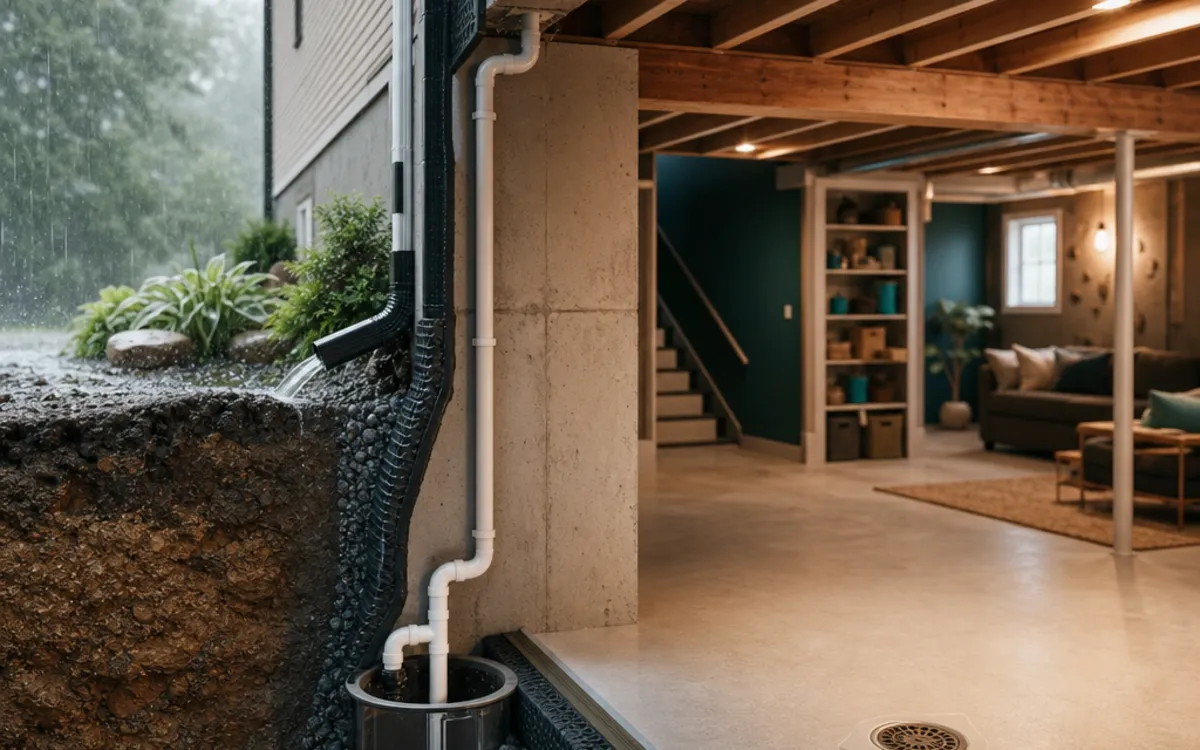
The access cover should remain locatable and serviceable after flooring, storage or renovation work. Ask what maintenance is expected and who is responsible for explaining the installed assembly. Do not assume that a valve can be added without changes to other parts of the system, and do not rely on a rendered image as an installation detail. Any construction plan should identify permit and inspection questions for the actual scope. The purpose of asking is to check suitability and limitations, not to expect a device to guarantee a dry basement.
Points to carry forward
- Ask how the home's drain layout informs location and coverage.
- Include long-term access and service in the installation plan.
- Confirm permit and inspection responsibilities for the proposed work.
Understand the role of sump and foundation systems
Where groundwater or foundation drainage is suspected, a sump pump may be part of the home's water-management arrangement. The basin, pump, controls, power source and discharge destination all need to be considered together. A pump can only move water that reaches the basin and may depend on electricity or working controls. A backup device can have value in some circumstances, but compatibility and upkeep matter. A general article cannot establish the right capacity or configuration for a particular property.
Ask a knowledgeable professional to explain how foundation drainage works at the home and what to do if water is appearing away from the basin. Do not direct sump discharge into a sanitary connection or onto a neighbour's property without confirming that the route is allowed and appropriate. Keep sump concerns separate from sanitary valve questions. This protects against the mistaken belief that installing one device handles every basement-water pathway. Depending on the evidence, more than one professional assessment may be appropriate.
Points to carry forward
- Assess basin, controls, power and discharge as one sump system.
- Ask what conditions the pump does not address.
- Confirm an appropriate discharge route before changing it.
Maintain equipment and preserve records
A device can only be understood and maintained when it remains accessible and its instructions are available. For a backwater valve, ask what inspection or cleaning is recommended for the installed model and when professional service is needed. For a sump pump, ask what checks are safe for the household, how alarms or backup arrangements work and what signs merit a service call. Do not use a one-size-fits-all maintenance interval where the manufacturer or installer has provided instructions for the actual equipment.
Keep model details, installation information, invoices, inspection records and service notes. Document changes to drains, sump equipment, discharge piping or finished floors because those changes can affect how a future professional interprets the system. Never force a valve, bypass a control or open equipment when water or electrical risk makes it unsafe. Maintenance records do not guarantee protection, but they help make future assessment more informed and reduce reliance on memory.
Points to carry forward
- Follow instructions for the actual valve and pump models.
- Keep access clear and document service or changes.
- Call a qualified provider rather than forcing unfamiliar components.
Check Ottawa program and permit information
For Ottawa properties, the City's current information is the starting point for permit questions about backwater-valve work and for any protective-plumbing program questions. Whether a permit or inspection applies depends on the work and current municipal rules; eligibility for a rebate or grant, if relevant, depends on the program's current terms and the property. A page that describes general requirements does not decide a particular homeowner's circumstances.
Check the official pages before scheduling work, and contact the City if a detail remains unclear. Keep the current program terms, correspondence, permit documents and inspection records with the home file. Do not assume a neighbour's approval or prior program participation establishes eligibility for another property. This guide is not a compliance, eligibility or engineering determination. It can help organize questions, but the City and qualified professionals are the appropriate sources for decisions within their responsibilities.
Points to carry forward
- Check current City permit and protective-plumbing program details.
- Confirm property-specific eligibility before relying on assistance.
- Save official responses and project records together.
Ask for an explanation, not an absolute guarantee
A useful recommendation explains the suspected water pathway, the observations or inspection that support it, the proposed action and what that action cannot address. Ask whether the work changes any household drainage, what access is needed, how maintenance will be handled and whether another assessment is warranted. If more than one cause is possible, ask how the options will be prioritized rather than being offered a single device as a complete answer.
Be cautious of claims that a backwater valve prevents all basement flooding or that a sump pump solves every sewer backup. No single measure controls all sources, and future conditions cannot be promised by a general guide. A written scope can distinguish included work, excluded items, permit responsibilities and follow-up steps. The best result is an informed decision based on the home's actual systems and a realistic understanding of risk—not certainty that no water event can occur.
Points to carry forward
- Ask what evidence supports the stated cause.
- Request clear limits, maintenance needs and excluded work.
- Treat any absolute flood-prevention promise with caution.
Further reading
Official references
Rules and program details can change. Check the current source before making a decision about work on your home.
Continue reading
The next useful question.
When the question is about your home
An on-site conversation can clarify what a general guide cannot.