
In this guide10 sections
- 01First: protect people, not belongings
- 02Stop sending water into the drain system
- 03Report basement flooding to the City
- 04When to contact a plumber or emergency drain service
- 05Protect yourself if cleanup is later considered
- 06Document the incident without putting yourself at risk
- 07Do not open a cleanout or attempt a pressured repair
- 08After the immediate event: identify the cause
- 09Prepare a household response plan before the next storm
- ↗Common questions
- ↗Official references
Before you begin
A safety-first response guide for Ottawa homeowners dealing with a possible sewer backup: what to stop using, when not to enter the basement, who to contact and what to document.
First: protect people, not belongings
If wastewater or flood water is entering a basement, treat it as potentially contaminated and possibly electrically hazardous. Do not enter the flooded area until a qualified professional has determined it is safe. If water is near outlets, cords, appliances, a furnace or a gas-fired water heater, keep away and use the utility contacts on the City of Ottawa's current flood-response page. Do not touch a breaker, pump, appliance, plug or submerged equipment from a wet area. If anyone is in immediate danger, contact emergency services.
A sewer backup can contain sewage and other contaminants. The City advises protective clothing for contact with flood water and warns of bacteria and viruses. That is not a reason to enter a flooded room just to retrieve possessions. Keep children and pets away, avoid tracking water into clean areas, and do not attempt to open a sewer cleanout cap. The City specifically says not to open cleanout caps and recommends leaving a clear area around them for City staff. Start with the official Ottawa basement flooding response instructions; this guide is secondary and does not replace real-time instructions.
Points to carry forward
- Do not enter a flooded area until a qualified professional says it is safe.
- Keep people and pets away from water that may contain sewage.
- Never open sewer cleanout caps during an incident.
Stop sending water into the drain system
The City advises avoiding fixtures and appliances that use water until the issue is resolved, because additional water sent down a drain may end up in the basement. That means do not flush toilets, run sinks, start a dishwasher or washing machine, or take actions that add wastewater while the backup is active. Ask the City or the responding qualified professional when normal use can resume. Do not rely on a neighbour's experience or a generic internet answer; the condition and affected system can differ from one property to another.
If you are unsure whether water is coming from a sanitary drain, a foundation, a sump or another route, do not perform repeated tests while water is present. Record what you already observed from a safe, dry place. A single source clue may be useful later, but it does not justify entering a hazardous area. Keep household members informed about which fixtures are not to be used, and post a simple notice if needed. If you share a building, contact property management so other occupants do not unknowingly add flow to the system. The priority is to prevent additional exposure while the cause and safety conditions are assessed.
Points to carry forward
- Pause fixtures and appliances that send water to drains.
- Do not test the source by running water during an active backup.
- Tell everyone in the household which plumbing to avoid.
Report basement flooding to the City
Ottawa's current basement-flooding instructions tell residents to call 3-1-1 to report a flood and note that someone 18 or older should be home to meet City staff if requesting City assistance. Follow the City's current instructions about access and timing. If the City asks you to make the sewer cleanout area available, keep it unobstructed but do not open the cap yourself. A municipal response can help assess the City's sewer system; a private interior or service-line problem may still need a plumbing assessment. Do not assume a City visit is a complete inspection of all private drains.
When you call, describe the address, where the water appeared, when it began, whether it is still rising, which fixtures were affected and any immediate safety concerns. Do not speculate about a cause as if it were confirmed. Ask for the incident or service reference, what the crew will check, and what you should do while waiting. City instructions and service availability can change, so consult the live basement flooding page instead of relying on a saved printout alone. For urgent medical, fire, electrical or gas danger, contact the appropriate emergency or utility service.
Points to carry forward
- Call 3-1-1 to report basement flooding as the City directs.
- Keep the cleanout area clear without opening it.
- Ask what the municipal visit will and will not assess.
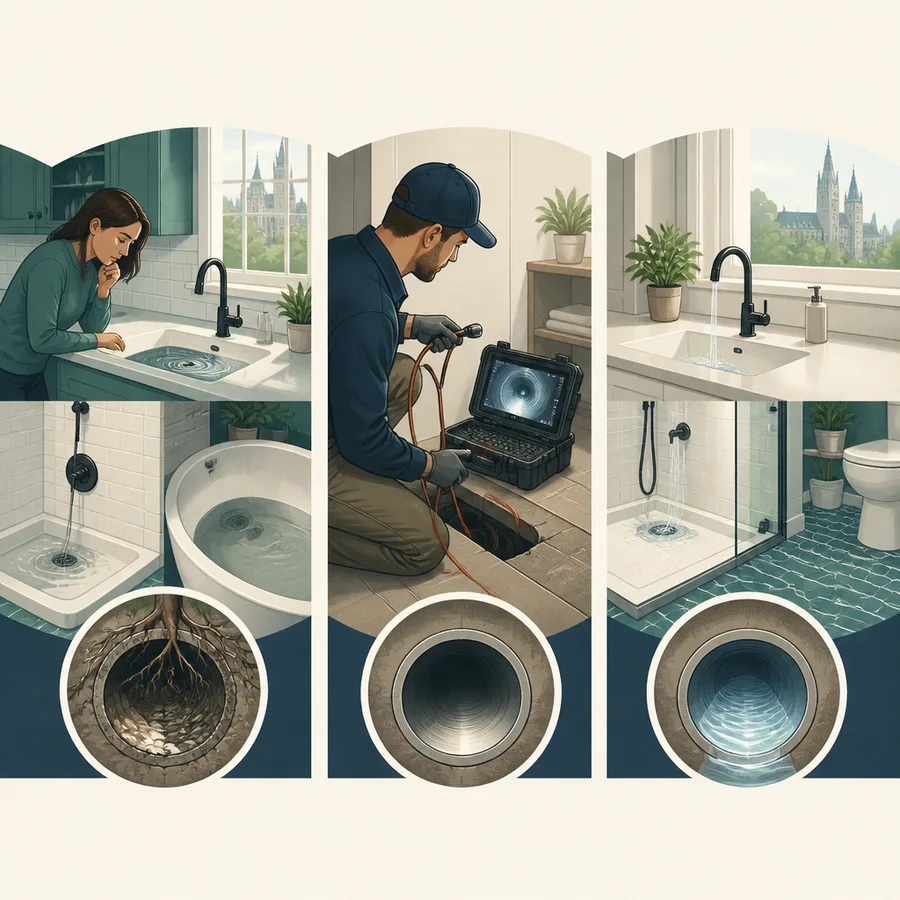
- 01
Stay out if unsafe
Do not enter flood water until a qualified professional says the area is safe.
- 02
Stop adding wastewater
Avoid fixtures and appliances that drain until the issue is resolved.
- 03
Call and document
Report flooding to 3-1-1, contact utilities if needed and record damage safely.
When to contact a plumber or emergency drain service
A plumbing professional may be needed to inspect private drains, fixtures or the service line, particularly if multiple fixtures are affected, the issue recurs, or the City determines the cause is not on its side. Tell the provider whether sewage entered the home, whether water is still rising, which rooms are affected, what the City has advised and whether any utilities may be involved. Ask whether the provider can safely attend under current conditions and which parts of the work are plumbing versus cleanup or restoration. Emergency drain cleaning can address a restriction in some situations, but a cleaning appointment is not automatically the right solution for a damaged pipe or a municipal sewer problem.
If you are comparing local service information, Plumbing Now lists professional drain cleaning in Ottawa as a service. That link is provider information, not an endorsement or a diagnosis of your home. Ask any company what response it can offer, what it will inspect, whether it handles contaminated-water cleanup, what the call-out or assessment includes, and how costs are approved. Be wary of guaranteed repair conclusions made without inspection. Never wait for a website form response when an active hazard needs immediate help; use the City and emergency contacts appropriate to the risk.
Points to carry forward
- Share active hazards and the City's observations with the plumber.
- Confirm whether the service covers plumbing, cleanup or both.
- Use emergency and utility contacts directly for immediate hazards.
Protect yourself if cleanup is later considered
Do not begin cleanup until the area has been declared safe to enter and any electrical or gas hazards have been addressed. The City says flood water may contain sewage and recommends protective clothing when contact occurs. Follow instructions from the City, public-health authorities, your insurer and qualified remediation professionals for contaminated materials, cleaning, disinfection and disposal. The needed work can depend on the type of water, how far it spread, which materials were wet and how long they remained damp. A short article cannot safely prescribe a universal chemical mixture, exposure period or clearance test.
Ottawa's sewer-cleaning information says the City does not provide a cleaning service after a blow-back event; residents may clean themselves or hire an outside cleaner, and reasonable, properly documented cleaning costs may be submitted as a claim. Confirm current terms and documentation requirements with the City and your insurer before assuming reimbursement. Avoid mixing cleaners, using products outside label instructions, or running fans or equipment in a space with an unresolved electrical hazard. Keep contaminated items separate from clean belongings as directed by the cleanup professional. Use official City cleanup information and seek qualified guidance.
Points to carry forward
- Wait for a safety assessment before entering or cleaning.
- Follow product labels and professional guidance; do not mix chemicals.
- Confirm cleanup and claim rules with the City and insurer.
Document the incident without putting yourself at risk
From a safe location, write down the time you first noticed the issue, the area affected, whether the water was rising or receding, and which fixtures or appliances were in use. Photograph visible damage only if you can do so without entering the flooded area or approaching electrical hazards. Keep original photos and a simple list of damaged belongings. The City advises contacting your insurer, documenting damage, retaining receipts for emergency and repair work, and keeping replacement-item records. Your insurer can explain coverage, approved contractors and how to submit a claim.
Keep City reference numbers, plumber notes, cleanup invoices, repair estimates and correspondence in one folder. Ask contractors to separate emergency mitigation from permanent repairs on estimates and invoices, so the scope is clear. Do not discard damaged items before asking the insurer or relevant authority whether they need to inspect them, unless safety requires immediate removal. Documentation does not guarantee a claim outcome or establish the cause of the backup; it preserves the sequence and expenses for review. For coverage questions, refer to the site's sewer-backup insurance guide and contact your own insurer for a decision.
Points to carry forward
- Photograph only from a safe, dry place.
- Keep receipts, City references, estimates and repair records.
- Ask the insurer what evidence it needs before disposing of damaged items.
Do not open a cleanout or attempt a pressured repair
Ottawa's instructions explicitly say not to attempt to open sewer cleanout caps during a basement flooding event. A homeowner may not know whether the line is backed up or under pressure, and opening a cap can expose people to sewage. Keep at least the clear work area requested by the City available for staff, but leave the cap untouched. Do not put a snake, hose, chemical or shop vacuum into a drain while wastewater is present. Do not operate a pump in a flooded area unless a qualified professional has established it is safe and the equipment is appropriate.
Also avoid entering the basement to shut off power or gas if water has reached electrical or gas equipment. The City directs residents to contact Hydro Ottawa if flood water reaches plugs, outlets, cords or electrical appliances, and Enbridge Gas if water threatens gas-fired equipment. Use the contact information on the official page, which can change. If you have already touched a cleanout or suspect a utility hazard, step away and report the situation to the appropriate responder. A repair plan can be made after the immediate scene is assessed; safety decisions should not be based on a generalized article or on a desire to limit property damage.
Points to carry forward
- Leave sewer cleanout caps closed during a backup.
- Do not approach wet electrical or gas equipment.
- Use utility guidance for utility hazards.
After the immediate event: identify the cause
Once the area is safe and the immediate response is underway, ask what is known about the source. Was there a municipal sewer issue, a private drain blockage, a service-line concern, foundation water, sump discharge, or more than one contributing condition? The location where water appeared is a clue, not always a full explanation. Request that City staff and the plumber document which part of the system each inspected and what remains unknown. If a camera inspection, cleaning or excavation is recommended, ask what evidence supports the next step and what it can establish.
A backwater valve can help limit reverse flow in a suitable sanitary drainage setup, but it is not a universal flood barrier and cannot fix a failed sewer line. Check the site's guides on backwater valves and sewer backup prevention and what a backwater valve can prevent once the emergency is over. Discuss any future protective plumbing with a qualified professional and verify current City program or permit requirements directly. Do not assume that a device is required, eligible for a rebate or appropriate at a specific location without checking the home's system and current municipal rules.
Points to carry forward
- Separate what responders observed from what is still unknown.
- Match follow-up work to the confirmed water pathway.
- Check current City requirements before planning protective plumbing.
Prepare a household response plan before the next storm
A simple plan can reduce confusion: keep the City flood response page, insurer contact and utility numbers accessible; identify where household members should wait if the basement becomes unsafe; and keep a clear route to the exit. Do not store irreplaceable items, electrical equipment or chemicals in an area that has flooded without considering the risk. Learn where cleanouts are located from a qualified professional, but do not cover them with permanent storage or open them during an incident. If a sump pump or backwater valve is installed, keep the manufacturer's instructions and service history available, and do not treat either device as a substitute for broader flood preparedness.
Review the City's recommendations before a forecast event and follow any advisories issued at the time. After a backup, ask whether the cause was documented and whether any maintenance or repair remains incomplete. Share the plan with family, tenants or housemates so everyone knows not to use fixtures during an active event and not to enter flooded areas. Keep the official Ottawa basement flooding instructions bookmarked. A prepared household can respond sooner, but only qualified staff can assess whether a particular room, electrical system or plumbing line is safe.
Points to carry forward
- Keep official contact information and instructions easy to find.
- Keep access to service points clear in ordinary conditions.
- Share the plan with everyone who uses the home.
Common questions
Ottawa Sewer Backup Emergency FAQs
What should I do first during a sewer backup in Ottawa?
Protect people and stay out of unsafe flooded areas. Stop using water fixtures, follow the current City instructions, and call 3-1-1 to report basement flooding.
Should I open the basement sewer cleanout?
No. The City of Ottawa says not to attempt to open cleanout caps during a flooding event; leave them closed and accessible to responders.
Can I clean sewage-contaminated water myself?
Only after the area has been determined safe. Follow current City, public-health, insurer and qualified cleanup guidance for protective equipment and handling contaminated materials.
When should I call an emergency plumber?
Contact a qualified plumbing service promptly for active private plumbing issues, but use City, utility or emergency channels directly for municipal flooding and immediate safety hazards.
Further reading
Official references
Rules and program details can change. Check the current source before making a decision about work on your home.
Continue reading
The next useful question.
When the question is about your home
An on-site conversation can clarify what a general guide cannot.