
In this guide10 sections
- 01Common clues below grade
- 02What the component may look like
- 03Covers that can be mistaken for valves
- 04A cover is not proof of condition
- 05How to document what you can see
- 06When not to open or inspect it yourself
- 07Finding reliable identification
- 08What an inspection should explain
- 09Understand what the identification means
- 10Practical next steps
- ↗Official references
Before you begin
Learn the common visual clues around a backwater valve without assuming that a floor cover or cleanout is the valve itself.
Common clues below grade
Many backwater valves are installed below a removable access cover in a basement floor or near a building sewer connection. From above, a cover may be round or rectangular, sit close to flush with concrete, and appear to be a plain metal or plastic plate. Other installations may have a different access arrangement or be concealed behind finishes. There is no single appearance that confirms a valve, and not every home has one in an obvious location.
Look for clues rather than drawing a conclusion: plumbing plans, permit records, an installer label, a service note, or a cover described in home documentation. Note the room and approximate location relative to visible plumbing, but remember that fixtures above the floor do not reliably reveal the underground route. A cover could allow access to a cleanout or another part of the drainage system. Some valve assemblies become recognizable only when an identified cover is safely opened by someone qualified to inspect the device. Do not pry at an unfamiliar plate or assume it is designed for homeowner removal.
Points to carry forward
- Record the cover's location and any label without assigning it a function.
- Check home records for drawings, invoices or service notes about the assembly.
What the component may look like
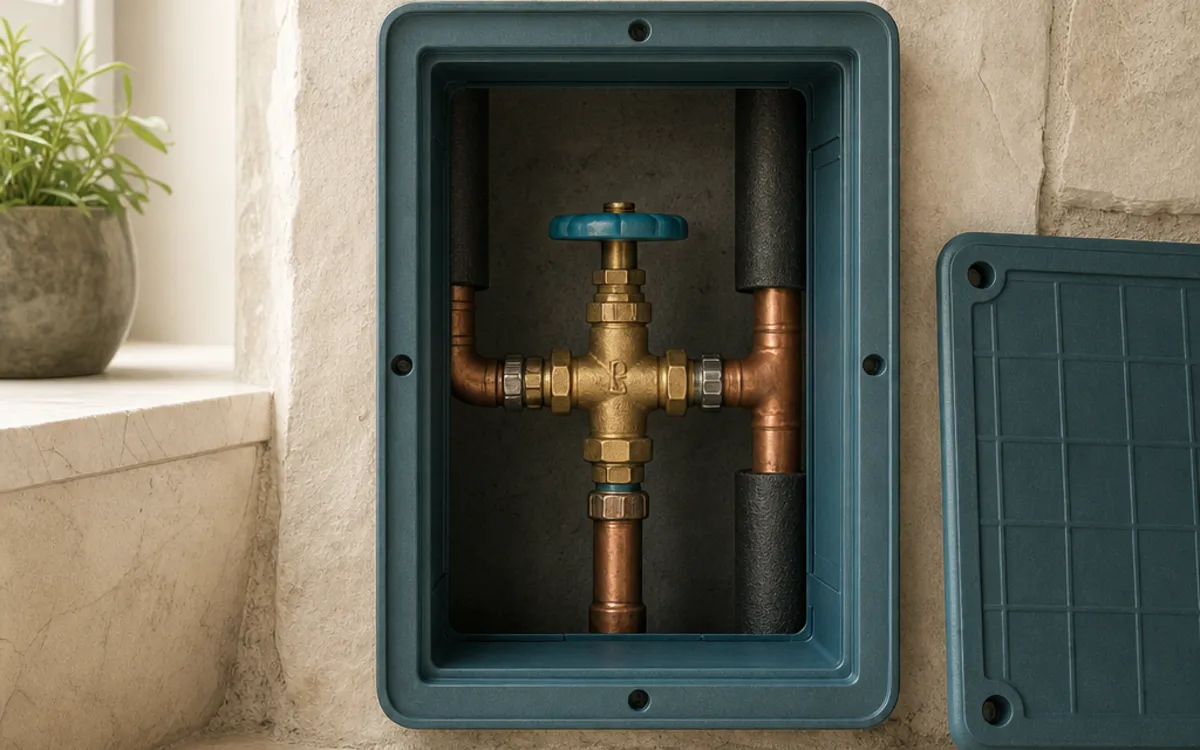
Once a valve is safely visible, the assembly may show a body installed in a pipe, a hinged flap or another moving closure, and an access opening intended for inspection. The material, colour, shape and mechanism vary by product and age. A photograph of one brand or installation is therefore only an example, not a universal identification guide. A cover may be several centimetres or more from the actual pipe component, so seeing a lid does not mean the valve itself is exposed.
Even a view of a flap is not enough to tell whether it is the right valve, correctly located, in working order or connected to the branches a homeowner expects. The assembly could be dirty, damaged, incorrectly oriented or part of a different drainage feature. Avoid touching, lifting or moving parts unless the valve is positively identified and the work is being done under appropriate safe procedures. If an inspection is needed, ask a qualified plumbing professional to identify the component, describe what can be seen and explain whether further testing is required. Ask for that explanation in writing for future reference.
Points to carry forward
- Treat online product photos as examples, not a way to certify a home's system.
- Ask a qualified person to identify the mechanism and its connected pipe route.
Covers that can be mistaken for valves
Several common plumbing and drainage features can look similar from the surface. A cleanout provides access to a pipe for inspection or clearing; a floor drain collects surface water; and a sump basin is associated with a sump pump and foundation drainage. A capped pipe, utility access or abandoned connection may also have a cover or plug. Appearance, proximity to a furnace room, or a pipe's apparent direction does not establish its purpose.
These distinctions matter because the systems address different water pathways. A sanitary backwater valve limits reverse flow in a relevant sanitary sewer route. It does not stop foundation seepage, storm water, a leaking supply pipe or a sump malfunction. If water appears beside a floor drain or basin, that does not by itself prove which system is involved. Ask the assessor to explain where the component drains and how that conclusion was reached. If uncertainty remains, it is safer to report “unknown access cover” than to label it a valve and make maintenance decisions on that assumption.
Points to carry forward
- Do not confuse a sump basin, floor drain or cleanout with a backwater valve.
- Ask which drainage system a visible opening serves before arranging service.
A cover is not proof of condition
A cover can indicate that access was intended, but says little about what lies below it. The cover may be over another fitting, the valve may be absent, or the assembly may be inaccessible or altered. A cover that looks newer than nearby concrete does not date the installation reliably, and a label may refer to a contractor or project rather than the component's identity. Likewise, a missing label is not evidence that a valve is defective.
Condition must be assessed at the actual device and in context. A qualified person may check the mechanism, seating surfaces, pipe connections and access condition, using an approach appropriate to the product and installation. A visual check cannot prove every hidden connection or future performance. Do not test a valve by deliberately sending water backward, blocking a drain, or flushing an object into the system. Such experiments can create a backup or damage plumbing. If the cover is stuck, broken, wet, corroded or unsafe, take a photo from a safe distance and arrange an assessment rather than forcing it.
Points to carry forward
- A floor cover identifies an access point, not automatically a working valve.
- Avoid improvised tests that could cause a blockage or wastewater release.
How to document what you can see
Homeowners can collect useful observations without opening anything. Note the location by room, whether the cover is flush or raised, its approximate dimensions, visible labels, nearby fixtures and whether there is a strong odour or active moisture. A photograph from above may help a professional decide what questions to ask, provided it can be taken without stepping into standing water or disturbing a suspected contaminated area. Include a scale only if it can be placed safely and without contact with the opening.
Write down what is known separately from what is guessed. For example, record “round metal cover beside the laundry area” rather than “backwater valve” unless a reliable record confirms that identification. Include dates and relevant symptoms, such as slow drains or previous service, but do not characterize clear seepage as sewage without evidence. This simple record reduces the chance that a future contractor assumes an unverified component identity. Share existing invoices, drawings and inspection notes, while noting if the records may describe an earlier layout that has since changed.
Points to carry forward
- Use neutral descriptions and preserve photos with the date and location.
- Keep observations distinct from assumptions about the underground plumbing.
When not to open or inspect it yourself
A floor cover can be heavy, sealed, corroded, damaged or located above a drainage opening that presents hazards. Forcing it can injure someone, break the cover, damage surrounding flooring or expose a person to sewer gases and contaminated material. If there is standing water, a sewage odour, an active backup or a damaged opening, keep people and pets away and contact an appropriate professional. Avoid leaning over an open pipe, reaching inside, using a flame, or putting your face close to an opening.
Even a cover that appears easy to lift may not be intended for routine homeowner access. An older installation may have fragile fittings or an unexpected configuration. A safe inspection requires identifying the system, managing hygiene and other hazards, and knowing how to reseal or restore access correctly. If an authorized service person removes a cover, ask them to explain any precautions and what they found. If there is immediate danger or a substantial wastewater release, follow local emergency and public-health direction rather than trying to diagnose the mechanism yourself.
Points to carry forward
- Do not force covers, reach into openings or work around sewage.
- Keep children and pets away from damaged or open drainage access.
Finding reliable identification
Start with the home's own documentation: plumbing drawings, renovation records, invoices, inspection reports or notes left by a previous owner. These can provide a lead, but confirm that they match the current building; later renovations may have changed pipe routes or removed equipment. A service professional can compare the records with accessible components and explain the limits of what can be confirmed without opening walls or floors. If a label includes a model or manufacturer, record it without assuming the product remains unmodified.
Request a clear name for the component, its role, and the evidence supporting the identification. Ask which pipe it is connected to and whether the visible opening provides ongoing service access. Where the system is undocumented, a plumbing assessment may be needed before deciding whether a valve exists or what it protects. The City of Ottawa's backwater-valve and permit information can help with municipal questions, but it is not a visual-identification service for a particular basement. Official eligibility and requirements should be checked directly and at the time they matter.
Points to carry forward
- Cross-check older paperwork against current visible conditions.
- Ask for component name, purpose, location and limits of identification.
What an inspection should explain
A useful inspection should do more than point at a cover. Ask the professional to describe whether the access leads to a sanitary line, cleanout, sump or other system; whether a backwater valve is actually present; and what the accessible parts show about its condition. Ask what could not be seen and whether additional investigation is recommended. If the professional cannot confirm the downstream or branch layout from the access point, that uncertainty should be stated rather than filled in with a guess.
If a repair or installation is proposed, request a written scope that says why the work is appropriate, what portions of the building drainage system it serves and how the valve will remain accessible. Clarify whether opening the floor is necessary, how surfaces will be restored and what checks will follow. A photograph can support discussion, but not establish product suitability or compliance by itself. For Ottawa permits or protective plumbing program information, consult the current City pages and ask the responsible authority about the specific project.
Points to carry forward
- Ask what was seen directly and what remains unverified.
- Request a written explanation before approving intrusive work.
Understand what the identification means
Confirming a backwater valve does not automatically mean that it is required, appropriately placed, functional or sufficient for a home's concerns. Those are separate questions. A present assembly may protect only a certain section of sanitary drainage; some fixtures or branches may connect differently. Its condition requires assessment, and its presence does not address groundwater, foundation seepage, storm runoff or sump-pump problems. Avoid treating a component label as a promise that every source of basement water has been controlled.
Likewise, not seeing an obvious access cover does not prove that no valve exists. The assembly could be concealed, located elsewhere or documented under a different description. A site-specific review is the appropriate way to resolve uncertainty. Keep records of the inspection, any accessible product details, repairs and permit documents with the home. This is especially useful when a property changes ownership or the basement is renovated, because later work can affect access and pipe routing.
Points to carry forward
- Separate presence, condition, code status and protective coverage.
- Preserve inspection and renovation records for future owners and service calls.
Practical next steps
If you are simply curious about a floor cover, begin with records and a safe photo rather than opening it. If you have recurring drain symptoms or suspect wastewater, describe those observations when booking an assessment. If your concern is water after rain, foundation seepage or a sump issue, identify that separately so the right drainage specialist can consider the relevant system. Be explicit about whether there is active sewage, because that changes the urgency and safe access considerations.
For proposed work in Ottawa, verify current permit information and any program terms on official City pages. Ask the contractor or City which requirements apply to the exact property and scope; a neighbour's installation does not establish yours. A good result is an accurate identification, a clear explanation of limits and an accessible maintenance plan, not merely a photograph that resembles a valve. Do not infer technical authority from conceptual images, which can simplify or omit details of real products and connections.
Points to carry forward
- Describe symptoms and water source separately when requesting an assessment.
- Use official Ottawa information for current project-specific requirements.
Further reading
Official references
Rules and program details can change. Check the current source before making a decision about work on your home.
Continue reading
The next useful question.
When the question is about your home
An on-site conversation can clarify what a general guide cannot.