Backwater valve planning in Alta Vista should begin with the house, not an assumption about the neighbourhood. The City’s secondary plan describes Alta Vista, Faircrest Heights and Riverview Park as Ottawa’s first post-Second World War suburb, with a low-rise character, school and park sites, and green transportation and utility corridors. That history is useful context: many properties have mature landscaping and homes that have been renovated over decades, but it does not tell you how any one building drain is arranged.
A backwater valve is a normally open device intended to close when wastewater reverses direction in the pipe. It can reduce one specific pathway for basement flooding, but it cannot stop water entering through a foundation, window well, roof drainage problem, failed sump system or surface grading. An Alta Vista owner therefore needs a property-specific inspection, a clear scope and confirmation from the City and insurer before treating a valve as part of a broader resilience plan.
Start with Alta Vista’s postwar housing context
The official secondary plan’s description of a postwar, low-rise district is more useful for asking questions than for predicting plumbing. A one-storey house near Alta Vista Drive, a split-level closer to Kilborn Avenue and an extensively rebuilt property may have very different drain routes, fixture elevations and renovation histories. Finished basement walls can also conceal where the building drain exits. Do not select a valve from house age, street name or a neighbour’s project.
Collect what belongs to the property: survey or renovation drawings, previous plumbing invoices, the approximate sewer entry point, locations of floor drains and below-grade fixtures, and any history of slow drains or water entry. Distinguish sewage backup from clear water. Photos taken during an incident and notes about which fixtures were affected can help a qualified plumber investigate without turning neighbourhood character into an unsupported diagnosis.
Map the drain before choosing an installation point
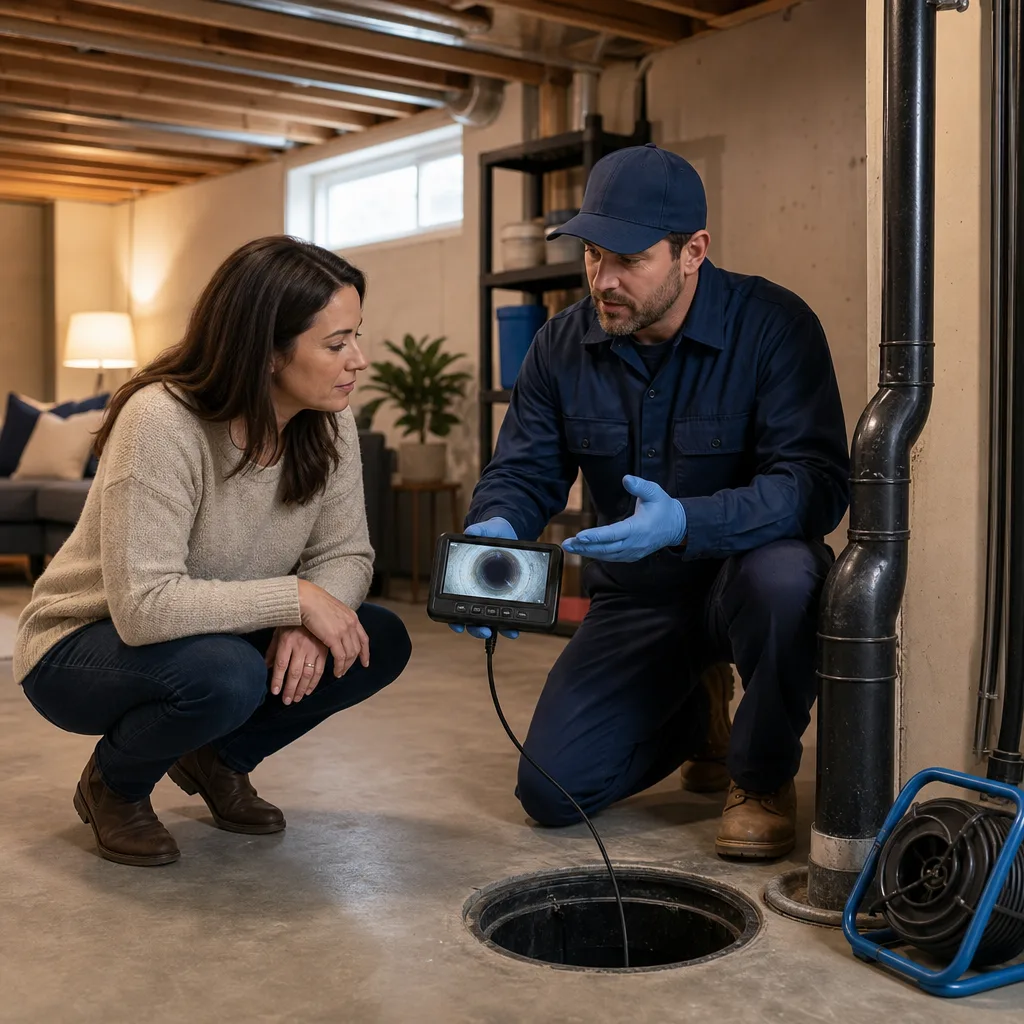
A professional assessment should identify the sanitary building drain, branches serving basement fixtures, available access and whether other connections could bypass a proposed device. A camera inspection can document accessible pipe condition and direction, while locating equipment may help relate the underground route to the basement floor. Camera footage is evidence, not a complete structural test: standing water, heavy deposits or bends can limit what is visible.
Ask for the findings in plain language and retain the video or still images where offered. If defects, roots, displacement or unusual connections are observed, the plumber should explain whether further cleaning, repair or investigation is needed before valve work. The site-specific goal is an approved arrangement that protects the intended fixtures and remains serviceable, not simply the shortest place to cut concrete.
Separate sewer backup from Alta Vista lot-drainage concerns
Alta Vista’s mature streets, yards and green corridors make exterior water management an important parallel review, but they do not prove a particular flood mechanism. During rain or thaw, walk the property safely and observe whether downspouts discharge away from the foundation, window wells remain protected, and soil directs water toward rather than away from walls. Changes made for patios, additions or gardens may matter more than the original subdivision plan.
A sanitary backwater valve addresses reverse flow in the sanitary drain. It does not replace grading corrections, foundation drainage work, window-well protection, a reliable sump arrangement where one exists, or repair of leaking supply plumbing. If water is clear and appears at a wall joint, diagnosis should remain open. Compare protective tools by pathway rather than purchasing a valve as an all-purpose basement flood solution.
Related reading
Confirm permits and an approved design before work
The City’s Residential Protective Plumbing FAQ says a building permit is required for installation of protective plumbing devices. Permit review and inspection are safeguards: they allow the proposed valve type, location and related drainage changes to be checked against applicable requirements. Ask the contractor who will prepare the application, who will arrange inspections, what must remain exposed and when the floor may be restored.
Requirements can change, and a general web guide cannot approve an individual installation. Confirm the current process with the City’s Building Code Client Service Centre or 3-1-1 before work starts. Avoid do-it-yourself excavation or drain alteration; mistakes can expose occupants to sewage, damage buried services and create an installation that closes incorrectly or cannot be maintained.
Related reading
Treat Ottawa’s rebate as an eligibility process
Ottawa’s Residential Protective Plumbing Program publishes eligibility conditions and maximum amounts for eligible measures. The City page currently distinguishes sanitary and storm devices and lists property-age conditions, required documentation and the lesser-of-cost-or-maximum approach. Those details should be read directly before authorizing work because program rules, funding and forms can change.
Do not assume that living in Alta Vista, owning an older house or obtaining a quote guarantees reimbursement. Ask whether pre-approval is required, which invoices and proof of payment must be retained, and whether taxes or associated restoration are eligible. Keep permits, inspection records, product information and dated photographs together. A rebate decision is the City’s; a contractor can support documentation but should not promise approval.
Compare quotes by scope, access and restoration
A useful quote identifies the valve and its approval standard, proposed location, investigation included, concrete opening, disposal, permit responsibility, inspection timing and floor restoration assumptions. In a finished Alta Vista basement, also ask how dust, furnishings and adjacent finishes will be protected and which cosmetic repairs are excluded. A low price that leaves the route or bypass risk unresolved is not an equivalent scope.
Request an explanation of how the valve can be reached after installation. Its access cover must not disappear beneath permanent flooring, cabinetry or storage. Clarify what happens if opening the floor reveals a different pipe material, branch arrangement or damaged drain. Written change authorization is safer than improvisation once work begins.
- Confirm investigation, permit, inspection and cleanup responsibilities.
- Record exclusions for flooring, asbestos assessment or unexpected drain repair.
- Ask for model information, warranty terms and maintenance instructions.
- Never accept a promise that a valve eliminates every kind of flooding.
Related reading
Know what changes when the valve closes
When reverse flow closes a sanitary valve, wastewater from the house may have nowhere to go until the downstream condition clears. Occupants should avoid flushing toilets, showering, running laundry or discharging other fixtures during a suspected backup. Continued use can create an internal overflow even while the valve is doing its intended job.
Make a household response card with the plumber’s contact, City 3-1-1 and insurer information. Keep children and pets away from sewage, avoid energized areas and use qualified remediation help where contamination occurs. The valve is a mechanical risk-reduction device, not a guarantee of a dry or sanitary basement.
Keep the valve accessible after renovation
Maintenance should follow the manufacturer’s instructions and the plumber’s site-specific advice. Typical professional service checks access, removes debris where appropriate and confirms that the flap or gate moves and seals without obstruction. Frequency depends on the device, use and observed conditions; do not invent a universal schedule from a neighbourhood article.
Alta Vista owners planning basement flooring or a future renovation should mark the access location on drawings before finishes are selected. After any backup, slow-drain episode or nearby drain work, arrange an inspection rather than assuming the valve reset correctly. A maintenance log with dates, findings and parts replaced is useful for the next owner and for insurance conversations.
Related reading
Coordinate the project with insurance and future records
Contact the insurer before installation and ask what information it needs, whether sewer-backup coverage is optional, and whether a valve changes any endorsement, deductible or maintenance obligation. Coverage wording varies. A permit, rebate or installed device does not guarantee insurance acceptance or payment after a loss.
Retain the accepted quote, permit, inspection outcome, paid invoice, model details, photographs and maintenance history. These records make future service easier and provide a careful answer during a home sale. Describe the device accurately; do not represent it as whole-home floodproofing.
Create an Alta Vista decision workbook before committing
Put the evidence in one short workbook rather than relying on conversations from memory. Include a basement sketch, photographs of fixtures and cleanouts, exterior drainage observations, renovation documents, incident notes and the questions each contractor answered. Mark statements that are confirmed by camera or records separately from assumptions that can only be tested after the floor opens. This makes competing recommendations easier to compare and gives the permit applicant a more coherent starting file.
Use the workbook to sequence decisions. First establish the likely water pathway; next identify pipe condition and the fixtures to protect; then confirm permit and rebate timing; finally settle restoration and maintenance access. If a proposal jumps directly to a device without answering those steps, ask for clarification. Taking time to define uncertainty is not delay for its own sake—it reduces the chance of buying a well-installed device in the wrong scope.
Also record decisions not to proceed. A plumber may find that drain repair, exterior drainage work or more investigation has priority. That outcome is useful and should not be reframed as a failed valve quote. The objective is proportionate risk reduction for the actual house, with costs and disruption understood in advance.
Before signing, review the file with every owner or adult occupant. Confirm temporary loss of plumbing, workspace access, where belongings will move and who can authorize a change. A shared plan is especially important when a finished basement is used as sleeping, working or rental space.
Complete a final evidence review
Before authorizing construction, confirm that the proposed measure answers the documented problem, that City timing is understood and that service access will remain practical. Record unresolved questions rather than letting them become assumptions in the field. This short final review keeps the project focused on verified property conditions.
Alta Vista backwater valve FAQ
Does every older Alta Vista house need a backwater valve?
No. Age and postwar neighbourhood history justify an assessment, not an automatic prescription. A qualified plumber should map the property’s drainage, identify the relevant backup pathway and discuss other water-entry risks before recommending work.
Can mature trees tell me that roots are in my sewer?
No. Trees near a route can be a reason to investigate, but only property-specific evidence such as camera findings supports a diagnosis. Even then, a plumber should explain image limits and whether cleaning or repair is required.
Will a sanitary valve stop water entering around my foundation?
No. It is intended to resist reverse flow in the sanitary drain. Foundation seepage, grading, window wells, roof water and sump failure require separate assessment and may need different measures.
Is an Ottawa permit required?
The City’s protective-plumbing FAQ states that a building permit is required for protective plumbing devices. Confirm current requirements and inspection stages with Ottawa before work, because the City—not this guide or a contractor—determines compliance.
Is my Alta Vista home guaranteed to receive a City rebate?
No. The Residential Protective Plumbing Program applies eligibility, documentation and cost rules. Address, house age or contractor recommendation alone does not guarantee approval. Read the current City page and obtain any required authorization.
Can we keep using plumbing during a sewer backup?
Do not use fixtures when the valve may be closed unless a qualified professional says it is safe. Household discharge can accumulate upstream of a closed valve and overflow inside the home.
What should remain accessible in a finished basement?
The valve’s service cover must remain readily reachable. Confirm clearances with the installer and avoid permanent flooring, cabinetry or stored contents that prevent inspection and cleaning.
Sources and official references
- City of Ottawa — Alta Vista, Faircrest Heights and Riverview Park Secondary Plan
- City of Ottawa — Residential Protective Plumbing Program
- City of Ottawa — assessing service-line failure risk
- City of Ottawa — protective-plumbing FAQ
Programs, permits and bylaws change. Confirm current requirements with the City of Ottawa before acting.
Questions about your Alta Vista home?
Ask a local plumber, without pressure.
Requests are sent to Lister Plumbing, who serve homes across all Ottawa areas listed here. A request is not a commitment, and no price is promised before someone looks at your plumbing.