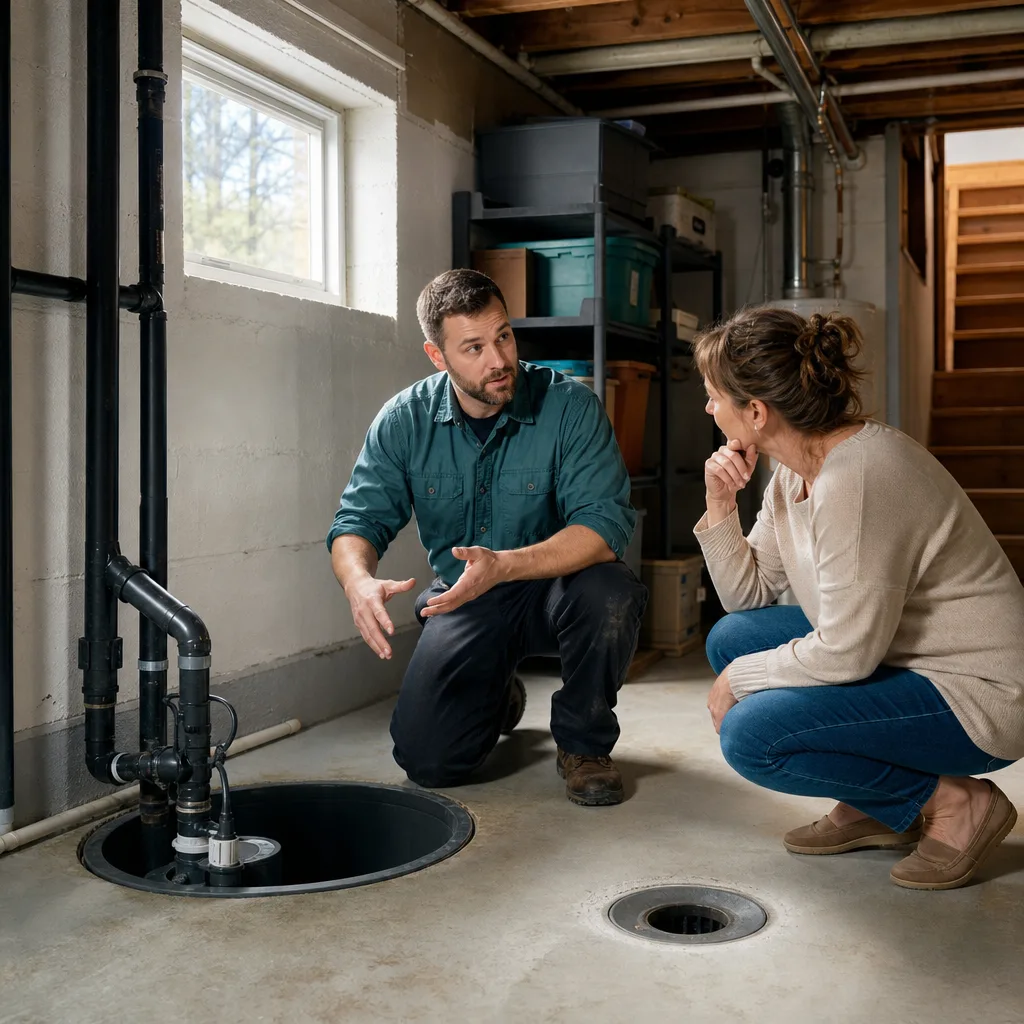
Beechwood Village is organized around Beechwood Avenue, which the City’s Community Design Plan describes as a traditional mainstreet serving New Edinburgh, Rockcliffe Park, Lindenlea and Vanier. For backwater-valve planning, this means homeowners may encounter detached houses, small multi-unit buildings, infill and mixed-use properties within a compact area. It does not mean every property shares one sewer layout.
A backwater valve allows normal outward drainage and closes against reverse flow from a surcharged downstream sewer. Correct placement depends on the building drain, fixture branches, occupancy and access. The valve does not stop groundwater, roof runoff, surface flow or foundation leakage, and it cannot guarantee that a basement will remain dry.
This guide focuses on due diligence rather than DIY installation. It explains how to coordinate diagnosis, occupants, permit inspection, possible rebate documentation and maintenance. Lister Plumbing confirmed service coverage for Beechwood Village, but no local job details were supplied; the article does not imply that any described building or street was a Lister project.
Let building use shape the Beechwood assessment
A single-household home, converted dwelling and storefront with apartments create different operational questions. Establish how many units discharge through the line, who controls basement access, whether commercial activity depends on water, and who can tell occupants to reduce use during a surcharge. Confirm common elements and owner, tenant or condominium responsibilities before work.
The Community Design Plan’s mainstreet context supports this building-by-building approach, but cannot reveal buried plumbing. Collect approved plans, renovation permits, invoices and previous flood notes. A professional should trace actual fixtures and drains instead of relying on apparent building age or the configuration next door.
- List every dwelling or business using the relevant building drain.
- Identify the person authorized to approve access and emergency instructions.
- Gather renovation records for basement kitchens, bathrooms and laundry.
Related reading
Plan construction access in a compact urban property
The correct line may be beneath a finished room, shared circulation area or occupied commercial space. Ask how workers and materials will reach it, what dust and noise controls are included, how occupants will retain safe access, and when wastewater service will be unavailable. If parking, sidewalk or exterior work is contemplated, confirm any separate permissions rather than assuming the plumbing permit covers public space.
The final access cover must remain reachable without moving permanent millwork or disrupting a tenancy. Discuss cover finish, floor restoration and clearances before cutting. A less visible location is not preferable if it compromises which branches are protected or makes future inspection impractical.
Identify whether the event was sewer backup
Contaminated water emerging from a low drain suggests a different pathway from clear water at a wall joint or runoff entering a window well. Record the first entry point, odour, weather, fixture behaviour and timing. These clues guide investigation but are not proof. Avoid contact with sewage and flooded electrical systems.
A sanitary valve addresses reverse flow in the protected sanitary pipe. It does not waterproof masonry, change grading, manage groundwater or replace a sump pump. The City’s prevention guidance discusses protective plumbing alongside downspouts, grading and foundation drainage, reflecting the need for a layered response.
Map converted and renovated drain branches
Beechwood-area building variety makes renovation history important. Basement bathrooms, secondary suites and relocated laundry may join downstream of a location that appears to be the main drain. A professional must determine which fixtures sit upstream of the proposed valve and whether separate storm or foundation connections exist.
Drain-camera inspection can observe reachable interiors and fittings, but it may not expose every concealed branch. Ask for the inspected route, distance references, images and limitations. If plans and camera observations disagree, the proposal should describe further investigation or a contingency rather than guessing.
Related reading
Separate valve work from pipe repair
Visible roots, deposits, offsets or deformation may affect flow and reliable valve operation. Ask the professional whether cleaning or repair is needed first and how each item is priced. A valve beside a damaged line does not repair the defect; cleaning alone does not provide backflow protection.
Older appearance is not a diagnosis, and infill is not proof of modern piping throughout. Document materials and conditions that can actually be observed. The written scope should distinguish confirmed work, allowances and exclusions so that restoration and hidden defects do not become vague surprises.
Coordinate the Ottawa permit with occupants and finishes
The City of Ottawa says installation of a backwater valve requires a building permit. Verify current submission and inspection requirements before work. In an occupied or multi-unit building, schedule the inspection while the installation remains visible without leaving an unsafe opening in a shared route.
Assign responsibility for the application, inspection request and corrections. Keep the permit, approved documents, result, invoice, valve model, photos and camera report. If condominium or co-ownership approval is relevant, obtain it separately; a municipal permit does not resolve private governance or access rights.
Related reading
Check rebate rules for the exact residential unit
Ottawa’s Residential Protective Plumbing Program applies detailed property, building-date, device, permit and documentation conditions. Mixed-use, multi-unit, condominium or substantially altered buildings may raise questions that a generic eligibility summary cannot answer. Contact the program before work and describe the actual ownership and occupancy.
Do not accept a guaranteed-rebate promise or automatically deduct funding from the contract price. Keep itemized paid invoices and City inspection records. Insurance approval is also separate: the owner or corporation should ask its insurer what evidence, maintenance or notice is required under the actual policy.
Create a water-use plan for every occupant
When surcharge closes the valve, wastewater cannot pass normally out through that line. Flushing toilets, showers, laundry, dishwashers or commercial fixtures can then cause an internal backup. A notice should tell occupants to minimize water use during a suspected event and identify the person responsible for updates.
Communication matters especially when the person seeing the access cover is not the owner. Explain that the valve is not storage and should not be forced open. Keep emergency contacts available, protect belongings above floor level and use qualified cleanup help where sewage is present.
Make access and maintenance part of property management
Follow manufacturer instructions and professional recommendations for inspection and cleaning, including attention after a suspected surcharge. Service generally checks accessible movement, removes debris safely and looks for damaged seals or components. Qualified repair is preferable to improvised parts or forced movement.
Record the access location, model and service dates in the building file. Tell tenants, cleaners and flooring contractors not to cover it. For a sale or change of manager, transfer the records and explain the closed-valve water-use plan. Documentation turns an otherwise mysterious floor cover into a maintained safety asset.
Related reading
Compare proposals for protection, disruption and stewardship
A complete scope identifies the line and fixtures protected, valve, access, expected outage, occupant controls, permit responsibility, inspection stage, restoration, cleanup and exclusions. Ask what happens if concealed branches or damaged piping are found. In a mixed-use property, request clear allocation of owner and contractor responsibilities.
Do not select on price until scopes match. Reject claims of total flood prevention, guaranteed rebates or automatic insurance benefits. Lister’s service page and quote form are linked for property-specific plumbing assessment; foundation, grading and governance questions may require other advisors.
Plan the inspection and restoration sequence around real mainstreet occupancy. A ground-floor business may need advance notice of water shutoff, while residents need a safe route past the work area. Ask who supplies barriers, who communicates schedule changes and what happens if the municipal inspection cannot occur at the expected time. These details belong in the scope rather than being left to the day of work.
Where ownership is shared, record the approval that authorized work and identify who owns the finished device. Clarify who keeps keys or access permission, pays for periodic service and responds after a suspected closure. Municipal approval does not decide these private responsibilities. Resolving them early helps prevent a maintained valve from becoming inaccessible when a tenant or manager changes.
The handover should include permit and inspection evidence, itemized invoices, device model, photographs before floor closure, access measurements and exact maintenance instructions. Ask the installer to explain the normal resting appearance and warning signs without encouraging occupants to dismantle anything. Store a copy somewhere other than the basement so it remains available after a water incident.
Revisit the plan when the basement is renovated, a new fixture is added or the building changes use. New branches can alter which fixtures are protected, while new flooring can accidentally conceal the access. A plumbing review before design is less disruptive than reopening fresh finishes. Update occupant instructions whenever the set of users changes.
Beechwood Avenue’s role as a traditional mainstreet also makes delivery and contractor access worth resolving early. The owner should confirm lawful parking, loading and material movement without blocking sidewalks or accessible entrances. If public-space occupation is proposed, ask the City what permission is required. A plumbing permit should never be treated as authorization to obstruct the right-of-way.
After a severe rainfall or suspected surcharge, record which occupants used water, whether an alarm sounded and where any moisture first appeared. A professional can inspect the valve and compare those observations with other possible pathways. Do not decide from a wet floor alone that sewage crossed the device; clear seepage, drain backup and plumbing leakage call for different follow-up.
For condominium or shared ownership, add valve review to reserve or maintenance planning. The responsible body should know the expected service access, restoration implications and records location. This does not establish a universal service interval or cost, but it avoids emergency procurement by an occupant who lacks authority. Obtain current professional advice when budgeting rather than carrying forward an unsupported estimate.
Related reading
Beechwood Village backwater valve FAQ
Is Beechwood Village the same as New Edinburgh or Vanier for plumbing purposes?
The City describes Beechwood Avenue as serving several surrounding neighbourhoods, but neighbourhood labels do not determine a building’s drainage. Verify the parcel, ownership, occupancy and actual sewer layout rather than applying an adjacent property’s plan.
Can one valve protect a mixed-use building?
Possibly, but only professional tracing can establish which fixtures share the line and sit upstream. Occupancy, continued water use, access rights and commercial disruption also require a building-specific plan.
Does an Ottawa rebate apply to every unit?
No automatic conclusion is possible. Current program rules govern property type, dates, measures, permits and documents. Multi-unit, condominium and mixed-use circumstances should be described directly to City program staff.
Is a permit required in Beechwood Village?
Yes, the City’s guidance states that a building permit is required for backwater-valve installation. Confirm current requirements and arrange inspection before the work is concealed.
Will the valve stop groundwater or wall seepage?
No. It resists reverse flow through a protected sewer line. Groundwater, foundation leakage, grading, downspouts and window wells require separate assessment and controls.
What happens if tenants keep using water when it closes?
Wastewater can accumulate on the building side and emerge from a low fixture. Provide all occupants with instructions to minimize water use during a suspected surcharge and a clear contact for updates.
Can a homeowner conceal or service the valve without a plumber?
The cover should never be permanently concealed. Routine scheduling and visual recordkeeping are appropriate, but installation and repairs to sanitary piping need qualified professional work and permit coordination; this guide provides no DIY steps.
Sources and official references
- City of Ottawa: Beechwood Community Design Plan
- Engage Ottawa: Beechwood Avenue Public Realm Plan
- City of Ottawa: Backwater valve permits
- City of Ottawa: Residential Protective Plumbing Program
- City of Ottawa: Prevent basement flooding
Programs, permits and bylaws change. Confirm current requirements with the City of Ottawa before acting.
Questions about your Beechwood Village home?
Ask a local plumber, without pressure.
Requests are sent to Lister Plumbing, who serve homes across all Ottawa areas listed here. A request is not a commitment, and no price is promised before someone looks at your plumbing.