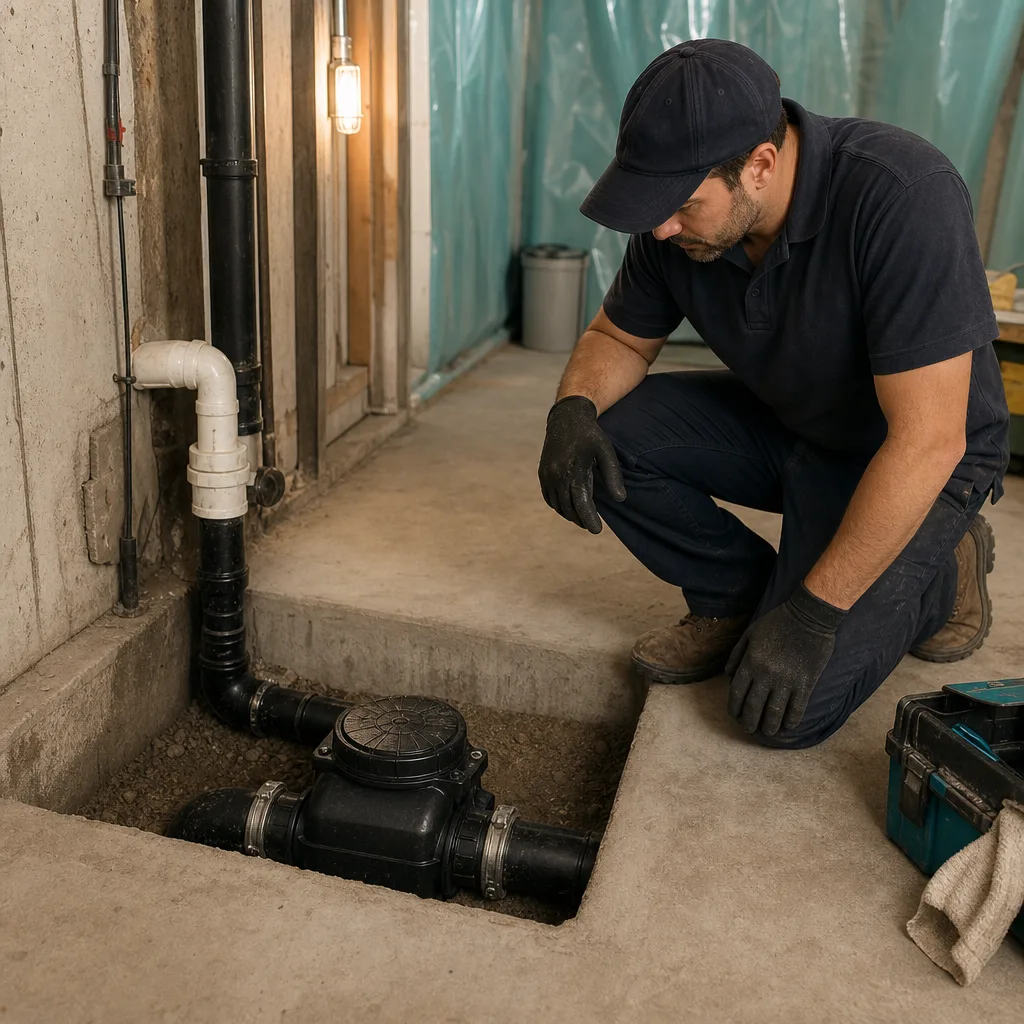
New Edinburgh’s historic character and mature housing stock present unique considerations for homeowners looking to enhance plumbing defenses against municipal sewer backups.
This neighborhood, near the Rideau and Ottawa rivers, is a designated Heritage Conservation District, requiring residents to balance infrastructure upgrades with the preservation of architectural heritage.
Installing a backwater valve is a proactive measure to block reverse flow during a municipal sewer surcharge. Success requires planning to navigate building bylaws, site-specific constraints, and older municipal infrastructure.
Consult local professionals to ensure systems integrate into your plumbing layout and meet city standards.
Prioritize safety by using qualified professionals to prevent structural damage or sewer gas exposure. Verify contractor credentials and insurance, and ensure all work is inspected by city officials to confirm it meets the Ontario Building Code.
For New Edinburgh owners, a useful planning file combines the property survey, available renovation records, photographs of accessible drains, questions for the permit authority, and written confirmation of condominium or shared-service responsibilities where those arrangements apply.
Heritage Conservation Considerations
New Edinburgh is a designated Heritage Conservation District. Interior plumbing upgrades generally do not trigger complex heritage alteration reviews.
Consult City of Ottawa planning officials if your project involves exterior or public-realm work. Always protect original floor finishes and masonry during the concrete breaking phases.
For regional project insights, visit https://listerplumbing.ca/backwater-valve-installation-ottawa.
Contractors must avoid unnecessary disturbance of foundational stone or masonry. Choose experienced professionals familiar with historic construction to minimize risks to your dwelling's fabric.
Homeowners in this district should recognize that heritage boundaries often protect the external visual integrity of the streetscape, though interior structural interventions still require care. During the installation of a backwater valve, ensure the work area is cordoned off to prevent dust migration into sensitive heritage architectural elements. Protecting your property’s historical value starts with professional documentation that confirms all plumbing modifications respect the original floor plan and structural layout. Always verify with city heritage staff before proceeding if your basement features historically significant exposed foundation or unique masonry work that could be impacted by excavation.
Related reading
Navigating City Permit Requirements
Verify current project requirements with the City of Ottawa building department before starting.
Permits ensure compliance with the Ontario Building Code. Professional contractors provide necessary site plans; bypassing this creates hurdles for future real estate transactions.
Consult our resource portal to ensure project filings are prepared correctly.
Official municipal inspection is a safety requirement to verify correct valve positioning and prevent cross-contamination. Unpermitted work voids legal protections and complicates insurance claims.
Obtaining the correct permits for New Edinburgh properties is non-negotiable for ensuring long-term home security and legal compliance. When applying, homeowners must provide accurate plumbing schematics that align with city building codes to avoid rejection. Keep copies of all permit applications and subsequent inspection certificates, as these records provide critical proof of professional work during future property assessments. Failing to secure these documents not only risks immediate code enforcement action but can also complicate your ability to claim insurance should a future flood event occur, making diligent permit management a vital step in your plumbing upgrade.
Related reading
Understanding Backwater Valve Functionality
A backwater valve blocks reverse flow into your home during a sewer surcharge; it is not a comprehensive protection system against all water intrusion.
Valves do not stop water from foundation cracks, window wells, or overland flow.
Pair valves with other systems to manage groundwater.
Mechanical integrity depends on keeping the device free of debris that could jam the flapper. Regular visual checks are essential.
Effective diagnosis of your home's vulnerability is the first step toward a successful installation. Homeowners must understand that a backwater valve only manages sewage backing up from the municipal main, not water coming through the walls or floors. For comprehensive protection, combine the valve with other basement mitigation strategies such as interior drainage systems or sump pumps. Because New Edinburgh homes vary in age, consult with your plumber to evaluate the specific risk profile of your basement before committing to a singular solution that might be insufficient for your site’s specific geological and infrastructure-related constraints.
Related reading
Assessing Mature Housing Infrastructure
New Edinburgh’s older plumbing and constrained access require thorough site assessment before installation.
Contractors use drain cameras to map lines. This provides technical data to evaluate layout suitability for a backwater valve.
Assess pipe material—clay or cast iron—and diameter to ensure a code-compliant seal.
Evaluate foundation stability during excavation. Experts must handle work near old brick or stone footings to prevent structural shifting.
Addressing constrained access is a common challenge when upgrading plumbing in New Edinburgh’s historic, compact homes. Professional installers often encounter narrow stairways or finished basements that complicate the placement of necessary equipment. A detailed pre-installation diagnostic session is essential to determine whether the existing pipe alignment can accommodate a valve without requiring extensive demolition of heritage flooring or walls. By identifying these constraints early, homeowners can avoid unexpected costs and structural disruptions, ensuring that the installation project remains within the desired scope and adheres to the structural limits of the original house foundations.
Related reading
Ensuring Accessible Maintenance
Longevity depends on consistent upkeep. Valves must remain accessible for cleaning and inspection.
Do not bury valves under flooring or fixtures.
Schedule recurring professional inspections to ensure the flapper and seals are functional.
Degraded seals or chemical exposure create safety risks. Use non-toxic cleaners and rely on professionals for major repairs to preserve watertight integrity.
Maintenance is the most overlooked aspect of long-term flood defense for New Edinburgh residents. Once installed, your backwater valve requires clear access to allow for regular visual inspections and debris removal. If a renovation project happens to enclose your valve area, ensure you install a high-quality access panel that meets current code standards. Remember that simple neglect can lead to mechanical failure at the exact moment you need it most. Schedule a professional cleaning at least annually to verify that the flapper seal remains intact and capable of stopping backflow during a significant weather event.
Related reading
Residential Protective Plumbing Program
The City of Ottawa offers the Residential Protective Plumbing Program (RPPP) for eligible homeowners.
Review official guidelines; approval is not automatic and policies may change. Verify availability before finalizing plans.
Obtain detailed quotes specifying scope and materials for potential program participation.
Do not let rebates dictate installation quality. Ensure contractors have RPPP experience and verify their registration status to avoid application denial.
The City of Ottawa's RPPP is an excellent resource for managing the costs of professional plumbing installations, but it requires strict adherence to program criteria. Homeowners must ensure all paperwork is submitted accurately and before starting any construction to be eligible for rebates. Be wary of contractors offering 'guaranteed' rebates; instead, verify their qualifications through the city’s official list of approved providers. Remember that rebates should be viewed as an added financial incentive rather than the primary factor for selecting your contractor; prioritize professional expertise in heritage building construction to ensure the long-term reliability of your investment.
Related reading
Sanitary and Storm System Considerations
Identify if your property uses a combined sewer or separate lines to determine the correct valve placement.
Improper installation can cause drainage backups. Professional assessment of your specific layout is required.
Correctly identifying your system prevents cross-connection code violations.
Placement errors can lead to 'contained flooding' where the valve blocks internal drainage. Ensure your plumber provides a map of all lines before installation.
Understanding the specific sewer architecture of your property is crucial for preventing accidental backups caused by incorrect valve placement. New Edinburgh features a mix of infrastructure ages, and misidentifying whether your home uses combined or separated lines can lead to severe drainage issues post-installation. A professional assessment must map the entire lateral, identifying where storm water and sanitary waste interact. This avoids 'contained flooding' scenarios where the valve inadvertently traps water inside your plumbing system. Before breaking ground, insist on a comprehensive site analysis to confirm that the valve location is optimal for both current code requirements and your home's plumbing configuration.
Planning Your Installation Project
Collaborate with professionals experienced in mature home infrastructure. Review property surveys and renovation goals to support long-term serviceability.
Ensure plumbing health is maintained during integration into existing foundations. Use municipal resources to make informed decisions.
Gather detailed quotes and compare timelines to prepare for site disruptions.
Prioritize safety during construction by ensuring dust and debris containment, especially if older materials contain hazardous substances.
Planning a plumbing upgrade in a New Edinburgh home involves more than just a tool kit; it requires a strategic timeline that accounts for the unique materials found in older dwellings. From lead pipes to fragile brick, site conditions can change the project's scope rapidly. Before starting, collaborate with your plumber to create a clear plan that addresses material disposal and safety containment. By preparing for potential site disruptions and reviewing your property's historical survey documents, you can ensure that the installation of your backwater valve integrates seamlessly with existing home utilities while minimizing risk to the structure.
Related reading
Taking Action and Accessing Resources
Protecting your home requires adherence to professional standards, permitting, and heritage compliance.
Refer to City of Ottawa resources for urban flood mitigation and managing basement risks.
Maintain records of permits and inspection reports for future audits or sales.
Stay informed on municipal infrastructure updates. Proactive engagement with city flood mitigation portals is the best strategy for a resilient home.
New Edinburgh residents have access to various municipal tools designed to foster a more resilient housing stock against climate-related basement flooding. Beyond the initial installation, active participation in city information sessions and checking for infrastructure updates in your area can provide peace of mind. Keeping a thorough digital or physical file of every permit, inspection report, and maintenance log is not only vital for your own records but also adds significant value for future property sales. Stay engaged with local municipal resources to ensure that your flood protection strategy evolves alongside city-wide infrastructure enhancements and changes in building code regulations.
New Edinburgh backwater valve FAQ
Does living near the Rideau River automatically increase my sewer backup risk in New Edinburgh?
No. Risk is determined by plumbing configuration, pipe condition, and municipal sewer capacity rather than proximity to water.
Is a heritage permit required for a backwater valve in New Edinburgh?
Generally, internal plumbing does not trigger review. Only consult heritage planning if the installation involves exterior or public-realm alterations.
Are there specific New Edinburgh plumbing codes I need to follow?
You must follow the Ontario Building Code and Ottawa bylaws. Mature homes may require specialized solutions to meet these standards.
Can I install a backwater valve myself?
No. Installation requires precise depth and angle adjustments to function correctly and satisfy building code requirements.
Does the valve guarantee my basement will never flood?
No. It only blocks reverse flow through protected drains; it does not stop foundation seepage, window well leaks, or overland runoff.
What is the RPPP program?
The Residential Protective Plumbing Program provides financial assistance for protective devices. Participation requires pre-approval and qualified professionals.
Is a camera inspection a guarantee of performance?
No. It is a diagnostic tool used to assess current pipe condition and feasibility, not a predictor of future performance.
Sources and official references
- New Edinburgh Heritage District
- City RPPP Information
- Backwater Valve Permits
- City Urban Flooding FAQ
- Lister Plumbing Services
Programs, permits and bylaws change. Confirm current requirements with the City of Ottawa before acting.
Questions about your New Edinburgh home?
Ask a local plumber, without pressure.
Requests are sent to Lister Plumbing, who serve homes across all Ottawa areas listed here. A request is not a commitment, and no price is promised before someone looks at your plumbing.