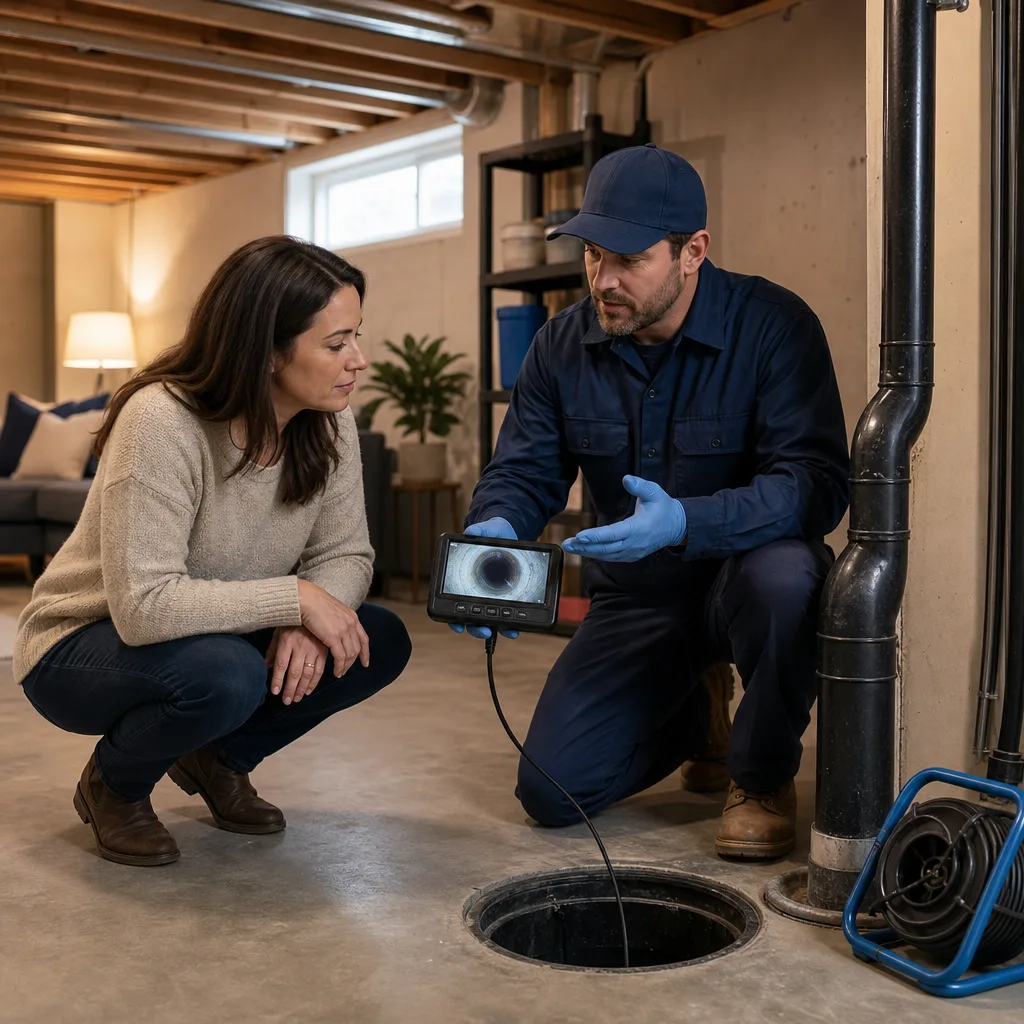
A backwater valve is a one-way plumbing device intended to stop wastewater from reversing through a building sewer when the downstream sewer is surcharged. For a Vanier homeowner, that simple definition is only the beginning. The useful question is not whether valves are generally helpful, but whether a valve fits the drainage layout, fixtures, service connections and flood pathways of one particular house.
Vanier contains a varied housing stock close to Montréal Road, McArthur Avenue, the Rideau River and the traditional mainstreet area around Beechwood Avenue. Lot dimensions, renovation histories and basement uses can differ from one block to the next. Those visible neighbourhood traits do not prove anything about an individual sewer connection. A licensed plumbing professional should trace the building drain and identify which fixtures and branches a proposed device would protect before work is priced or authorized.
This guide explains a careful planning sequence without presenting do-it-yourself installation instructions. It also separates sewer backup protection from surface water, groundwater, foundation leakage and sump-pump issues. Lister Plumbing has confirmed service coverage in Vanier, but no local project records were supplied for this article; nothing below should be read as a case study or claim about work completed on a specific street.
Start with the Vanier house, not a neighbourhood assumption
Older-looking homes are not automatically good valve candidates, and newer finishes do not reveal the age of buried piping. Additions, basement bathrooms, former floor drains and past sewer repairs may have changed how a property drains. Ask the assessor to establish where the sanitary building drain leaves the foundation, whether any storm connection is separate, where the cleanouts are, and whether all fixtures that need protection lie upstream of the proposed valve.
This house-first approach matters in compact urban settings. A convenient patch of basement floor may not be on the correct pipe, while a mechanically suitable location may be obstructed by finished flooring, a party-wall condition, utilities or structural elements. Access is not merely an installation concern: the valve must remain visible and reachable for inspection, cleaning and future service.
- Gather any plumbing drawings, renovation permits, sewer repair invoices and previous flood reports.
- Note every basement fixture, floor drain, laundry connection and sump pit before the visit.
- Do not infer pipe routing from a neighbour’s installation or an exterior cleanout alone.
Confirm the backup pathway before selecting protection
A sanitary backwater valve addresses reverse flow from the sanitary sewer through the building sewer. It does not waterproof foundation walls, seal window wells, correct negative grading or remove groundwater. If water appeared clear, entered at a wall joint, rose through a crack or followed a downspout discharge, the investigation should consider those clues rather than treating every wet basement as a sewer event.
The City of Ottawa describes protective plumbing as one part of basement-flooding prevention. Its public guidance also discusses grading, downspouts, foundation drainage and sump pumps. A professional assessment can distinguish likely pathways and decide whether drain-camera inspection, dye testing or another diagnostic is justified. The goal is a coordinated plan, not a device installed merely because it is familiar.
Related reading
Account for Vanier’s Beechwood and Montréal Road contexts
The City’s Beechwood Community Design Plan identifies Beechwood Avenue as a traditional mainstreet serving Vanier, New Edinburgh, Lindenlea and Rockcliffe Park. Montréal Road is another defining corridor through Vanier. Properties near these corridors can include detached houses, conversions, small multi-unit buildings and mixed-use premises. Occupancy and building form affect the questions to ask: who controls the basement, how many dwelling units depend on the drain, and how will occupants be notified when the valve closes?
A backwater valve temporarily blocks discharge while it is holding back a surcharge. Residents must avoid using plumbing during that period. In a multi-unit or mixed-use property, a professional should consider communication, access and the consequences of continued water use. The owner should also confirm whether the proposed work affects common elements, tenancy arrangements or commercial operations. These are property-management questions, not reasons to assume a particular sewer configuration.
Use camera findings to define a sensible scope
A camera inspection can help locate fittings, observe accessible pipe condition and identify obstacles, but it is not a magic survey of every buried branch. Ask for a clear explanation of what was inspected, how the proposed valve location was determined, and whether the camera could reach the relevant connection. Heavy buildup, offsets, roots or damaged pipe may require a separate repair decision before a valve can operate reliably.
The estimate should distinguish diagnostic work, excavation, valve and access-box installation, concrete or finish restoration, permit charges and any excluded repairs. If the route remains uncertain, uncertainty should be stated rather than hidden in a fixed narrative. Homeowners comparing proposals should compare scope and assumptions, not only the bottom-line price.
Related reading
Treat the Ottawa permit and inspection as core steps
The City of Ottawa’s permit page says a building permit is required for installation of a backwater valve. Requirements can change and unusual buildings may need additional review, so confirm the current submission, contractor and inspection process with the City before work begins. A permit is not paperwork to add after the floor is closed; inspection access and timing should be built into the project plan.
Ask who will apply, whose name will appear on the permit, when inspection will be requested and what records you will receive. Keep the permit, approved documents, invoices, model information and inspection result together. This file can support maintenance, resale conversations, insurance questions and a rebate application, but it does not guarantee any of those outcomes.
Check rebate eligibility before committing funds
Ottawa’s Residential Protective Plumbing Program publishes eligibility rules, eligible measures, documentation requirements and maximum rebate information. The program distinguishes sanitary and stormwater devices and uses property and construction-date criteria. Do not rely on an old brochure, a neighbour’s reimbursement or a contractor’s casual assurance. Review the current City page and seek program confirmation for ambiguous circumstances before authorizing work.
A rebate is not automatic approval of a proposed design and should not be treated as guaranteed project funding. Retain itemized paid invoices, permit and inspection records, photographs requested by the program and proof tied to the eligible property. Insurance coverage is a separate contract: ask the insurer what it requires, whether notice is needed and whether a valve changes any endorsement or deductible.
Plan for the period when the valve is closed
When reverse pressure closes a valve, wastewater from the home cannot pass normally through that protected line. Running showers, flushing toilets, doing laundry or operating a dishwasher can create an internal backup upstream of the closed valve. Every household member should understand a simple response: minimize water use during a suspected sewer surcharge and follow professional and municipal advice.
The valve also cannot promise a dry basement. Water may enter through other routes, a device can be obstructed, and conditions can exceed the protection strategy. Keep valuables off basement floors, maintain appropriate alarms and pumps, and preserve safe access to electrical panels. If sewage is present, avoid contact and use qualified cleanup help; contaminated water creates health and electrical hazards.
Keep the access cover usable after Vanier renovations
Finished basements make access planning especially important. Do not bury the cover beneath tile, cabinetry, a permanent platform or stored belongings. Record its location with measurements and photographs before finishes are restored. If a tenant or future owner will manage the home, include the valve in the building information package rather than leaving an unexplained cover in the floor.
Inspection and cleaning frequency should follow the manufacturer’s instructions and the professional’s advice, with attention after a suspected surcharge. Service generally includes checking the flap or gate for free movement, removing debris safely and examining seals and accessible components. A homeowner can schedule and document maintenance without dismantling the sanitary system or improvising repairs.
Related reading
Coordinate the valve with whole-property drainage
Walk around the property during planning. Look for settled soil beside the foundation, blocked catch basins, low window wells, downspouts discharging beside walls and snow-storage areas that direct meltwater toward the house. City guidance recommends keeping drainage routes functional and managing water away from foundations. Changes must avoid sending water onto neighbouring land or creating unsafe ice.
Roof runoff, foundation drainage, sump discharge and sanitary plumbing should be understood as different systems even where historical work has made the layout confusing. A plumber can address sanitary devices; grading or foundation concerns may require other qualified professionals. Coordinating those scopes prevents a valve from being presented as a universal flood cure.
Compare Vanier proposals with a written question set
A high-quality proposal should identify the line being protected, device type, proposed location, access arrangement, permit responsibility, inspection stage, restoration allowance and exclusions. Ask what evidence supports the chosen location and what happens if concealed conditions differ. If there are multiple units or a commercial component, request an explicit explanation of operational implications.
Do not accept claims that installation eliminates all flooding, guarantees insurance approval or assures a City rebate. No responsible assessment can promise those results. Choose a scope that preserves maintainability and addresses the diagnosed pathway. The strongest decision is one that remains understandable years later from the records left with the property.
Keep the final proposal, not just the receipt. It should allow another plumber to identify the device and access point without reconstructing the original sales conversation.
Vanier backwater valve FAQ
Does every older Vanier home need a backwater valve?
No. Building age and neighbourhood are not enough to establish need or feasibility. A professional should review the property’s drainage, fixture elevations, service layout, prior incidents and other water-entry pathways. The resulting plan may include a valve, another protective measure, repairs or monitoring.
Is Vanier covered by Ottawa’s protective plumbing rebate?
Vanier is within the City of Ottawa, but location alone does not establish eligibility. The property, construction date, proposed measure, permit, inspection and invoices must satisfy the program’s current rules. Confirm directly with the City; neither this guide nor a quote guarantees reimbursement.
Will a valve stop water entering from the Rideau River or heavy rain?
A valve is designed to resist reverse flow through the protected sewer line. It does not directly stop river flooding, overland runoff, groundwater, foundation seepage or window-well entry. Any history involving those pathways calls for broader drainage and flood-risk advice.
Can the access cover be hidden in a finished basement?
It should remain readily accessible for inspection and cleaning. A design can integrate a neat access cover into the finish, but permanent flooring, cabinetry or storage must not prevent service. Record the location before restoration.
Do I need a permit for a backwater valve in Vanier?
The City of Ottawa states that installation requires a building permit. Confirm the current process before work and arrange the required inspection before concealment. Multi-unit, mixed-use or unusual properties may need additional review.
Should plumbing be used while the valve is closed?
Water use should be minimized during a suspected surcharge because household discharge cannot pass normally through a closed protected line. Continued flushing, bathing or laundry can cause an internal backup. Ensure all occupants know the response plan.
Can I install or repair the valve myself?
This guide intentionally provides no DIY installation steps. Cutting a building drain, selecting protection and coordinating permit inspection require qualified professional judgment. Incorrect placement can leave fixtures unprotected or create operational and sanitation problems.
Sources and official references
- City of Ottawa: Backwater valve permits
- City of Ottawa: Residential Protective Plumbing Program
- City of Ottawa: Prevent basement flooding
- City of Ottawa: Beechwood Community Design Plan
Programs, permits and bylaws change. Confirm current requirements with the City of Ottawa before acting.
Questions about your Vanier home?
Ask a local plumber, without pressure.
Requests are sent to Lister Plumbing, who serve homes across all Ottawa areas listed here. A request is not a commitment, and no price is promised before someone looks at your plumbing.