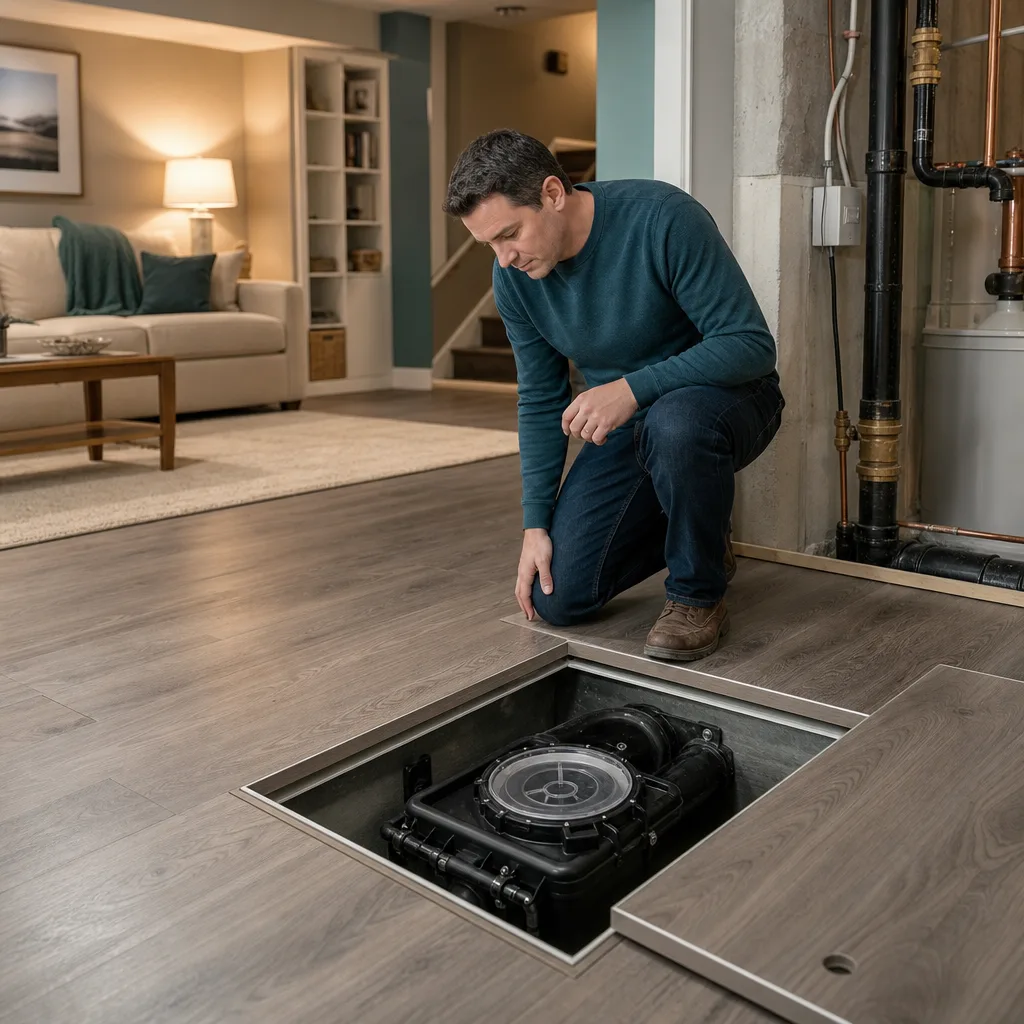
Templeton is in Gatineau, Quebec—not the City of Ottawa. That jurisdictional fact changes the most important administrative advice on this site: Ottawa’s permit pages and Residential Protective Plumbing Program do not apply to a Templeton property. Gatineau’s current construction regulation, municipal guidance and Quebec plumbing requirements are the relevant starting points.
A backwater valve, commonly called a clapet antiretour in Quebec, allows drainage to leave under normal conditions and closes against reverse sewer flow. Gatineau states that its municipal regulation requires residences to have backwater valves regardless of construction year, and its public guidance describes maintenance and owner responsibilities. Confirm the current text, the particular building and the proposed design with the Ville and a properly qualified Quebec plumbing contractor before work.
Put Templeton in the correct legal jurisdiction
Templeton is a historic geographic name within present-day Gatineau. The Ville’s historical timeline records the Township of Templeton among the first Quebec municipal designations in 1855. Today, an address using Templeton as its local identity is governed municipally by Gatineau and provincially by Quebec. An Ottawa phone number, nearby Ontario service area or English-language web search does not move the property across the provincial boundary.
Start at Gatineau’s clapet antiretour page and current Règlement de construction. Ask municipal staff which authorization, declaration, inspection or supporting document applies to the exact work. Rules and forms change; an old invoice or advice from an Ontario project is not reliable authority.
The internal links here explain general planning concepts, but any Ottawa-specific rebate, permit or code statement must be disregarded for Templeton. Lister Plumbing has confirmed that Templeton is within its service coverage; the owner should nevertheless verify that the person performing regulated work holds every Quebec qualification required for that scope.
Understand Gatineau’s stated valve obligation
Gatineau’s public page says municipal regulation obliges all residential owners to install backwater valves, irrespective of the home’s year of construction. It also explains that every plumbing fixture below street level must be protected in accordance with applicable requirements. Those statements make a site-specific review more—not less—important: the contractor must establish which branches and fixtures need protection and what arrangement is permitted.
Do not assume one device on the most visible pipe satisfies the rule. Ask for a drawing showing connected fixtures, drain direction, valve locations and accessible cleanouts. Have the contractor identify any fixture that would remain outside the protected arrangement and explain why. Multi-unit, mixed-use and altered buildings deserve direct municipal and professional review.
This article does not replace the regulation or design a system. Gatineau’s current construction bylaw and the applicable Quebec plumbing chapter control. Obtain written clarification for unusual conditions rather than relying on a translated summary.
Related reading
Separate sewer reversal from infiltration and runoff
A clapet antiretour addresses reverse flow in drainage piping. It cannot stop water entering at a foundation crack, window well, roof connection or low exterior opening. It does not repair a blocked or collapsed private drain, operate a sump pump during a power outage or make poor grading drain away from the building.
Record where and when water appeared, odour, weather, fixture behaviour, alarm conditions and any municipal notice. Photographs taken safely after the event and previous plumbing records are more useful than a neighbourhood rumour. Never enter water where electrical or contamination hazards may be present; use emergency and restoration professionals as conditions require.
Templeton includes varied properties and development periods. Neither the historic township name nor proximity to a watercourse establishes the underground configuration of one home. A professional must assess actual pipe routing, fixture elevations and site drainage.
Related reading
Investigate the drain before choosing a valve location
A contractor should trace accessible drainage and determine how low fixtures connect. When condition or routing is uncertain, a camera inspection can show the visible interior of the pipe, branches encountered, offsets, deposits or damage. Locating equipment may help relate observations to the floor. Camera work cannot see through soil or prove that every concealed branch was captured.
Ask the reviewer to label the insertion point, direction and distance travelled, then explain how findings support the proposed design. If the line is obstructed, decide whether cleaning or repair must precede valve work. Installing a new device beside a serious unresolved defect does not correct that defect.
Keep video, still images and a basic drain sketch. This record supports quote comparisons, later service and a future sale. It also reduces the chance that finished concrete will be opened in the wrong place.
Related reading
Use Quebec guidance for device selection and placement
The Régie du bâtiment du Québec publishes technical material on backwater valves, including guidance about normally open devices on a principal collector under specified conditions. That is a technical exception with conditions, not permission for an owner to select a product from a retail shelf and improvise an installation.
Ask the contractor to identify the device’s standard, normal position, protected branches, required access and compatibility with the proposed configuration. The design must account for wastewater generated inside while closure occurs. Depending on layout, an unsuitable placement can leave connections unprotected or create operational problems.
Avoid do-it-yourself drain alteration. Concrete cutting, excavation and work on sanitary piping involve physical, contamination and code risks. No online sequence can verify concealed services, pipe material, slope, venting or municipal requirements at the address.
Compare Templeton quotes by scope and Quebec eligibility
Request a written proposal naming the legal contractor, proposed devices and locations, fixtures protected, investigative work, floor opening, disposal, testing, administrative responsibility and restoration. Ask for applicable Quebec licence information and verify it through the appropriate official channel. Coverage of a service territory is not itself proof that every person or subcontractor may perform every regulated task.
Clarify exclusions for asbestos or other hazardous-material assessment, concealed utilities, damaged pipe, electrical work, finish flooring and painting. In a condominium or divided co-ownership, obtain the declaration and syndicate approval before altering shared or exclusive plumbing. Determine who owns the relevant drain.
Compare equivalent scopes. A low figure that excludes investigation, concrete replacement and administrative work is not directly comparable to an inclusive proposal. Require written authorization before extras and a change-order process for concealed conditions.
Related reading
Do not budget an Ottawa rebate for Templeton
The City of Ottawa’s Residential Protective Plumbing Program is for qualifying City of Ottawa properties. Templeton is in Gatineau, so an owner must not use Ottawa’s program assumptions, application forms or permit checklist. Even if the same contractor serves both sides of the river, municipal funding does not follow the contractor.
Ask Gatineau directly whether any current local assistance, tax treatment or documentation program applies to the address and proposed work. Also ask an insurer, in writing, whether it offers a prevention incentive and what evidence it requires. Neither this article nor a quote can guarantee public assistance, an insurance discount or coverage after a loss.
Budget the entire project, including investigation, professional work, administration, restoration and maintenance. Any confirmed assistance can then be treated as conditional rather than necessary to finish safely.
Know what happens when the clapet closes
Closure blocks reverse flow, but it may also prevent household wastewater from passing the protected point. During a suspected sewer surcharge, stop or sharply reduce toilet flushing, bathing, laundry, dishwashing and other water use. Continued discharge can fill private piping and overflow through an interior fixture.
Have the installer demonstrate normal appearance and explain safe response without opening a cover during an active backup. Post concise bilingual instructions if that helps everyone in the home. Include a plumber, insurer, municipal service and restoration contact in the house emergency record.
A valve lowers one defined risk; it is not a flood-proofing guarantee. Surface water, groundwater, plumbing leaks, pump failure and unprotected branches remain separate possibilities.
Follow Gatineau and manufacturer maintenance direction
Gatineau tells owners to maintain backwater valves and provides public instructions. Debris or deposits can stop a flap from seating. Follow current municipal guidance, the manufacturer’s literature and the qualified contractor’s advice; where instructions differ or access is unsafe, obtain professional service rather than improvising.
Keep each cover visible and reachable. Record device type, exact location, installation date and maintenance observations. Fixed flooring, storage or cabinetry should not block access. Report recurring debris, a damaged seal, restricted movement, odour or leakage.
Never confuse maintenance with a guarantee. A clean mechanism can still be bypassed by an unprotected fixture, overwhelmed by water entering elsewhere or affected by damaged piping. Review the complete drainage picture after renovations.
Related reading
Create a Quebec-ready property record
At completion, collect the contract, itemized paid invoice, contractor details, licence verification, municipal documents, inspection result if applicable, product data, warranty, photographs and drain plan. Confirm that covers open and labels remain legible after floor restoration.
Send requested evidence to the syndicate or insurer and ask them to acknowledge receipt. A municipal requirement does not guarantee an insurance claim, and an insurer’s interest does not replace compliance. Keep all answers in writing.
Give the record and closure instructions to a buyer or new occupant. Templeton’s jurisdiction should be explicit so future owners do not mistakenly apply Ottawa procedures.
If the home changes use, gains a basement fixture or undergoes major renovation, revisit the drainage drawing rather than assuming the original protection still covers every connection. Record the date and purpose of each alteration. This small administrative habit helps the next contractor distinguish verified facts from assumptions and helps an owner demonstrate that maintenance and changes were taken seriously. Keep municipal responses in their original language and date each verification.
Templeton backwater valve FAQ
Is Templeton covered by Ottawa’s backwater-valve rebate?
No. Templeton is in Gatineau, Quebec, and Ottawa’s Residential Protective Plumbing Program is not the applicable municipal program. Ask Gatineau and your insurer about any current address-specific assistance without assuming approval.
Does Gatineau require residential backwater valves?
Gatineau’s public guidance states that municipal regulation obliges all residential owners to install them regardless of construction year. The proper number, type and arrangement still require review under the current bylaw and Quebec plumbing requirements.
Should I use an Ottawa permit checklist?
No. Contact Ville de Gatineau about the current authorization and inspection path. General project-planning questions may be transferable, but Ottawa forms, fees, rebates and municipal requirements do not govern a Templeton address.
Can a valve stop water through my foundation?
No. It controls reverse flow in the drainage connection it protects. Foundation infiltration, surface runoff, roof drainage, window wells and pump failures need separate diagnosis and measures.
What qualifications should I check?
Ask who will contract, perform and supervise the work, obtain applicable Quebec licence details, and verify them through the appropriate official registry. Also confirm insurance and responsibility for municipal compliance in writing.
May we use toilets while the valve is closed?
Stop or minimize water use. Household discharge may be unable to pass the closed valve and can cause an internal overflow. Follow the device-specific instructions provided at handover.
How should a Templeton valve be maintained?
Follow Gatineau’s current owner guidance, the manufacturer’s instructions and professional advice. Keep access clear, document checks and arrange service if the mechanism is damaged, obstructed, leaking or repeatedly collecting debris.
Does installation guarantee insurance coverage?
No. Compliance, municipal administration and insurance coverage are separate. Disclose the work, provide requested documents and obtain written answers about exclusions, deductibles, maintenance and claim conditions.
Sources and official references
- Ville de Gatineau: clapet antiretour
- Ville de Gatineau construction regulation 534-2025
- Régie du bâtiment du Québec: clapets antiretour
- Ville de Gatineau historical dates
- Lister Plumbing backwater valve installation
Programs, permits and bylaws change. Confirm current requirements with the City of Ottawa before acting.
Questions about your Templeton home?
Ask a local plumber, without pressure.
Requests are sent to Lister Plumbing, who serve homes across all Ottawa areas listed here. A request is not a commitment, and no price is promised before someone looks at your plumbing.