A backwater valve can reduce one specific basement-flooding pathway: reverse flow through a building sewer. For a Barrhaven homeowner, the useful question is not simply whether a valve is a good product, but which private drain serves the house, whether a valve is already present, and how the device would fit with grading, foundation drainage, sump equipment, and the way the basement is used. Barrhaven includes established neighbourhoods near Greenbank and Fallowfield as well as newer growth south toward the Jock River. Age, renovation history, and lot conditions can differ even between nearby homes, so a street name or subdivision era cannot replace an on-site plumbing assessment.
This guide explains a careful planning path without assuming that any Barrhaven property has a particular sewer arrangement or level of risk. It connects the City of Ottawa's official permit and Residential Protective Plumbing Program information with practical questions to take to a qualified plumber. It is homeowner decision guidance, not do-it-yourself installation instructions, an insurance opinion, or a promise that a project will qualify for funding.
Start with the Barrhaven property, not a subdivision assumption
Barrhaven's development has moved outward over decades. A house in an established part of Old Barrhaven may have a different construction history from a newer home in Half Moon Bay, Longfields, Chapman Mills, or Barrhaven South. Additions, basement bathrooms, finished floors, and previous drain work can further change what is accessible. Do not infer that every home of a certain age has—or lacks—a sanitary backwater valve. Ask for the device to be physically located and identified.
Collect the building age, permit records you have, renovation invoices, any sewer-backup history, and notes about where water has appeared. Also distinguish wastewater emerging from a floor drain or fixture from clear water at a wall, window, foundation crack, or sump. Those observations point to different pathways. A valve intended to stop sewer reversal does not seal a foundation or manage overland water.
- Photograph accessible cleanouts, sump equipment, floor drains, and any existing valve cover without opening plumbing.
- Note basement fixture locations and any planned finishing that could restrict future valve access.
- Record whether past water appeared during rain, a drain blockage, snowmelt, or another event; do not guess at the cause.
Understand the protection—and the important limits
A backwater valve normally permits discharge to leave the house and closes when flow tries to return from the downstream sewer. Correct selection and placement matter because private plumbing may include sanitary and storm drainage, while the valve approved for one application is not automatically appropriate for another. Ottawa defines a backwater valve in its Sewer Connection By-law and publishes dedicated permit guidance. A professional should establish which line is under consideration and whether other connected fixtures affect the design.
Closure is temporary protection, not unlimited storage. Occupants should minimize plumbing use while a valve is closed because wastewater generated inside cannot pass normally. A valve also cannot prevent seepage, surface runoff, a failed sump pump, a blocked private lateral upstream of the valve, or water entering through an uncovered window well. Treat it as one component of a layered plan rather than a guarantee of a dry basement.
Use investigation to define the installation scope
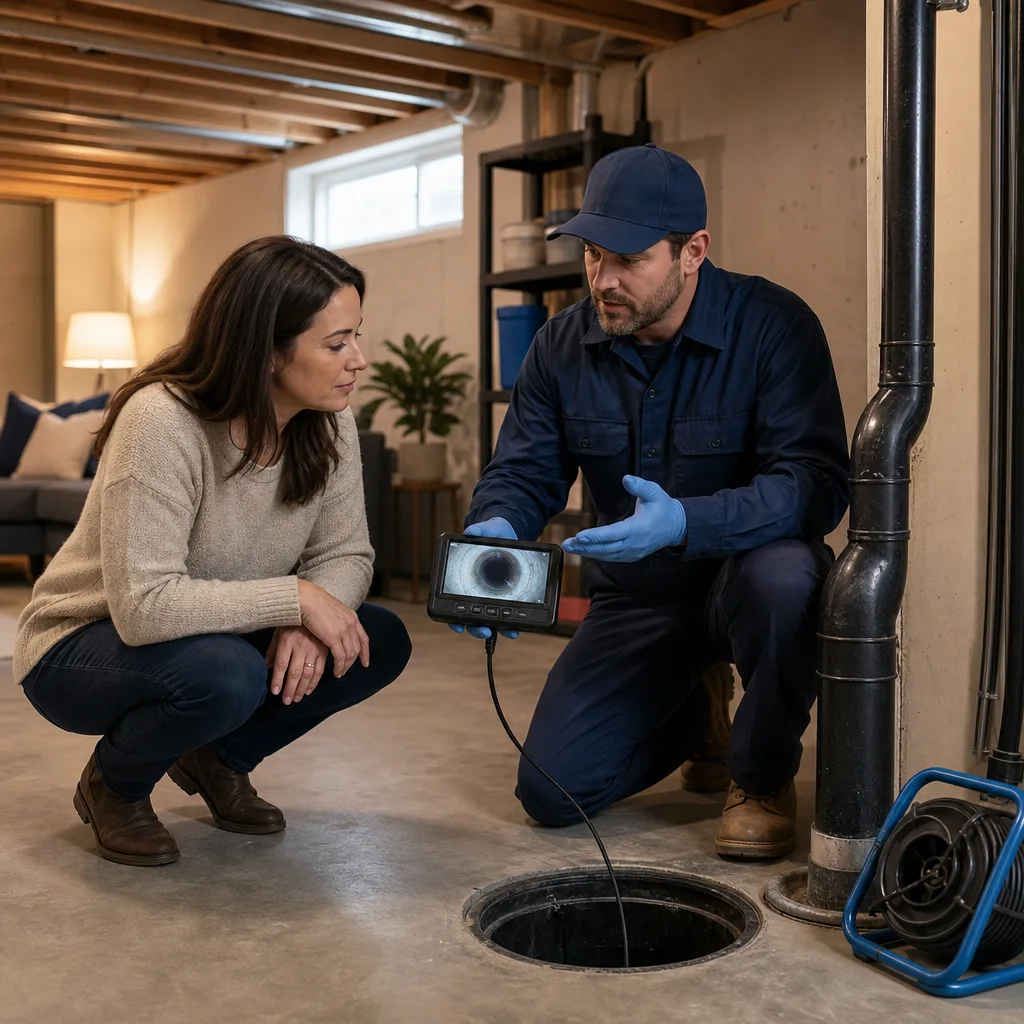
A sensible assessment follows the drainage route before anyone prices excavation. The plumber can review visible piping, locate an existing device, and determine whether camera inspection or drain locating is useful. A camera may reveal offsets, roots, deposits, damage, or branch connections in an accessible line, but footage must be interpreted in context; it does not map every hidden pipe or certify future performance.
Barrhaven lots range from compact townhouse settings to detached properties with more exterior space. Interior access, shared walls, finished basements, utility rooms, and the route to the municipal connection all influence the least disruptive compliant approach. Request a written scope stating the line being protected, valve type, access method, floor restoration allowance, inspection responsibilities, and what findings could change the price.
Related reading
Confirm Ottawa permit and inspection requirements before work
The City of Ottawa says a building permit is required for installation of a backwater valve. Its backwater-valve page also explains that permit requirements support review and inspection. Because rules, forms, and fees can change, verify the current process for the exact property and scope before authorizing work. The contractor and homeowner should agree in writing who applies, who schedules inspection, and which documents will be delivered at completion.
Do not cover the valve or restore all finishes before required inspection milestones are satisfied. Keep the permit number, approved documents, invoices, model information, photographs, and final inspection record together. Those records help with maintenance, resale questions, and a future rebate or insurance inquiry, but possession of records does not itself guarantee reimbursement or coverage.
Treat the Ottawa rebate as a program with conditions
Ottawa's Residential Protective Plumbing Program lists financial assistance for eligible property owners installing approved protective plumbing devices, including sanitary and storm backwater valves. Eligibility is not established merely by living in Barrhaven or hiring a plumber. The applicant, property, device, timing, permits, inspections, invoices, and supporting material must meet the program rules in effect when the City assesses the submission.
Read the current City page before work and ask the program directly about any ambiguity. Build the project decision around the home's protection needs and an affordable total cost, not around an assumed rebate cheque. A quote can separate potentially eligible valve work from floor replacement, decorating, or unrelated drain repairs. Neither a contractor nor this guide can approve an application on the City's behalf.
Keep riverine, surface, and sewer risks separate near the Jock River
The Jock River is a meaningful landscape feature around southern Barrhaven, but proximity to any watercourse does not establish why a particular basement gets wet. Riverine flooding, overland drainage, groundwater, and sewer backup are different mechanisms. The City's interactive flood-hazard map is an informational starting point for known riverine hazards; the City advises owners to contact the relevant conservation authority for the most current property information.
A parcel outside a mapped riverine area can still experience plumbing or lot-drainage problems, while a backwater valve cannot control river or surface water entering above the drainage system. Review grading, downspout discharge, window wells, foundation symptoms, and sump operation alongside the sewer assessment. If buying or renovating near low-lying land, obtain property-specific professional and insurance advice rather than relying on neighbourhood labels.
Related reading
Compare Barrhaven quotes on scope, access, and accountability
A useful quote does more than name a valve and total. It identifies the pipe and location, investigative assumptions, permit responsibility, excavation and disposal, inspection coordination, access cover, testing, and the boundary of concrete or flooring restoration. In a finished Barrhaven basement, clarify protection for adjacent finishes and whether matching tile, laminate, carpet, or paint is excluded. In a townhouse, ask whether shared-property or condominium approvals are relevant before work begins.
Ask what happens if opening the floor reveals damaged pipe, an unexpected branch, or an existing valve. Changes should require explanation and authorization rather than becoming a vague contingency. You may request an assessment from Lister Plumbing while independently checking City requirements; service availability is not evidence that work has previously occurred at your property or elsewhere in Barrhaven.
Preserve visible, usable access after installation
A valve needs accessible clearance for inspection and maintenance. Plan the finished floor around the access cover rather than hiding it beneath fixed cabinetry, a wall, or permanently installed flooring. Keep the manufacturer's instructions and model details close to the household maintenance file. The City advises regular maintenance and notes that a licensed plumber can inspect the device if the owner is unsure of its condition.
Maintenance is not a reason to improvise repairs. Follow the manufacturer and professional's safe procedure, and arrange service for a damaged seal, stuck gate, debris, unusual odour, or uncertain operation. After significant drain work, confirm that access remains unobstructed. Household members should know where the valve is and understand that water use should be reduced if it closes during a backup.
Ask the insurer specific questions, not general ones
Insurance products distinguish among sewer backup, overland water, groundwater, and other losses. Ask your insurer or broker how the policy defines each peril, what endorsements and limits apply, whether a professionally installed and inspected valve affects underwriting, and what records should be retained. Get answers in writing where possible. A permit or valve does not automatically create coverage, remove exclusions, or guarantee a premium reduction.
Document the basement before construction and retain dated completion records. If water has already entered, prioritize safety: avoid contact with sewage, do not use electrical equipment in wet areas, and contact appropriate emergency, restoration, and insurance professionals. Installation of a preventive device is a separate decision from diagnosing and remediating a prior loss.
If the basement contains a bedroom, home office, stored inventory, or specialized equipment, describe that use accurately when discussing coverage and construction logistics. Move vulnerable contents outside the work and dust-control zone before excavation. Ask whether policy limits differ for contents, improvements, business property, cleanup, and additional living expenses. These questions do not alter the plumbing design, but they reveal consequences that the protection plan and household records should address.
A practical Barrhaven decision sequence
First, identify the observed water pathway and collect property documents. Second, have a qualified plumber trace the relevant private drainage and inspect any existing device. Third, compare the proposed valve with complementary measures such as grading corrections, downspout management, window-well protection, sump maintenance, or lateral repair. Fourth, confirm permits and current program conditions directly with Ottawa before installation.
Finally, approve a written scope, preserve inspection points, collect close-out documents, and schedule ongoing maintenance. Pause if the proposal relies only on the home's age, assumes rebate eligibility, promises complete flood protection, or leaves the protected line unclear. A measured process is especially valuable in a fast-growing community where nearby houses can look similar but contain materially different plumbing.
Barrhaven backwater valve FAQ
Do all newer Barrhaven homes already have a backwater valve?
Do not assume so. Ottawa notes certain construction-date requirements, including private sanitary service protection for homes built after January 1, 2012, but build date, approved design, later alterations, and actual condition still need verification. Have a professional locate and identify any device and check available permit records.
Does living near the Jock River mean I need a backwater valve?
River proximity alone does not answer the question. A valve addresses reverse sewer flow, not riverine or surface flooding. Consult Ottawa's flood map and the relevant conservation authority for riverine information, then obtain property-specific drainage and plumbing assessments.
Can a valve protect my finished Barrhaven basement from every flood?
No. It cannot stop foundation leakage, overland flow, window-well entry, sump failure, or every drain blockage. It may reduce sewer-backup risk when correctly selected, installed, inspected, accessible, and maintained, but no device guarantees a dry basement.
Is a City permit optional if a plumber installs the valve?
No. Ottawa's official guidance says installation requires a building permit. Confirm the current process and inspection stages with the City, and state in the contract who obtains the permit and provides the final records.
Will Ottawa reimburse the full Barrhaven installation cost?
Not necessarily. Program eligibility, eligible items, maximum amounts, documentation, and timing are governed by current City rules. Verify before work, submit complete records, and budget without assuming approval or full recovery.
Should I choose a sump pump or backwater valve?
They manage different pathways. A sump pump moves water collected in a sump system; a backwater valve resists reverse flow in a drain. Some properties may need one, both, or other measures after professional assessment.
How often should a Barrhaven valve be checked?
Use the manufacturer's instructions and the City guidance applicable to the installed model, and arrange professional inspection if operation or condition is uncertain. Keep access clear year-round rather than waiting for a severe-rain forecast.
Sources and official references
- City of Ottawa Residential Protective Plumbing Program
- City of Ottawa backwater valve permit guidance
- City of Ottawa basement flooding prevention
- City of Ottawa interactive flood plain map
- Barrhaven South Community Design Plan
Programs, permits and bylaws change. Confirm current requirements with the City of Ottawa before acting.
Questions about your Barrhaven home?
Ask a local plumber, without pressure.
Requests are sent to Lister Plumbing, who serve homes across all Ottawa areas listed here. A request is not a commitment, and no price is promised before someone looks at your plumbing.