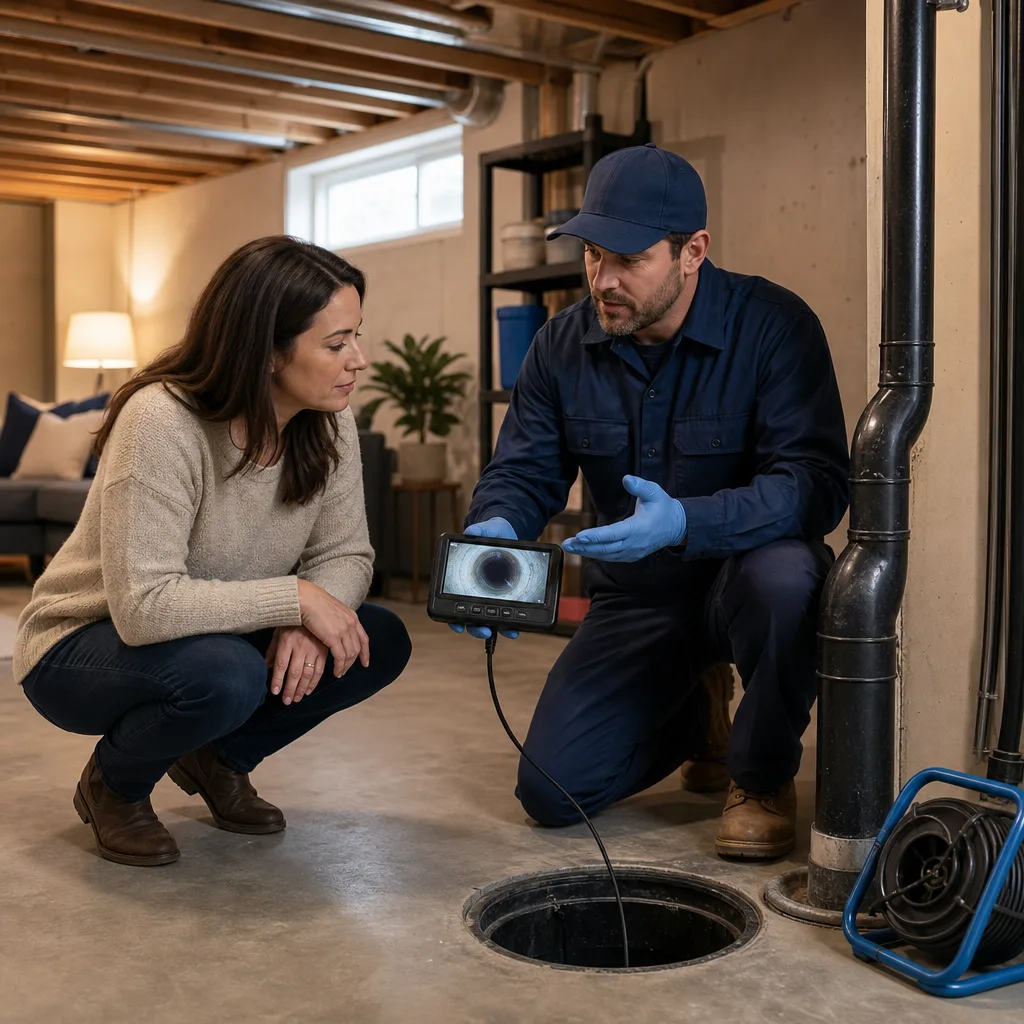
Riverside South homeowners often approach basement protection from a different starting point than owners in Ottawa’s older central neighbourhoods. The community has grown in phases between the Rideau River, Leitrim Road, Bowesville Road and the southern urban edge, so house age, grading, finished-basement layouts and plumbing access can vary from one street or development phase to another. A neighbourhood label is not a substitute for inspecting the individual building.
A sanitary backwater valve is a normally open device intended to allow wastewater to leave a home while helping stop reverse flow from a surcharged sanitary sewer. It addresses one pathway only. It cannot stop water entering through foundation cracks, windows, grading, roof drainage or groundwater, and it does not replace a sump pump where groundwater control is needed. This guide frames the questions a Riverside South owner should take to a qualified plumbing professional and the City of Ottawa.
Keep neighbourhood growth and transit construction context separate from private-plumbing evidence. Public plans can explain how Riverside South is evolving, but they cannot confirm a buried branch, existing valve or eligibility decision at one address. Those conclusions require current records, field assessment and the responsible authority.
Start with the property, not a Riverside South assumption
Riverside South includes established streets, active construction areas and newer extensions. Do not infer that every home has the same drain arrangement because nearby houses look similar. Ask a plumber to identify the building sewer, sanitary branches, cleanouts, floor drains and any sump or storm connections. Construction drawings, a plumbing report and visible labels can help, but accessible piping and camera findings are stronger evidence than neighbourhood folklore.
Record the home’s approximate construction date, basement finish, previous water entry, renovations and utility locations. If a former owner finished the basement, confirm that access to drainage components was not concealed. A valve location must remain serviceable after installation; burying an access cover beneath flooring or built-ins defeats routine inspection.
- Ask whether builder documentation identifies a sanitary backwater valve, but have the installed condition verified because drawings can show intended rather than final routing.
- Note whether the basement floor has been raised, lowered or covered with a subfloor; each condition can affect investigation, cutting and a durable access detail.
- Identify all basement fixtures, including a rough-in hidden behind finishes, so the plumber can explain which branches the proposal would and would not protect.
- Record sump-pump, alarm and backup-power details separately. Their presence does not establish sanitary protection, and the valve does not establish groundwater protection.
- Ask how the location was determined and what evidence supports it. A clear answer should refer to observed piping, locating, records or measured investigation rather than a typical subdivision layout.
- Confirm how concrete, vapour-control layers, insulation and finished flooring will be restored after required inspection, and which trade carries responsibility for each item.
Separate river, surface-water and sewer-backup questions
The Rideau River is an important local landmark, but proximity to it does not by itself establish a sanitary sewer-backup risk or prove that a backwater valve is suitable. River flooding, overland runoff, groundwater and sewer surcharge are different mechanisms. A professional assessment should begin with where water could enter and what evidence exists, rather than treating every basement concern as one problem.
Walk around the house during safe, dry conditions. Note low window wells, settled soil, downspout discharge, driveway slopes and places where meltwater could collect. City flood-prevention guidance also emphasizes lot drainage, foundation maintenance and responsible sump discharge. Combining measures is usually more sensible than expecting one valve to provide comprehensive protection.
Related reading
Use a drain assessment to define scope
A drain camera inspection may help locate the building sewer, confirm pipe direction and reveal offsets, roots, debris or defects that affect planning. It is diagnostic evidence, not a guarantee that every buried condition can be seen. The plumber may also need measurements, fixture testing or selective exposure before finalizing a location.
The key design question is what plumbing the selected valve will protect without creating an unintended restriction or leaving vulnerable branches outside it. Ask for a written scope that identifies valve type, proposed location, access arrangement, pipe restoration, floor reinstatement, permit responsibility and inspection milestones. If the scope changes after concrete is opened, have the change documented before work continues.
Related reading
Confirm City of Ottawa permit and inspection requirements
The City of Ottawa maintains a specific backwater-valve permit page and explains that plumbing work must comply with applicable requirements. Have the contractor or designer confirm the current permit pathway for the actual scope before cutting concrete. Do not rely on a neighbour’s project, an old invoice or a product package as permit advice.
Clarify who applies, who answers plan-review questions, when work must remain exposed and who books inspection. Keep the permit number, approved documents and inspection record with the home file. This guide deliberately avoids do-it-yourself installation steps: an incorrectly selected or installed valve can obstruct drainage, remain inaccessible or fail to provide the intended protection.
Related reading
Check rebate eligibility before committing
Ottawa’s Residential Protective Plumbing Program publishes eligibility conditions and application requirements. The City page currently distinguishes properties by factors including location, ownership, construction date and the proposed protective work. Program terms, maximums and required documents can change, so treat a possible rebate as conditional—not as a discount already earned.
Contact the City before work if eligibility matters to the budget. Preserve quotations, invoices, proof of payment, permits and inspection material in the form requested. Neither a contractor’s recommendation nor valve installation guarantees reimbursement, and a rebate decision is separate from an insurer’s coverage decision.
For a newer home, verify what is already present
Because much of Riverside South is comparatively recent, an owner may discover an existing protective device or rough-in. Do not assume a cap in the floor is a working valve. Ask a professional to identify the component, its model if possible, what branches it serves and whether its access and condition permit maintenance.
If there is an existing valve, the decision may be inspection, repair or replacement rather than adding another device. Multiple devices are not automatically better. Product compatibility, drainage layout and code requirements matter. Home warranty documents or builder drawings may provide clues, but field verification remains important after renovations.
Plan around finished basements and future access
A finished basement raises two separate issues: the value exposed to water and the disruption needed to reach the drain. Before accepting a quote, discuss flooring removal, dust control, concrete cutting, utility clearances and who restores each finish. Photograph the area before opening and the piping before it is covered, subject to inspector approval.
The access cover should be obvious, durable and removable without dismantling cabinetry. Avoid placing permanent furniture over it. If a future buyer or service technician cannot find the valve, maintenance is likely to be missed. Add the location, model, installation date and permit record to a simple home flood-protection file.
Make inspection part of seasonal home care
A backwater valve contains moving or sealing parts that can be affected by waste and debris. Follow the manufacturer’s instructions and have a qualified person inspect and clean it at the stated interval and after a suspected backup. Never enter a confined space or open plumbing while sewage is backing up.
Coordinate valve checks with sump testing, downspout review and a look at grading before spring melt and major-rain seasons. A slow fixture, repeated gurgling or unexplained odour deserves diagnosis rather than an assumption that the valve is operating. Keep maintenance notes and photos where the next homeowner can find them.
Related reading
Ask the insurer precise coverage questions
Installation does not automatically create or preserve sewer-backup coverage. Tell the insurer what device is proposed and ask whether it affects eligibility, deductible, limits or documentation. Request answers in writing. Distinguish sewer backup from overland water and groundwater wording because policies can treat them differently.
Retain permits, inspection results, invoices, photographs and maintenance records. Those documents may help describe the risk-control measure, but they do not guarantee claim payment. Continue practical loss reduction: store irreplaceable items above floor level and know how to shut off utilities safely during an emergency.
Compare complete scopes, not valve prices
Useful quotes explain investigation, device selection, permit handling, excavation, disposal, inspection access, concrete repair and exclusions. Ask whether finish restoration, camera work and taxes are included. A low number that omits permit coordination or floor restoration is not directly comparable with a complete scope.
Lister Plumbing states that it serves Riverside South; homeowners can ask the company to assess their specific property without implying that work has previously been completed on their street. Seek professional review, verify current municipal rules independently and avoid anyone promising that a valve will prevent every kind of basement flood.
- Give each bidder the same known information and ask them to identify assumptions. Differences in protected branches, restoration and permitting can explain price differences more meaningfully than the valve brand alone.
- Ask who attends the City inspection, who handles a requested correction and when the floor may be closed. These responsibilities should not emerge only after the concrete is open.
- Confirm warranty boundaries for the device, workmanship, drain repairs, concrete and finishes. No warranty language should be interpreted as a guarantee against every future source of basement water.
Related reading
Riverside South backwater valve FAQ
Does every Riverside South house need a backwater valve?
No. Need and suitability depend on the individual drain layout, existing devices, hazards, history and professional assessment. A community’s age or location cannot determine the answer for one house. Ask a qualified plumber to trace the system and confirm the current City requirements.
Is a home near the Rideau River protected from river flooding by this valve?
No. A sanitary backwater valve is intended to resist reverse flow through the protected sanitary connection. It does not seal foundations or stop river water, groundwater, surface runoff or water entering openings. River and overland-flood concerns require separate official information and property-specific advice.
Could my newer Riverside South home already have a valve?
Possibly, but age alone is not proof. Have a professional identify any access cap or device and determine its type, condition and coverage. Builder records may help. Do not install a second valve merely because an existing device was hard to identify.
Can the valve go under finished flooring?
The piping may be below the slab, but the valve’s service access must remain reachable and consistent with the approved installation and manufacturer instructions. Discuss a durable access cover and finish details before work. Permanent flooring or cabinetry should not prevent inspection.
Will the Ottawa rebate definitely pay for installation?
No. The City decides applications under its current Residential Protective Plumbing Program criteria and documentation rules. Confirm eligibility directly before relying on funding. Installation, permit issuance or a contractor’s opinion does not guarantee approval or a particular amount.
Do I still need a sump pump?
A valve and sump pump address different water pathways. A sump system may manage groundwater or foundation drainage where applicable; a sanitary valve addresses reverse sewer flow. A professional should assess each independently rather than treating one as a substitute for the other.
What should I do during an apparent sewer backup?
Keep people and pets away from contaminated water, avoid using plumbing fixtures, and do not open or service the valve during active backup. Contact appropriate emergency plumbing and utility resources. Follow public-health and insurer directions for cleanup and documentation.
Sources and official references
- City of Ottawa — Riverside South Secondary Plan
- City of Ottawa — Backwater valve permits
- City of Ottawa — Residential Protective Plumbing Program
- City of Ottawa — Prevent basement flooding
Programs, permits and bylaws change. Confirm current requirements with the City of Ottawa before acting.
Questions about your Riverside South home?
Ask a local plumber, without pressure.
Requests are sent to Lister Plumbing, who serve homes across all Ottawa areas listed here. A request is not a commitment, and no price is promised before someone looks at your plumbing.