Beacon Hill’s residential areas extend across a varied east-end setting near the Ottawa River corridor, Green’s Creek and major roads. Maps and topography can prompt useful questions about surface drainage, but they cannot diagnose a house sewer or prove that a basement is vulnerable to backup. Housing form, renovation history, fixture elevation and private-pipe condition matter at the individual address.
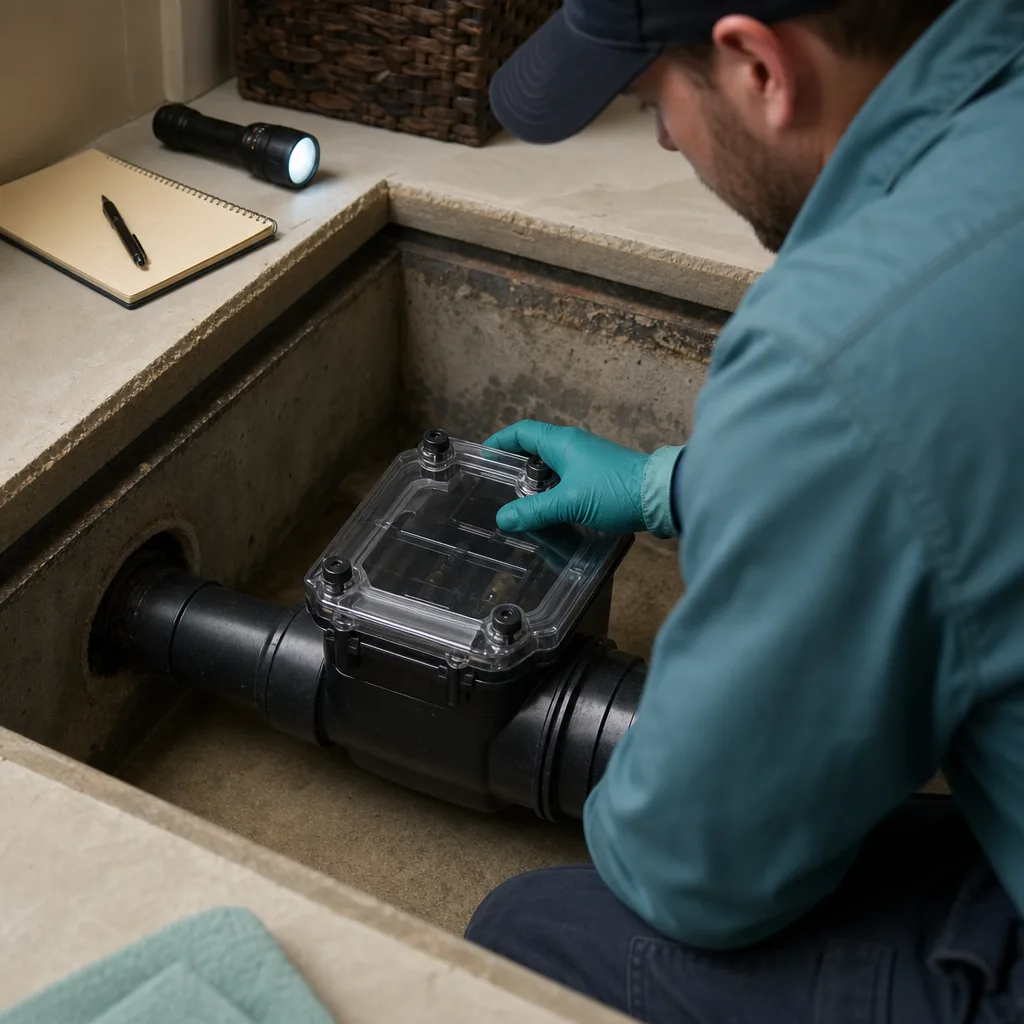
A backwater valve is intended to stay open for normal discharge and close when flow reverses. It may help protect fixtures upstream of a correctly selected and installed device. It does not stop river or surface flooding, groundwater seepage, roof water, foundation leakage, sump failure, plumbing leaks or every drain obstruction. Beacon Hill owners should treat it as one possible layer in a property-specific plan, with professional assessment, City approvals and continued maintenance.
Use Beacon Hill geography as context, not a diagnosis
A home’s position on a slope, near open space or closer to the river corridor may influence questions about overland flow and grading. It does not establish the direction, material or condition of the sanitary service. Do not infer a combined sewer, flood frequency or valve need from neighbourhood location; verify the private arrangement and consult official mapping or City staff for site-specific public information.
Walk the exterior in safe conditions and note downspout outlets, window wells, sunken paving and soil slope. Inside, record the lowest fixtures, floor drains, sump equipment and visible cleanouts. These observations help separate surface and groundwater concerns from a reverse sanitary-flow concern.
Build a drainage record for the individual house
Gather permits, renovation drawings, prior plumbing invoices and any record of sewer repair. A basement bathroom or addition may have changed branches even if the house resembles others nearby. Document past incidents by location, water character, weather and fixture behaviour, while avoiding contact with sewage or wet electrical areas.
Ask a qualified plumber to explain where the building drain likely exits, what joins it and which fixtures a proposed valve would protect. If information is uncertain, the scope should include investigation rather than hide the uncertainty in a fixed installation promise.
Let camera findings guide the next question
A camera inspection can reveal accessible pipe interiors, branches, deposits and some visible defects; locating can relate the route to the floor. Request the footage or stills and a plain-language account of what was and was not seen. This is especially useful where finished rooms make exploratory openings disruptive.
Camera work has limits. Water and debris can hide conditions, and an image does not measure every pipe property or certify the public sewer. If an obstruction, displacement or deterioration appears, ask whether cleaning, repair or another test should precede valve installation. A backwater valve should not be used to mask an unresolved private-line problem.
Match each protective tool to a water pathway
Wastewater rising at a low fixture, clear seepage at a wall and water collected in a sump are different evidence. A sanitary backwater valve addresses reverse sanitary flow. Grading, foundation drainage, window-well work, pump reliability or leak repair may be needed for other pathways. More than one issue can appear during severe weather.
If a sump pump exists, review its condition, discharge and backup power separately. A pump and valve do not duplicate each other, and one is not automatically required because the other is present. Seek an assessment that explains the pathway each recommendation addresses and its limitations.
Related reading
Confirm the City permit before opening concrete
The City’s protective-plumbing FAQ states that installing a protective plumbing device requires a building permit. Verify current forms, fees and inspection stages with the Building Code Client Service Centre or 3-1-1. Assign responsibility for the application, responses and inspection booking in the contract.
The valve type, orientation, protection zone and service access must satisfy applicable requirements for the actual drain. Keep work exposed until the required inspection permits closure. This is professional work, not a homeowner cutting exercise: excavation can encounter sewage and hidden services, and an incorrect valve can obstruct normal drainage.
Related reading
Read Ottawa’s rebate rules at the start
Ottawa’s Residential Protective Plumbing Program lists eligibility conditions and maximum amounts for sanitary and storm protective measures. Its current page includes construction-date criteria and explains that payment is limited to the lesser of eligible cost or the maximum. Rules and funding may change, so read the live City material before entering a contract.
Beacon Hill location alone confers no entitlement. Confirm the municipal address, property type, construction evidence, prior installations and application timing. Retain City correspondence, estimates, permit and inspection records, itemized paid invoices, product details and photographs. Approval and amount belong to the City; no contractor can guarantee them.
Related reading
Ask quotes to expose assumptions
A high-quality quote specifies investigation, valve model, proposed location, protected fixtures, concrete opening, pipe work, testing, permit, inspection, cleanup, access cover and restoration limit. Ask what happens if the floor reveals another branch, unsuitable material or damage. Written change authorization prevents pressure decisions.
Finished Beacon Hill basements need explicit flooring, dust and contents planning. Clarify whether trim, cabinetry, hazardous-material review and decorative repair are excluded. Compare equivalent scopes and serviceability, not just totals. No quote should promise that the basement can never flood.
- Request a diagram of upstream fixtures and known bypasses.
- Confirm device approval, warranty and manual.
- Identify who coordinates City inspection before concealment.
- Reserve a practical, removable access area.
Related reading
Prepare for the moment a valve closes
When reverse flow shuts a sanitary valve, household wastewater cannot leave normally. Stop toilet flushing, bathing, laundry, dishwashing and other discharge during a suspected backup. Otherwise water can accumulate upstream and overflow from the lowest opening despite the device blocking external flow.
Post a simple response plan, with plumber, insurer and 3-1-1 contacts. Keep people and pets away from contamination and avoid energized wet spaces. Arrange professional assessment after an event rather than assuming the flap is clean and fully reopened.
Preserve access, maintenance and insurance evidence
Follow the manufacturer’s instructions and professional advice for inspection. Service checks appropriate movement, seating and debris for the specific model; there is no neighbourhood-based interval. Keep the cover readily reachable and arrange a check after backup, unusual drainage or work on the line.
Before installation, ask the insurer about sewer-backup coverage, exclusions, deductibles and documentation. Permit or rebate approval does not guarantee coverage or claim payment. Keep the permit, inspection result, invoice, model, photos and maintenance log for servicing and future sale.
Related reading
Use seasonal observation without waiting for damage
Beacon Hill homeowners can collect useful information during ordinary rain and thaw without entering hazardous conditions. Note where roof discharge travels, whether snow storage directs melt toward the foundation, and whether window wells or low paving hold water. Inside, watch for new staining, odour or slow drainage. Observations should be dated because a single dry-day inspection may miss intermittent conditions.
Share that record with the appropriate professional. Exterior water observations may call for a drainage or foundation assessment, while fixture behaviour belongs in the plumbing investigation. Do not deliberately flood-test a yard, drain or valve. Testing methods should be selected by professionals who understand the building and municipal requirements.
Seasonal evidence also helps prioritize budgets. A camera-confirmed drain defect may need attention before a protective device; repeated surface ponding may justify grading review; uncertain evidence may support monitoring. The right outcome is not always immediate valve installation, and deferring construction while gathering facts can be responsible.
Require a complete installation handover
Before final payment, confirm the required City inspection status, review the valve location and obtain model literature, warranty terms and an itemized invoice. Ask the installer to identify which fixtures are protected and any known limitations. Photograph the open installation where permitted and the finished access cover for the property file.
Have every occupant review closure instructions. Mark the cover so it is not buried under storage, and include it on plans for later flooring or basement renovation. If the household changes, transfer the instructions rather than assuming a new resident recognizes the device.
The handover should also state what warrants a service call: unusual drainage, suspected closure, sewage exposure, damage to the cover or work on nearby piping. Never force a mechanism or pour aggressive products into the system as a troubleshooting shortcut. Qualified assessment protects both the device and the drainage route.
Finally, revisit insurance and emergency contacts with the completed documents in hand. Report information the policy requires, but do not assume the installation changes coverage. The insurer alone determines underwriting and claims under its contract.
Separate service-line repair from protective plumbing
Ottawa’s homeowner information notes that service-line life can depend on material, soil conditions and use. That general statement is not a diagnosis for Beacon Hill. If inspection identifies a private-line concern, ask where it is, what evidence supports it and whether cleaning, monitoring, repair or replacement is being recommended. Obtain the finding in writing.
A backwater valve controls direction of flow at its installation point; it does not restore a broken joint, remove an obstruction permanently or correct poor slope. Conversely, repairing a private defect does not necessarily provide protection against an external surcharge. Keep the objectives and prices separate so each can be evaluated on its evidence.
Confirm the public-private responsibility boundary with the City for the actual location. Do not authorize excavation based on an informal belief that the municipality or homeowner will later absorb the cost. Shared or condominium property adds another layer of authorization that should be resolved first.
Ask how any upstream repair changes the selected valve location, access or permit drawings. Sequencing matters: performing investigation and necessary repair first can prevent duplicate floor work and can give the designer more reliable conditions for protective plumbing.
After work, update the service sketch and preserve camera files, measurements and invoices. This evidence helps later maintenance and avoids forcing a future owner to rediscover the underground route from scratch. Note the date, contractor contact and inspection status, and give every owner access to the durable record rather than storing it with one person.
Beacon Hill backwater valve FAQ
Does proximity to the Ottawa River prove a Beacon Hill sewer-backup risk?
No. Geographic proximity does not diagnose a private sanitary route or predict a specific event. Consider official flood information separately and investigate the house’s drainage and water-entry evidence.
Can slope tell me where my sanitary pipe runs?
No. Records, visible plumbing and professional camera or locating work are better evidence. Never select an excavation point from surface slope alone.
Will the valve stop clear water at a basement wall?
No. A sanitary valve resists reverse sanitary flow. Clear seepage calls for investigation of grading, foundation, window, roof-water or other pathways.
Is a permit required in Beacon Hill?
Ottawa’s protective-plumbing FAQ says a building permit is required. Confirm the current process with the City and keep work available for the required inspection.
Is an older property guaranteed the Ottawa rebate?
No. Construction date is only one program consideration. The City applies all current eligibility, application, work and documentation rules and controls approval.
Should plumbing be used while the valve is closed?
No. Stop discharging wastewater through protected fixtures because it can accumulate inside. Resume only when conditions are safe and the system is operating normally.
Does installation guarantee insurance coverage?
No. Coverage depends on the policy and insurer. Ask before work and retain documents, but do not treat permits or rebates as insurance approval.
Sources and official references
- City of Ottawa — Residential Protective Plumbing Program
- City of Ottawa — protective-plumbing FAQ
- City of Ottawa — service-line failure risk
- City of Ottawa — flood plain mapping
Programs, permits and bylaws change. Confirm current requirements with the City of Ottawa before acting.
Questions about your Beacon Hill home?
Ask a local plumber, without pressure.
Requests are sent to Lister Plumbing, who serve homes across all Ottawa areas listed here. A request is not a commitment, and no price is promised before someone looks at your plumbing.