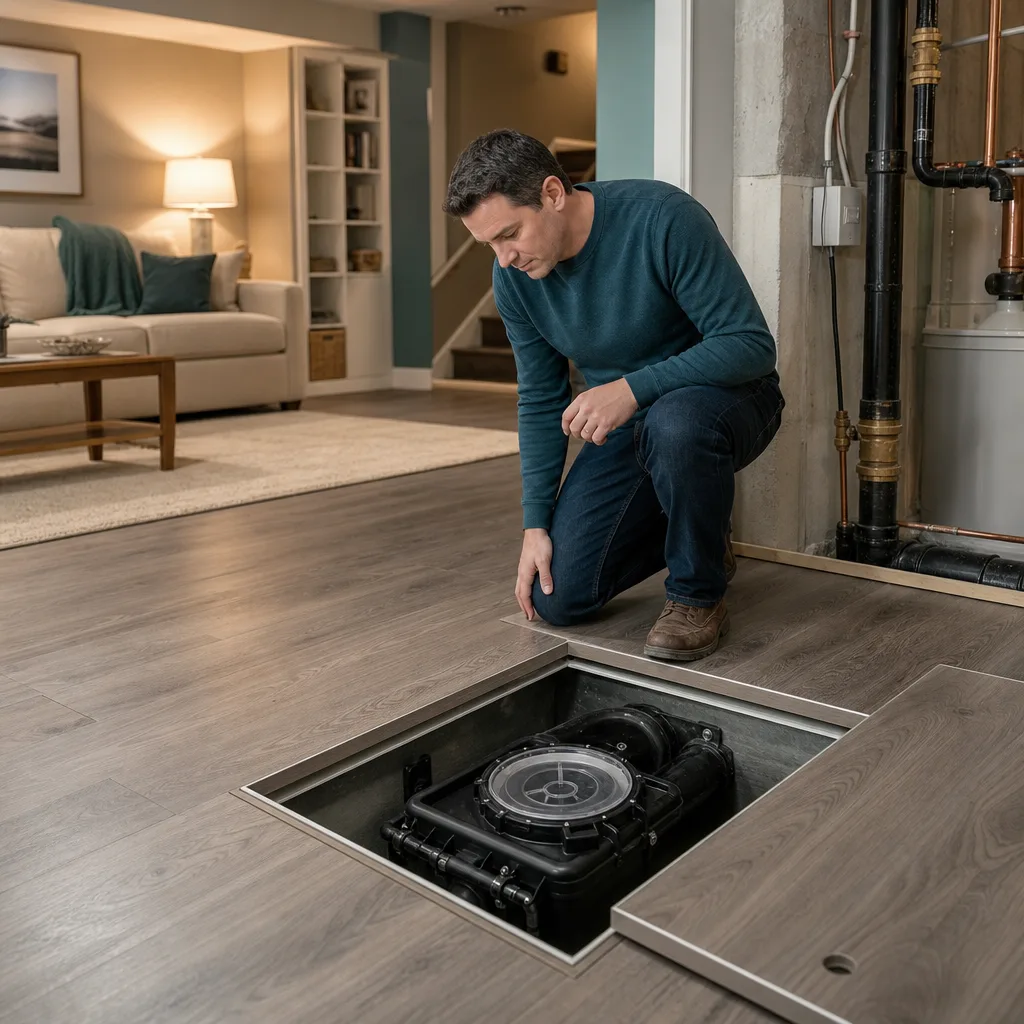
Backwater valves allow wastewater to leave a building in normal conditions and close against reverse flow when the downstream sewer surcharges. In Blackburn Hamlet, deciding whether to add one should begin inside the property boundary: identify the actual building drain, the fixtures connected to it, the elevation relationships and the evidence about how water has entered before.
Blackburn Hamlet is an established outer-urban community beside Greenbelt lands, with curving residential streets and access organized around Innes Road and the Blackburn Hamlet Bypass. That setting is meaningful for access, landscaping and household planning, but it does not prove the material, route or condition of any home’s sewer. Houses of similar appearance can have different renovations, basement fixtures and buried work.
This homeowner guide emphasizes diagnosis, permits, rebate verification, safe operation and long-term access. It is not a do-it-yourself installation manual, and a valve is not a guarantee against every form of flooding. Lister Plumbing has confirmed that it serves Blackburn Hamlet; because no project records were provided, this article makes no claim about installations completed in the community.
Build a property record before the assessment
Collect plumbing plans, renovation permits, sewer invoices and notes from any water incident. Mark basement toilets, showers, laundry, floor drains, sump pits and cleanouts. If water entered previously, record where it first appeared, whether it was clear or contaminated, what the weather was doing and whether neighbours or municipal services reported an issue. These observations are clues rather than a diagnosis.
A professional should trace the sanitary building drain and determine whether a proposed valve would protect every relevant branch. Finished ceilings and floors may conceal changes made during basement renovations. An exterior cleanout can help orient an investigation but does not by itself show all interior connections. Request an explanation tied to observations, not an assumption based on the subdivision or construction era.
- Photograph accessible piping and covers without opening sanitary components.
- List basement additions and fixture relocations by approximate date.
- Ask the assessor to identify uncertainty where the drain route cannot be fully observed.
Separate Greenbelt surroundings from building drainage facts
The City’s Official Plan describes the Greenbelt as a large planning area containing natural, rural and other uses, and municipal planning material treats Blackburn Hamlet as an outer-urban community even though residents may perceive it as within the Greenbelt. Those distinctions help explain the community’s edges and transportation pattern. They do not tell a homeowner whether a particular lot has a sanitary backup risk.
Avoid conclusions based on nearby open space, a low-looking yard or a neighbour’s valve. Surface topography, foundation drainage and municipal sewer surcharge are different subjects. A site walk can identify grading, window wells, downspout outlets and low points, while plumbing diagnostics address reverse flow through the sewer. Both may matter, but each needs its own evidence and appropriate professional.
Related reading
Match the device to the water pathway
A sanitary backwater valve resists sewage returning through the protected sanitary line. It does not stop rain flowing toward a walkout, groundwater rising beneath a slab, leakage through a wall crack, or water entering a window well. A sump pump manages collected groundwater or foundation drainage where such a system exists; it performs a different task and also requires discharge and backup-power planning.
If the source is uncertain, resist buying a device before diagnosis. A drain-camera inspection may clarify pipe routing and visible condition. Foundation or grading expertise may be needed for seepage. The City’s basement-flooding guidance presents protective plumbing alongside property drainage measures, which is a useful reminder that resilience often depends on several coordinated controls.
Use a camera inspection for specific questions
Camera work is most valuable when it answers defined questions: where the building sewer runs, whether an accessible branch joins before the proposed valve, and whether visible damage or obstruction changes the scope. Ask the operator to describe the inspected route and limitations. A camera cannot see through heavy blockage, map every hidden branch automatically or certify pipe that it did not reach.
If roots, offsets, deformation or significant deposits appear, discuss whether cleaning or repair should precede valve installation. A freely moving valve installed beside a failing pipe does not correct the pipe defect. Obtain video or stills where available and ensure the estimate says whether diagnostic work, cleaning and unforeseen repairs are included.
Related reading
Choose access that survives future basement use
The technically correct pipe may pass beneath a recreation room, utility area or finished floor. The valve needs an approved, serviceable location and a durable access cover. Discuss excavation size, dust control, protection of nearby finishes, concrete restoration and how the final cover will sit relative to flooring. Never approve a plan that hides the device beneath permanent cabinetry or an immovable platform.
Blackburn Hamlet homes often use garages and side yards intensively for vehicles, gardens and storage. If equipment or material must reach the work area, clarify the route and protection in advance. This is logistical guidance, not a claim about any property’s plumbing. The written scope should state what the contractor will restore and what remains for another trade.
Schedule Ottawa permit review and inspection
The City of Ottawa states that installing a backwater valve requires a building permit. Confirm current forms, fees and inspection expectations before work begins. Ask who obtains the permit, when the inspector must see the installation, and whether the floor must remain open. A project sequence that treats inspection as an afterthought risks delay and unnecessary reopening.
Keep the permit, inspection result, paid invoice, valve make and model, photographs and any camera report. These records tell future owners what was installed and support maintenance. They may also be requested for rebate or insurance purposes, but possession of records does not guarantee reimbursement or a coverage decision.
Verify Ottawa rebate details at the source
Ottawa’s Residential Protective Plumbing Program lists eligibility conditions and documentation for protective devices. Rules distinguish device categories and include property and construction-date requirements. Program terms can change. Check the current municipal page before accepting a quote, and contact the program when a property has an addition, replacement dwelling, multiple units or another circumstance that makes the date test unclear.
Budget as though approval still must be earned. An estimate should not label the rebate as certain or subtract it as guaranteed cash. Retain itemized invoices and permit documentation in the format the City requests. Speak separately with your insurer because municipal eligibility does not decide insurance coverage, premiums or claim treatment.
Prepare everyone for valve closure
When surcharge pressure closes the flap or gate, the home’s wastewater cannot leave through that protected line normally. Continued flushing, showering, laundry and dishwasher use may then back up on the house side. Place a simple instruction with the household emergency information: during a suspected sewer surcharge, minimize water use and follow professional or City advice.
A valve can be blocked by debris or fail to address another entry route, so avoid absolute promises. Keep stored items raised, consider appropriate water alarms and maintain safe clearance around electrical and mechanical equipment. Sewage exposure requires caution and qualified cleanup; occupants should not enter water where electrical hazards may exist.
Make maintenance visible and document it
Follow the manufacturer’s instructions and professional recommendation for inspection and cleaning, including attention after a suspected surcharge. Maintenance generally focuses on accessible debris, free movement, seals and signs of damage. It is not a reason for an unqualified person to dismantle sanitary piping or improvise replacement parts.
Label the access cover discreetly, keep it unobstructed and record service dates. Give the file to a new owner rather than relying on memory. If flooring is replaced, show the installer the access requirement before work starts. Long-term protection depends as much on this ordinary stewardship as on the initial installation.
Related reading
Compare scopes rather than headline prices
Request a proposal that identifies the protected line and fixtures, valve type and location, permit responsibility, inspection stage, access-box finish, restoration, cleanup and exclusions. Ask what changes if the exposed drain differs from expectations. Compare whether each bidder diagnosed the same problem; two prices are not comparable when one includes camera work and floor restoration and the other does not.
Reject promises that a valve prevents all flooding, guarantees a rebate or assures insurer approval. Request professional reasoning and a maintainable result. Lister’s regional service information is available through the linked page, while the property-specific decision belongs in a documented assessment and written quote.
Before accepting, ask for the planned sequence from arrival through inspection and restoration. Blackburn Hamlet households may need to move recreation-room furniture, clear a garage route or arrange for pets and children to stay away from the work zone. Confirm how long sanitary fixtures are expected to be unavailable and how a delay in inspection would be managed. These practical answers help distinguish a complete project plan from a price for the valve alone.
After completion, walk through the access location and normal appearance of the device with the professional. Record whom to call if an alarm, odour, slow drain or suspected closure occurs. Avoid diagnosing those signs by forcing the cover or mechanism. A short, property-specific handover gives future maintenance a much firmer basis than generic product literature.
Keep photographs from before floor restoration with measurements from two fixed walls. If carpeting, tile or built-ins change later, give those records to the renovation contractor and require the access to remain usable. This modest step protects the maintenance plan from being lost during an otherwise unrelated basement update.
Blackburn Hamlet backwater valve FAQ
Does Blackburn Hamlet’s location near the Greenbelt change valve requirements?
Greenbelt context does not establish a home’s sewer design or permit requirements. Blackburn Hamlet properties are within Ottawa, so current City permit rules apply. Device need and placement must come from property-specific drainage assessment, not the community’s landscape setting.
Can I copy the valve location used by a neighbour?
No. Similar houses may have different additions, basement bathrooms, repairs and pipe routing. A professional should trace your building drain and show which fixtures would be upstream of the proposed device.
Does an Ottawa rebate automatically cover the full project?
No. Eligibility, eligible costs, limits and documents are governed by the current City program. Restoration or unrelated repairs may not be treated like the device work. Obtain current confirmation and never treat reimbursement as guaranteed.
Will a sanitary valve solve yard drainage or window-well flooding?
No. It addresses reverse flow through a protected sewer. Grading, roof runoff, window wells, foundation seepage and groundwater require separate assessment and may call for different controls.
Is a permit required in Blackburn Hamlet?
The City of Ottawa says a building permit is required to install a backwater valve. Confirm the latest process and ensure inspection occurs at the required stage before the work is concealed.
How often should the valve be checked?
Use the manufacturer’s schedule and professional advice, and inspect after a suspected surcharge. Conditions differ, so this article does not impose a universal interval. Keep the cover accessible and record every service.
Can a homeowner perform the installation?
This is not a DIY project guide. Selecting the protected line, cutting sanitary drainage and satisfying permit inspection require qualified professional work. Improper placement can leave fixtures exposed or cause wastewater to back up inside.
Sources and official references
- City of Ottawa: Greenbelt designations
- City of Ottawa: Backwater valve permits
- City of Ottawa: Residential Protective Plumbing Program
- City of Ottawa: Prevent basement flooding
Programs, permits and bylaws change. Confirm current requirements with the City of Ottawa before acting.
Questions about your Blackburn Hamlet home?
Ask a local plumber, without pressure.
Requests are sent to Lister Plumbing, who serve homes across all Ottawa areas listed here. A request is not a commitment, and no price is promised before someone looks at your plumbing.