Gloucester is a broad former municipality rather than one uniform housing subdivision. Within today’s Ottawa it spans communities of different ages, building forms and site conditions. A bungalow with a renovated basement, a townhouse and a rural-edge property may all carry a Gloucester address while presenting entirely different drainage questions. Responsible planning therefore starts with the individual parcel and plumbing, not a claim about “Gloucester sewers.”
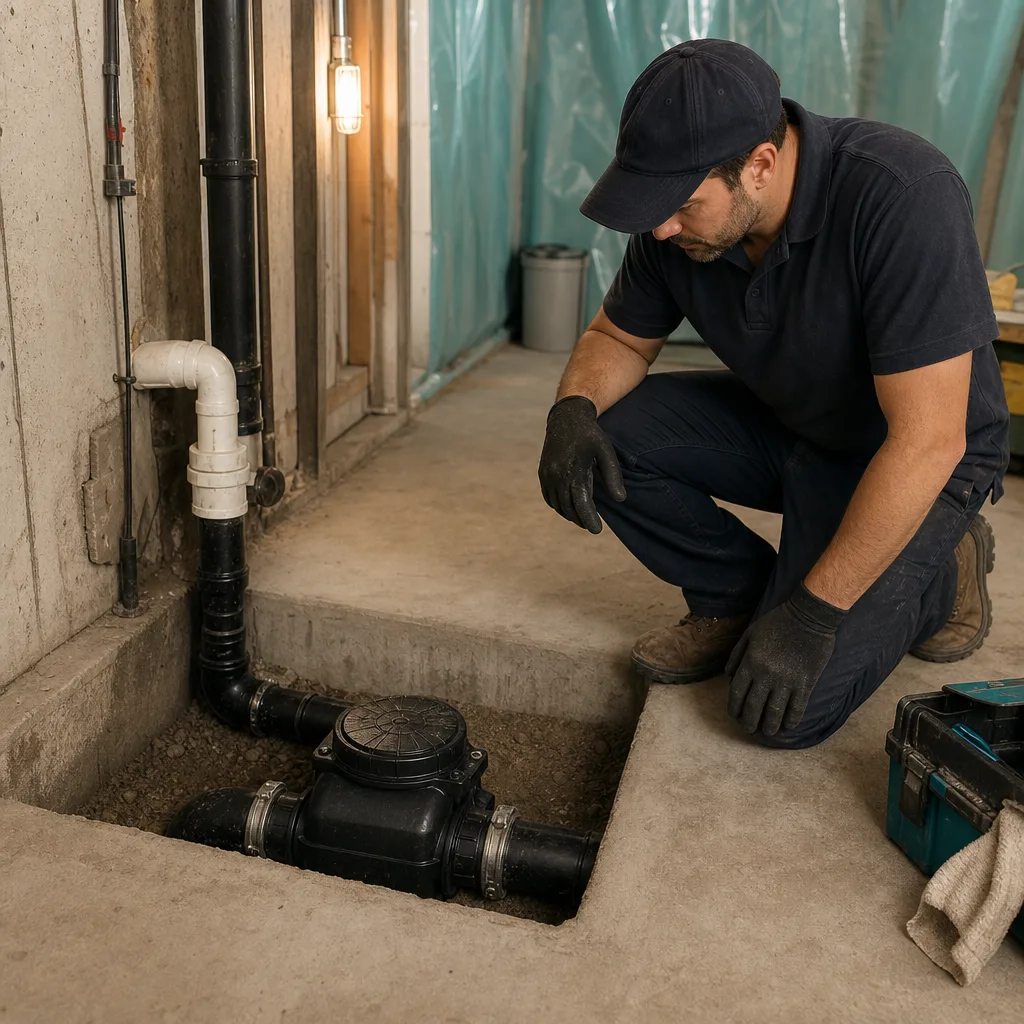
A sanitary backwater valve is intended to permit normal outward wastewater flow and resist reverse flow from a surcharged sanitary sewer through protected piping. It does not stop rain through an opening, groundwater seepage, foundation leakage, surface runoff or every possible plumbing backup. This homeowner guide explains how to frame a professional assessment, permit review and long-term care without providing hazardous installation instructions.
When requesting advice, use the precise neighbourhood and address instead of Gloucester alone. That helps the City, insurer and contractor distinguish jurisdiction, servicing and building context without pretending that a broad historical boundary predicts private plumbing. Decisions and records should always return to the individual property.
Define the property before defining the solution
Because Gloucester can mean a large geographic area, give prospective professionals the exact address, housing type, approximate build date and service arrangement. Confirm whether the property receives municipal water and sewer service rather than assuming from the community name. Ottawa’s geoOttawa mapping and property records may offer context, but only field investigation can establish private drain routing.
Collect permits, renovation plans, surveys, invoices and any prior drainage reports. Describe observed incidents precisely: wastewater at a floor drain differs from clear seepage at a wall. Avoid unsupported claims about neighbourhood flood frequency or sewer design. Public planning documents are useful background, not evidence that a particular basement requires a particular device.
- Confirm the municipal address and current City jurisdiction first. The historical Gloucester name covers a wide area, while permit and program questions attach to the actual property.
- State whether the building is detached, attached, condominium, rental or mixed use. Ownership and shared piping can change who may authorize investigation and ongoing service.
- Verify municipal servicing from reliable records and professional observation. Do not assume that every property using a Gloucester community name has the same private connection.
- List additions, basement bathrooms, secondary units and major renovations because each may introduce branches absent from original plans or change access to older piping.
- Separate known facts, such as an observed floor-drain backup, from recollections about nearby streets. The design should respond to this building’s evidence, not unverified neighbourhood stories.
- Ask the professional to identify uncertainties before quoting. Buried depth, material transitions, inaccessible cleanouts and former alterations can all affect the final scope and restoration.
- If piping may be shared, obtain the condominium, co-owner or building authority needed before testing or alteration. A private solution must not create a problem for another occupant.
Expect housing era and renovations to change access
Older Gloucester houses may have cast iron, clay or other legacy materials, while later homes may use different piping and layouts. Renovations can reroute fixtures, cover cleanouts or add basement bathrooms. Age suggests questions to ask; it does not diagnose pipe material or condition. A professional should verify what is present before selecting fittings or excavation limits.
Finished rooms make restoration a meaningful part of the scope. Identify flooring layers, radiant heating, nearby utilities, cabinetry and asbestos or other hazardous-material concerns where age and materials warrant qualified review. The least disruptive visible location is not automatically the hydraulically correct location. Keep investigation and safety ahead of cosmetic convenience.
Distinguish sewer backup from other Gloucester water entry
Basement water can arrive through sanitary piping, foundation drainage, groundwater, lot runoff, windows or building-envelope defects. A valve only addresses reverse flow through the sanitary piping that it protects. It cannot compensate for a failed sump pump, blocked private drain, foundation crack or low opening. A mixed event may require more than one measure.
Write down colour, odour, entry point, fixture behaviour, rainfall or snowmelt timing and whether neighbours or the City reported an issue. Photos taken safely can assist diagnosis. Never enter contaminated water or open a valve during an active backup. City flood-prevention guidance covers grading, downspouts, sump discharge and protective plumbing because layered risk reduction is more realistic than a single-device promise.
Use camera evidence to refine, not oversell, the plan
A drain camera can help identify direction, accessible branches and visible defects. In older or altered Gloucester properties, bends, scale, standing water or inaccessible sections may limit the view. Ask the operator to explain what was observed, what could not be inspected and whether location equipment or selective exposure is needed.
A useful report identifies access used, direction travelled, approximate observations and relevant images. It should not convert uncertainty into certainty. Existing defects may need attention before or alongside valve work. Obtain a written installation scope naming the protected drains, device, access, permit, inspection, excavation, concrete repair and finish exclusions.
Related reading
Confirm Ottawa approvals for the actual work
The City of Ottawa’s backwater-valve page explains the permit context. Ask the City or qualified project professional how current requirements apply to the address and scope. Gloucester’s former municipal identity does not create a separate present-day permit system for properties inside Ottawa. Never rely on a product seller or a neighbour’s older project as approval.
Put responsibility for application, drawings, inspection booking and corrections in the contract. Determine what must remain exposed and obtain inspection before closure. Preserve the permit number, approved documents, inspection result, photos and invoice. This article offers no do-it-yourself cutting or plumbing sequence because errors can restrict drainage, expose occupants to sewage and undermine intended protection.
Related reading
Apply Ottawa rebate rules address by address
Ottawa’s Residential Protective Plumbing Program lists conditions tied to the residential property, applicant, building date and eligible work. Gloucester’s varied development history makes address-specific checking essential. A house being old, previously flooded or professionally assessed does not itself guarantee eligibility.
Read the current official page before contracting if funding matters. Confirm required estimates, permit and inspection records, invoices and proof of payment, along with submission timing. Program terms may change. Only the City can approve an application, and municipal reimbursement does not guarantee performance, insurance acceptance or a future claim outcome.
Related reading
Select coverage and serviceability, not just a product name
The professional must determine which fixtures and branches a proposed valve protects, whether vulnerable connections remain outside it and how normal drainage behaves during closure. Valve size and type must suit the approved design and manufacturer requirements. Buying a familiar model before tracing the plumbing can force the design around the wrong component.
Ask for the product literature and a drawing or marked photograph of the final location. Access must remain adequate for inspection, cleaning and replacement. Where several units or shared elements are involved, establish ownership and responsibility before work; do not alter common plumbing based on assumptions. Condominium owners should consult their corporation and governing documents.
Create a maintenance record that survives a sale
Moving parts and sealing surfaces can collect debris. Use the manufacturer’s instructions and qualified service at the stated frequency and after suspected backup conditions. Wipes, grease and unsuitable waste can cause problems even when packaging uses reassuring language. Slow drainage or repeated gurgling requires diagnosis, not improvised force through an unknown device.
Label the access discreetly, store the model and installation date, and keep inspection notes with the permit file. Coordinate checks with sump, alarm, backup-power and visible lot-drainage reviews where those systems exist. Never permanently carpet, tile or build cabinetry over the service opening. A future owner should be able to locate and understand the device without demolition.
Related reading
Separate municipal compliance from insurance coverage
A permit confirms regulatory steps; it does not amend an insurance contract. Ask the insurer in writing whether installation affects sewer-backup eligibility, premium, deductible, sublimits or maintenance evidence. Clarify definitions for sewer backup, overland water and groundwater because the same basement incident may involve different coverage language.
Keep written answers, invoices, device details, permits, inspection results, maintenance records and pre-work photographs. These establish a useful chronology but never guarantee claim approval. Reduce exposed loss separately by storing irreplaceable items above floor level and maintaining a safe emergency plan for electricity and contaminated water.
Compare Gloucester proposals on evidence and scope
A strong proposal describes assessment, valve and protected piping, permit responsibility, excavation, waste removal, inspection access, concrete replacement, finish restoration, warranty and exclusions. Ask how unknown buried conditions are priced. A cheaper quotation excluding permits, camera work and flooring cannot be compared directly with an inclusive one.
Lister Plumbing confirms service coverage in Gloucester, but no claim is made here about completed local projects. Homeowners may request a property-specific assessment and independently check municipal information. Be wary of guaranteed flood prevention, guaranteed rebates or guaranteed insurance acceptance: each exceeds what a plumbing installation alone can establish.
- Ask each bidder to name the evidence used to locate the drain and define coverage. A Gloucester-wide rule of thumb is not a substitute for measurements or observed piping.
- Confirm whether the quote includes camera work, locating, permit fees, inspection attendance, disposal, concrete and final flooring. List exclusions beside the price so comparisons remain fair.
- Require prior authorization for additional drain repair discovered after opening. The professional should document the condition and explain why it changes the agreed protective-plumbing scope.
- Discuss safe access through the property, particularly where finished rooms, tenants, narrow stairs or shared spaces are involved. Protection of occupants and finishes belongs in project planning.
- Obtain model literature, final location records and maintenance instructions at handover. A verbal explanation on installation day is not a durable home record.
Related reading
Gloucester backwater valve FAQ
Is Gloucester one plumbing area with one typical sewer layout?
No. Gloucester covers many communities and development periods. Municipal-service status, private drain routing, pipe material, renovations and lot conditions must be checked for the exact property. Avoid any recommendation based only on the Gloucester name.
Does an older Gloucester house automatically qualify for Ottawa’s rebate?
No. Construction date may be one criterion, but the City applies all current program requirements to the property, applicant and work. Confirm eligibility directly before relying on funds and collect the required permit, inspection and payment records.
Can a valve solve foundation seepage after heavy rain?
A sanitary valve does not seal foundations or manage groundwater. Seepage may call for grading, drainage, sump or building-envelope assessment. If wastewater and clear seepage occurred together, have each pathway evaluated separately.
Is a camera inspection always conclusive in an older drain?
No. Cameras provide valuable visible evidence, but bends, debris, water, damage and inaccessible branches can limit findings. Ask the operator to document limitations and explain whether further locating or exposure is needed.
Who obtains the City permit?
The contract should assign responsibility, but the owner should verify that required approval and inspection actually occur. Keep the permit and final inspection record. Do not let restoration conceal work before the required inspection.
May I cover the valve access to improve the room?
Do not make routine service destructive. The approved access must remain usable under the manufacturer’s requirements. Integrate a removable cover into the finish and record its position for future owners and technicians.
Does a permit or rebate guarantee insurance coverage?
No. Municipal compliance, program eligibility and insurance are separate decisions. Ask the insurer for written terms, including exclusions, deductible, limits and maintenance expectations, and retain that response with the property file.
Sources and official references
- City of Ottawa — geoOttawa
- City of Ottawa — Backwater valve permits
- City of Ottawa — Residential Protective Plumbing Program
- City of Ottawa — Prevent basement flooding
Programs, permits and bylaws change. Confirm current requirements with the City of Ottawa before acting.
Questions about your Gloucester home?
Ask a local plumber, without pressure.
Requests are sent to Lister Plumbing, who serve homes across all Ottawa areas listed here. A request is not a commitment, and no price is promised before someone looks at your plumbing.