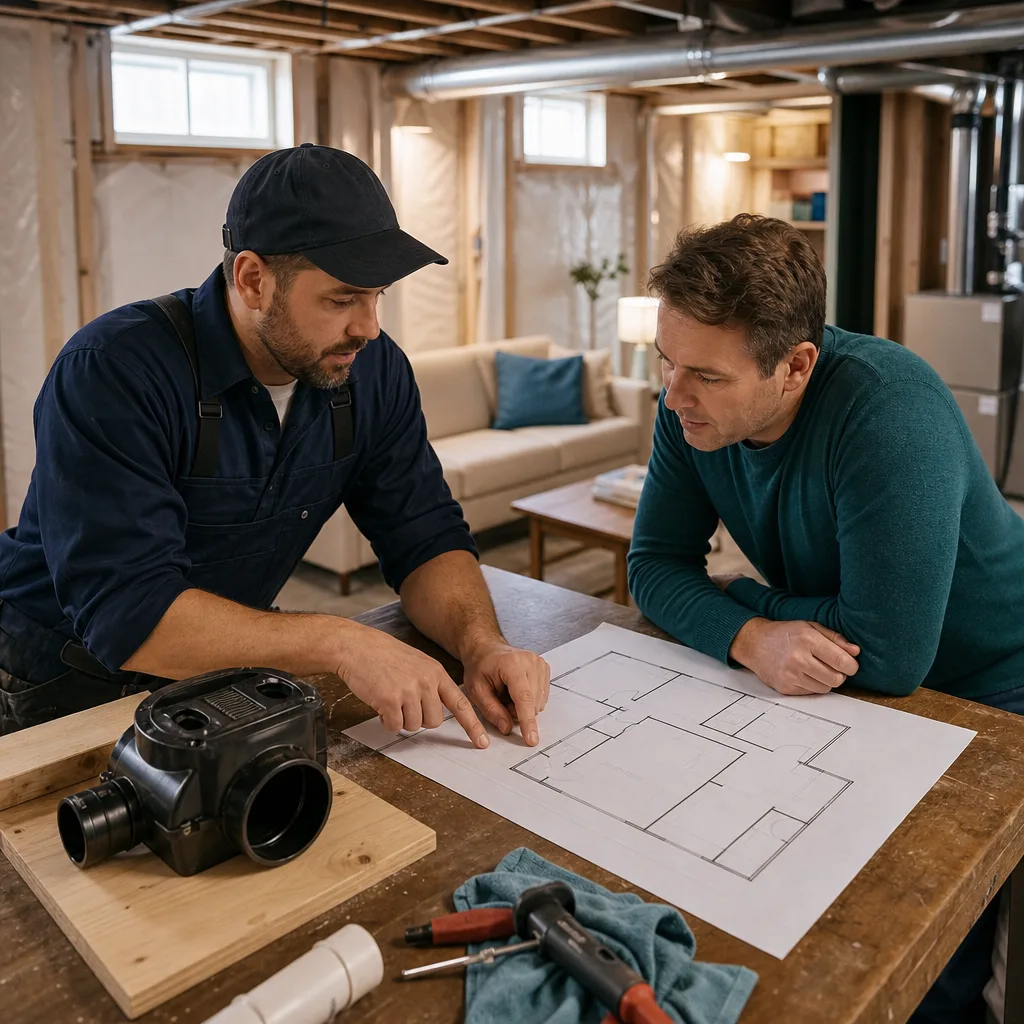
Carp’s village setting makes service verification the first step in backwater-valve planning. City infrastructure material identifies municipal water and wastewater servicing for Carp, while rural properties beyond a village service area may rely on private systems. A Carp address, rural-looking lot or nearby sewer cover is not enough to establish how one parcel is served.
Where a building is appropriately connected, a backwater valve can close against reverse flow through the protected sewer line. It cannot fix a collapsed private pipe, stop Carp River surface water, lower groundwater or waterproof a foundation. The property’s records, drain route, fixture branches, site drainage and history must be investigated separately.
This guide avoids DIY installation instructions and unsupported neighbourhood claims. Ottawa permit and rebate requirements need current confirmation, and no device guarantees complete flood prevention or insurance approval. Lister Plumbing confirmed service coverage in Carp; no Carp installation records were provided, so this is planning guidance rather than a portfolio of local jobs.
Verify the village service boundary and parcel connection
Begin with utility bills, purchase documents, approved plans and previous sewer or septic records. Determine whether the house is connected to municipal wastewater and where the private-side building sewer meets the public system. For properties outside or near the village, confirm rather than assuming that broad City servicing descriptions apply to the parcel.
The City’s Carp Community Design Plan explains growth and land-use context but is not a substitute for utility records or inspection. If a property uses an on-site sewage system, septic diagnosis and approvals take priority; an urban-style valve may not address the source. Ask every bidder to state the service arrangement on which its proposal relies.
- Confirm wastewater service with records and observable components.
- Locate basement fixtures, cleanouts, pumps, tanks and access covers.
- Resolve conflicting information before excavation or equipment purchase.
Related reading
Treat Carp River context as a separate flood question
The City publishes Carp River watershed and restoration planning, which confirms that river and stormwater matters are important regional subjects. It does not show that a specific basement is exposed or that sewer surcharge caused a past incident. Floodplain status and property drainage should be checked using current official mapping and professional advice.
A sanitary valve only resists reverse flow through its protected pipe. Water moving over land, entering a window well, seeping through a wall or rising beneath a slab bypasses it. Document the first entry point and water character, then assign sanitary, foundation, grading and surface-water questions to the appropriate specialists.
Trace the drain rather than guessing from the floor plan
Basement toilets, showers, floor drains and laundry may join the building drain at different points, particularly after additions or renovations. A professional must identify a compliant location that protects the intended fixtures and stays accessible. An open utility-room floor is not useful if the main line follows another route.
Camera inspection can help observe reachable pipe, fittings and visible defects. Ask which line was inspected, where the camera stopped and how distance was measured. A camera cannot automatically reveal every concealed branch. The estimate should acknowledge uncertainty and explain pricing if excavation exposes a different configuration.
Related reading
Address line condition and maintenance access together
Roots, deposits, offsets or deformation can obstruct flow or interfere with a valve. If observed, obtain professional recommendations that separate cleaning, repair and valve work. Adding a moving device does not cure upstream misuse or downstream pipe failure. Likewise, visible aging does not justify replacement without an actual assessment.
The finished valve needs a durable access box with room for service. Discuss excavation, concrete replacement, flooring transitions and protection of nearby mechanical systems. Never bury the cover under cabinets, permanent shelving or continuous flooring. Photograph and measure the location before restoration.
Plan access and responsibility on larger or mixed-use properties
Carp properties can range from village homes to larger rural or business premises. Building use changes who needs instructions, who authorizes work and how wastewater use is controlled during a surcharge. A multi-unit or commercial building deserves an explicit operational plan rather than a single-household assumption.
Long private service lines, outbuildings or previous additions may also complicate ownership and routing. These features must be confirmed on the property; they are not universal Carp conditions. Clarify equipment access, disturbed finishes, exterior excavation exclusions and restoration responsibility in writing.
Confirm Ottawa permits for the actual servicing type
The City says a building permit is required to install a backwater valve. Confirm current forms, fees, drawings and inspection stage before work begins. A private sewage system or unusual occupancy may involve other review, so describe the real property rather than asking only a generic permit question.
The proposal should name the permit applicant and inspection coordinator. Keep approved documents, inspection results, itemized invoices, equipment model, photographs and diagnostic reports. Records support future service and applications but do not promise reimbursement or insurance treatment.
Related reading
Verify rebate eligibility before setting the budget
Ottawa’s Residential Protective Plumbing Program publishes eligible measures, property and date criteria, limits and documentation. Carp’s location within Ottawa does not automatically qualify every parcel, private system or scope. Read the current rules and ask program staff about ambiguous service arrangements or building histories.
Do not let an estimate subtract a rebate as guaranteed money. Retain paid itemized invoices and all permit evidence requested by the City. Insurance is separate: ask the insurer how installation, inspection and maintenance affect the specific policy, without assuming a valve earns a discount or assures a claim.
Prepare for a closed valve and possible power loss
When the valve closes against surcharge, household discharge cannot pass normally. Flushing, bathing, laundry and dishwashing can fill the piping on the home side. Give every occupant a clear instruction to minimize water use during a suspected sewer event and contact the appropriate service.
A valve does not power sump or sewage pumps. Where pumps exist, document circuits, alarms and safe backup arrangements with qualified electrical and plumbing advice. Keep people away from sewage and flooded electrical equipment, elevate vulnerable belongings and use qualified cleanup help after contamination.
Maintain the valve as part of a broader property calendar
Follow manufacturer instructions and professional advice for inspection and cleaning, especially after a suspected surcharge. Service typically checks accessible movement, debris, seals and damage. Do not force a stuck component or improvise parts. Arrange qualified repair and record the findings.
Include sump pumps, alarms, septic equipment where present, grading outlets and downspouts on the property calendar, but keep each asset’s function clear. Maintenance reduces avoidable failures; it cannot guarantee that every future event stays below the protection level.
Related reading
Demand a Carp-specific written scope
The scope should state service type, protected line and fixtures, valve and access location, permit duty, inspection, restoration, cleanup, exclusions and handling of concealed conditions. Compare proposals only after confirming they solve the same diagnosed problem.
Reject city-name swapping and promises of complete flood prevention, guaranteed rebates or insurer approval. A sound decision is explainable from property evidence and remains serviceable. Lister’s service page and quote request are provided for plumbing assessment; river, foundation, septic or grading issues may need other specialists.
Request a basic responsibility sketch showing the building drain, confirmed cleanouts, property connection and any known private-system components. For a longer rural service, note which portions were actually camera-inspected and which remain unknown. The sketch should distinguish measured locations from estimates so future landscaping, paving or construction does not accidentally block access.
Review seasonal access realistically. Snow, frozen ground and spring saturation can affect exterior observation and restoration schedules, but those conditions do not justify unsupported claims about pipe condition. Ask what evidence can be collected indoors, what should wait, and whether temporary risk-reduction measures are appropriate. A staged plan is often more defensible than rushing into excavation with an uncertain target.
If the premises include a business, rental unit or outbuilding, identify all users of the wastewater system and any fixture that may bypass the proposed location. Establish who can restrict water use, admit service personnel and receive an alarm. This operational review can expose a branch or responsibility that a single-household quote would otherwise miss.
At handover, obtain the permit and inspection records promised in the contract, valve model, photographs before concrete restoration, access measurements and the maintenance instructions for that exact device. Walk through the closed-valve water-use response without opening or forcing the mechanism. Add the documents to the property file and transfer them when ownership or management changes.
Finally, keep river and lot-drainage information current. Official maps and policies can change, and a valve installation does not settle questions about floodplain, grading or emergency access. Consult the City, conservation authority or appropriate professional for those topics. Clear boundaries between advice prevent plumbing work from being overstated as a complete rural flood plan.
Carp homeowners planning an addition, basement suite or new plumbing fixture should provide the valve records to the designer before routing drains. A new branch connected downstream could remain unprotected, while added discharge during a closure could increase consequences inside. Later work needs its own permits and review; the original inspection is not blanket approval for future changes.
If a backup occurs after installation, document the first affected fixture, water appearance, household use, alarms, rainfall and power status. Do not assume the valve failed or succeeded without inspection. Keep people away from sewage and electrical hazards, minimize discharge and call the appropriate professional. The resulting evidence can distinguish maintenance, pipe, pump, septic and surface-water questions.
Before winter, ensure the indoor access remains clear and that exterior cleanouts or wastewater components are not damaged by plowing, storage or landscaping. This is not an instruction to open or service buried systems. It is a reminder to preserve identified access and show its location to anyone working on the property. Qualified providers should handle inspection, thawing, repair and contaminated components.
For resale, provide records without describing the device as a warranty against flooding. Buyers need the service type, permit history, protected fixtures, access point and maintenance notes, along with honest disclosure guided by appropriate legal and real-estate advice. Clear documentation is more useful than broad assurances and helps the next owner continue the property-specific maintenance plan.
Related reading
Carp backwater valve FAQ
Are all Carp-address properties on municipal wastewater service?
No assumption should be made from the mailing address. City material identifies servicing for the village, while rural parcels may differ. Confirm the individual property through bills, plans, City information and professional inspection.
Does a valve protect against Carp River flooding?
Not directly. It resists reverse flow through a protected sewer. River water, overland runoff, groundwater, foundation seepage and window-well entry require separate site-specific assessment.
Can a private septic property use the same valve plan?
Not automatically. Septic backups have different potential causes and approvals. A qualified professional should diagnose the building sewer, tank, pumps and effluent system before any check device is considered.
Is an Ottawa permit required in Carp?
The City states that backwater-valve installation requires a building permit. Confirm current requirements and any additional review for the actual service type or building use before starting.
Is the Ottawa rebate guaranteed?
No. The City applies current property, date, measure, permit and documentation rules. Confirm eligibility directly and budget without assuming reimbursement or full cost coverage.
What should occupants do if the valve closes?
Minimize toilet flushing, showers, laundry and other wastewater discharge because it cannot leave normally through the closed line. Follow professional and municipal guidance and avoid contaminated or electrically hazardous areas.
Can I install the valve myself?
This guide provides no DIY steps. Correct line selection, sanitary work, permits and inspection require qualified professional involvement. Incorrect placement can leave branches unprotected or cause an internal backup.
Sources and official references
- City of Ottawa: Carp Community Design Plan
- City of Ottawa: Carp River Restoration Plan
- City of Ottawa: Infrastructure Master Plan village servicing
- City of Ottawa: Backwater valve permits
- City of Ottawa: Residential Protective Plumbing Program
Programs, permits and bylaws change. Confirm current requirements with the City of Ottawa before acting.
Questions about your Carp home?
Ask a local plumber, without pressure.
Requests are sent to Lister Plumbing, who serve homes across all Ottawa areas listed here. A request is not a commitment, and no price is promised before someone looks at your plumbing.