Richmond requires more precise planning than a generic “Ottawa sewer” article suggests. Official City planning documents describe village growth and a history of limited municipal water and sanitary networks, while infrastructure material identifies municipal wastewater service for Richmond and a more limited water arrangement in parts of the village. Individual servicing still needs parcel-level confirmation because planning designations do not map the pipes inside a house.
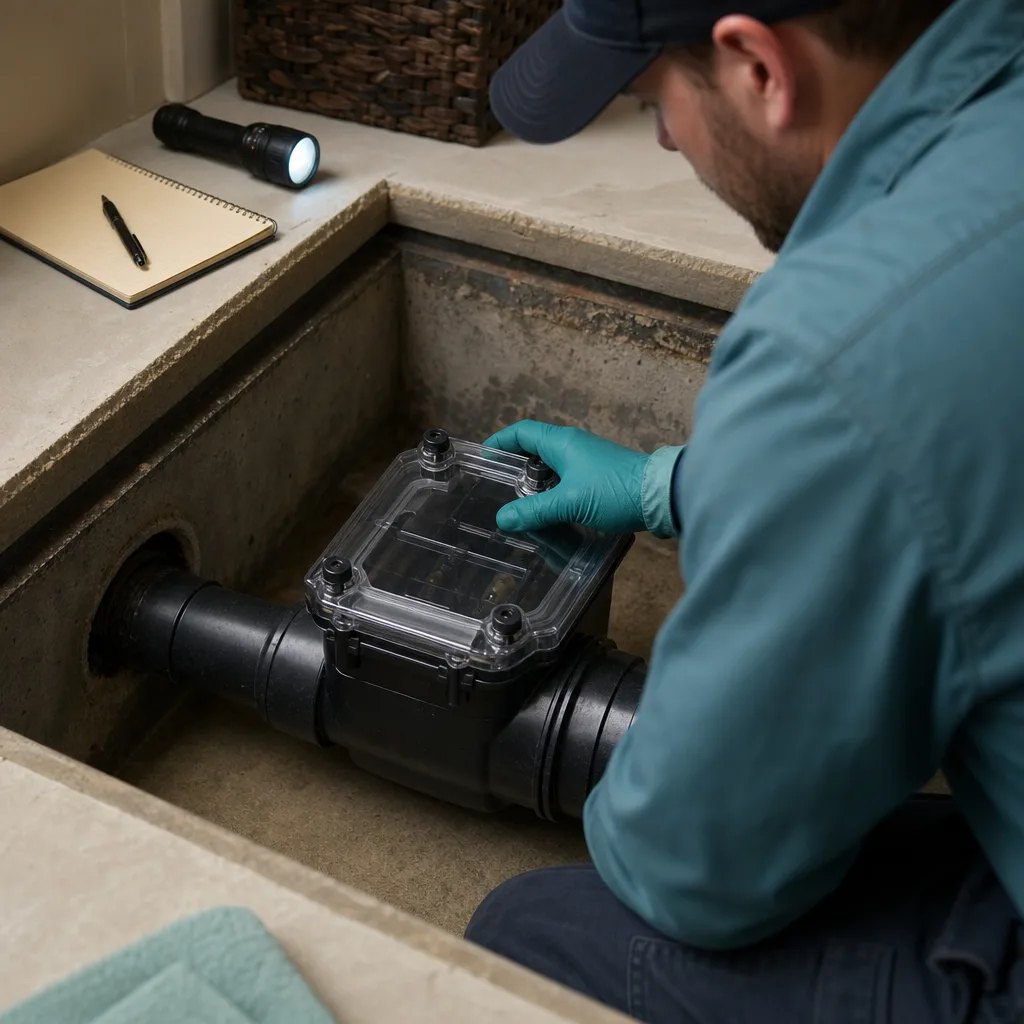
A backwater valve is a one-way device that closes against reverse flow through a protected building sewer. It does not correct a blocked private line, operate a sump pump, waterproof a foundation or divert overland water. The correct decision depends on the home’s connection, pipe route, fixture elevations, previous alterations and the actual pathway of any past water entry.
This article provides a professional planning sequence, not DIY installation directions. It does not claim a valve guarantees a dry basement, rebate payment or insurance approval. Lister Plumbing has confirmed coverage in Richmond, but no local project records were shared; no example below represents a completed Richmond installation.
Confirm the property’s place in Richmond’s servicing picture
Start with utility bills, purchase documents, approved plans and any well, septic or sewer records. Identify whether the house has municipal wastewater service, where the private building sewer meets it, and whether water service or other private infrastructure affects the work area. Do not infer the answer from a newer subdivision nearby or from the Richmond Community Design Plan’s broad servicing policies.
If records conflict, ask the City and qualified professionals to clarify before excavation. A proposal should name the assumed downstream system and responsibility boundary. This protects homeowners from purchasing a standard device for a nonstandard arrangement and helps determine which permit or inspection questions must be answered.
- Collect utility, permit, renovation and wastewater-service records.
- Mark all basement fixtures, sump pits, floor drains and cleanouts.
- Require parcel-specific confirmation rather than a village-wide assumption.
Related reading
Do not confuse sewer protection with river or surface-water protection
Richmond’s planning context includes the Jock River and environmental management, but proximity to a river does not prove how a basement flooded or whether a valve is suitable. A sanitary valve acts only on reverse flow through its protected pipe. It does not block river water, saturated-ground seepage, runoff at a door, foundation cracks or an overflowing window well.
Record where water first appeared and whether it was contaminated. Review grading, roof discharge, foundation drainage and sump operation separately from sanitary plumbing. For floodplain or site-specific surface-water concerns, consult current municipal and conservation-authority information and qualified advisors rather than treating a plumbing device as universal protection.
Map the building drain and low fixtures
A professional should trace the sanitary line from basement fixtures toward the property connection. Basement bathrooms, laundry, floor drains and additions may join at different points. A useful valve location places the intended fixtures upstream, remains serviceable and complies with applicable requirements. A convenient floor location is irrelevant if the wrong branch runs below it.
Ask what evidence supports the route: visible piping, cleanouts, camera observations, plans or exploratory access. Where parts remain uncertain, the quote should say so and explain how a changed condition will be priced. This is preferable to a confident but unsupported promise that every fixture will be protected.
Related reading
Resolve pipe defects before adding a moving device
A camera may reveal deposits, roots, offsets, deformation or standing water in reachable piping. These observations need professional interpretation; the camera does not measure every pipe property or inspect branches it cannot enter. Request saved images and a plain-language account of the limits.
A valve needs free movement and unobstructed flow. If cleaning or repair is recommended, ask whether it is essential before installation, separately priced, and subject to another inspection. Installing beside a damaged sewer does not repair that sewer. Conversely, no article can declare replacement necessary without seeing the property.
Account for village growth and renovation history
Richmond’s Community Design Plan guides long-term growth, meaning homeowners may encounter houses from different development periods and infill or additions with different servicing records. Construction era is a prompt for research, not proof of pipe material, valve presence or rebate eligibility. Search the property file and inspect what is actually accessible.
Finished basements can conceal fixture relocations and floor drains. New flooring can also bury an existing access cover. Before planning work, photograph covers and obtain measurements from fixed walls. If a valve already exists, identify its model, condition and protected branches before deciding that another device is needed.
Plan the Ottawa permit before opening the floor
Ottawa’s official page says a building permit is required for backwater-valve installation. Confirm current requirements and whether the property’s servicing arrangement creates additional review. Decide in writing who applies, pays fees, arranges inspection and responds to any correction.
Inspection must occur at the required stage, commonly before the installation is concealed. Keep the permit, inspection record, invoice, valve details, photos and camera report. These records aid maintenance and future sale, but they do not guarantee rebate reimbursement or insurer acceptance.
Related reading
Test the project against current rebate rules
The City’s Residential Protective Plumbing Program publishes eligibility, construction-date conditions, eligible measures and documentation. A Richmond address does not by itself prove that the property or exact scope qualifies. Review the current page before authorizing work and seek written clarification where the original building, addition or service history makes a date uncertain.
Treat the rebate as an application, not a discount guaranteed by a contractor. Keep itemized paid invoices and City records in the required form. Ask your insurer separately about disclosure, maintenance evidence, endorsements and deductibles because municipal funding rules do not decide private coverage.
Related reading
Know what happens when the valve closes
During a downstream surcharge, the device closes so reverse flow cannot pass. Household wastewater then cannot leave normally through that line. Continued showers, flushes, laundry and dishwasher use can fill upstream piping and produce an internal backup. Every occupant should know to minimize water use during a suspected surcharge.
A closed valve is temporary protection, not wastewater storage. Consider appropriate alarms, keep belongings raised and maintain safe clearance around electrical systems. If sewage enters, avoid exposure and flooded electrical areas and use qualified cleanup assistance.
Preserve access through every basement update
Specify a durable, flush and reachable access cover. Do not place permanent cabinetry, a wall, laminate or tile without access over it. Record the location, make and model and give that information to tenants or future owners. Access quality is part of the design, not a cosmetic afterthought.
Follow manufacturer instructions and professional advice for inspection and cleaning, with attention after a suspected surcharge. Service checks accessible movement, debris, seals and damage. Document findings and obtain qualified repair rather than forcing components or using improvised parts.
Related reading
Compare Richmond proposals on evidence and scope
The proposal should identify the service assumption, line and fixtures protected, device, location, access box, permit responsibility, inspection, floor restoration, cleanup and exclusions. Ask how unknown buried conditions will be handled and whether camera work or pipe repair is included.
Reject absolute claims about preventing all floods, securing rebates or obtaining insurance approval. Choose a maintainable solution to a diagnosed pathway. Lister’s service information and a quote request are linked for homeowners who want an assessment; other drainage pathways may require other specialists.
Ask the assessor to distinguish the public sewer, private service and plumbing inside the building. This responsibility map matters when a blockage or defect is found: the party to contact and the available remedy can change with location. The map should be based on records and findings, not inferred from the village name. Preserve any City correspondence with the project file.
Include site drainage observations in the handover even when they are outside the plumbing scope. Downspouts ending at the foundation, settled soil, blocked swales or a low basement entrance warrant separate attention and should not be described as corrected by the valve. Any grading change must avoid transferring water to a neighbour and may require qualified design or approval.
For households with a well, pump, sump or other powered equipment, document which system is affected by an outage and which is unrelated to the sanitary valve. Labels and a simple emergency contact sheet are more useful than assumptions during a storm. Electrical backup equipment must be selected and connected safely by qualified people for the actual load.
Before final payment, verify that the permit inspection has been completed as planned, the access opens without damaging finishes, the work area is restored to the written standard and all records are delivered. A homeowner does not need to dismantle the valve to perform this handover. The purpose is to confirm a serviceable, documented installation rather than test the mechanism without professional supervision.
Richmond homeowners should also revisit the assessment when adding a basement bathroom, secondary unit or substantial addition. A new fixture branch may join on the wrong side of an existing valve or change wastewater demand during closure. Share the existing permit drawings and valve location with the designer and plumber before plans are finalized. Do not assume a past inspection automatically approves later plumbing changes.
If the property is rented, give occupants concise instructions without asking them to service the device. They should know where to report slow drainage, sewage odour, an alarm or water at a low fixture, and when to stop water use. The owner or manager should retain access rights and maintenance records. Clear roles reduce delay while protecting tenants from sanitary and electrical hazards.
A post-storm review should consider what actually happened rather than crediting or blaming the valve without evidence. Record whether it closed, whether fixtures were used, where any water appeared and whether pumps had power. A professional can use that information to inspect the device and adjust the broader drainage plan. Avoid opening sanitary components while conditions remain unsafe.
Richmond backwater valve FAQ
Is every Richmond property connected to the same wastewater system?
Do not assume uniform servicing. City plans provide village-wide context, while the individual parcel’s records and professional inspection establish its connection and private piping. Confirm service before choosing protective plumbing.
Will a backwater valve protect against Jock River flooding?
A valve addresses reverse flow through a protected sewer line. It does not directly block river water, overland flow, groundwater or foundation seepage. Seek site-specific flood and drainage guidance for those pathways.
Does Richmond qualify for Ottawa’s rebate program?
Richmond is in Ottawa, but each property and measure must satisfy the current program’s eligibility, date, permit, inspection and documentation rules. Reimbursement is never guaranteed by location or by receiving a quote.
Is a building permit required?
The City of Ottawa says backwater-valve installation requires a building permit. Confirm the current process and any servicing-specific review, then arrange inspection before concealment.
Can a valve replace a sump pump?
No. The valve resists sewer reverse flow; a sump pump removes collected water where a sump system exists. One does not power or substitute for the other, and some homes may need neither or may need coordinated measures.
What records should remain with the house?
Keep permits, inspection results, invoices, device model, photos, camera findings, access measurements and maintenance notes. These help future service but do not promise insurance coverage or a flood-free basement.
Can I install the valve myself?
This guide intentionally omits DIY steps. Selecting and cutting the correct sanitary line, maintaining safe drainage and passing inspection require qualified professional work.
Sources and official references
- City of Ottawa: Richmond Community Design Plan
- City of Ottawa: Richmond Environmental Management Plan
- City of Ottawa: Infrastructure Master Plan village servicing
- City of Ottawa: Backwater valve permits
- City of Ottawa: Residential Protective Plumbing Program
Programs, permits and bylaws change. Confirm current requirements with the City of Ottawa before acting.
Questions about your Richmond home?
Ask a local plumber, without pressure.
Requests are sent to Lister Plumbing, who serve homes across all Ottawa areas listed here. A request is not a commitment, and no price is promised before someone looks at your plumbing.